

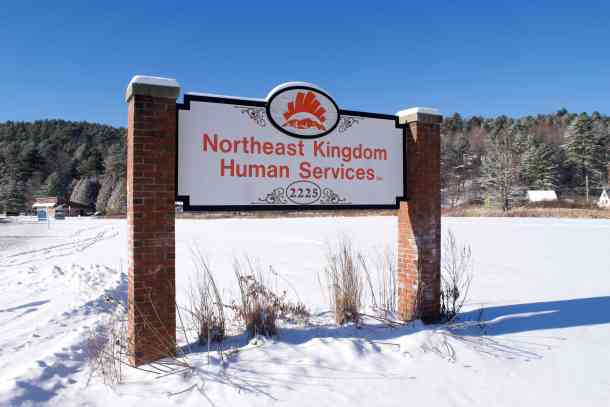
The state has placed Northeast Kingdom Human Services on “provisional” status after an investigation found a litany of problems including poor leadership, high turnover and providing inadequate treatment.
The issues have reached a “critical level of concern,” according to a Vermont Department of Mental Health report submitted to NKHS CEO Tomasz Jankowski and board chair Denise Niemira last week.
NKHS has 30 days to submit a plan to correct those issues. If the agency doesn’t address the problems, it could face “de-designation,” meaning it would lose its state contract to provide services.
“The issues that have been outlined in the additional agency review are going to take time to address,” said Mental Health Commissioner Sarah Squirrell in an interview. “It is crucial that Northeast Kingdom Human Services address them.”
The department launched the seven-month investigation in February, after 54 employees and patients complained to the state about NKHS between 2019 and early 2020.
One parent, whose adult son has Down syndrome and receives services from NKHS, said frustration among clients and their families has been simmering for years. “It’s a nightmare,” she said. “People just want to stay away.”
Her son has become independent enough to cut back on the services he receives from NKHS. But in rural Northeast Kingdom communities with few alternative supports, many other families don’t have the same option, she said. “You know how poor we are here, and how rural,” she said. “We have a lot of need.”
The agency, which has offices in St. Johnsbury and Derby, has a contract with the state to provide disability services, mental health counseling and substance abuse treatment for residents of Orleans, Essex and Caledonia counties.
The agency failed to meet standards in seven of 12 of the categories under review, including leadership and governance, staff training, client support and services, and procedures for addressing staff complaints, according to the report.
Jankowski vowed to set the organization back on the right path. “I take this very, very seriously,” he said. “We will continue improving the areas where we need to improve.” But, he added, “this organization has not put the health of our community in danger at any point.”

Former employees report that internal mismanagement and unethical practices leads to lower quality care for patients. At least one employee authorized services and treatment plans as a licensed social worker, even though he wasn’t licensed in Vermont, according to former staff members who spoke with VTDigger on condition of anonymity.
Another former NKHS worker said she was repeatedly asked to fulfill tasks she wasn’t qualified or trained to do. At points, she worried that the organization was using her signature, which was on file electronically, without her permission. She quit last month. “I did not feel professionally safe,” she said.
Staff members have the option to leave, but clients are stuck, she added. “The only people that are going to get hurt are the clients,” the employee said.
A long time coming
Northeast Kingdom Human Services is one of Vermont’s 10 designated agencies, which contract with the state to offer regional mental health and disability services. The organization employs 478 people to provide care across a large swath of the state’s rural northeastern corner.
The internal problems have been an open secret for years, according to former staff members.
In early 2019, more than 60 employees went to the board complaining about bullying, harassment and being asked to perform duties they weren’t licensed for.
The agency hired a consultant to address concerns, but according to staff members, little changed after the report came out in December of last year.
Employees turned to the state instead, flooding the Department of Mental Health with complaints about “overall leadership organization, culture and quality of services for clients,” according to Squirrell.
In the complaints, staff described retaliation and bullying that resulted in high turnover. Multiple workers say Jankowski vacationed almost monthly in Ohio and Poland during his first year in the job, and then requested a large raise before his second.
One described being asked to run a teen recovery group therapy program with little training and minimal planning. Half the participants dropped out, the worker said.
“It’s not just job burn out, it’s a moral burn out to work for NKHS,” another employee wrote.

In response, the Department of Mental Health launched an investigation last February. The department typically reviews each designated agency every four years. NKHS was last reviewed in 2018, Squirrell said.
The state completed the investigation in August and provided a report to the board last week. The department issued a “provisional redesignation without intent to de-designate” letter to NKHS last Friday. “Most or all standards [were] not met,” according to the department letter.
The agency must file a corrective action plan within 30 days and show progress within six months.
As part of that work, NKHS needs to address high staff turnover, poor staff morale and a lack of oversight and staff supervision. The agency must also seek feedback from clients and the community, according to the Department of Mental Health report. The organization must strengthen board oversight to ensure that mental health care providers receive adequate training and are performing work that is within “their scope of practice.” NKHS must also have a system to address complaints from staff.
If NKHS fails to meet the standards, it can be “de-designated.” The state would cancel its contract with NKHS, provide services through other organizations and ultimately name a new designated agency for the region.
Staff from the Department of Mental Health “quality team” started working with NKHS on Monday to help with the action plan and improve the mental health services the agency provides, according to Squirrell.
Jankowski said he is committed to working with the Department of Mental Health to correct the issues and after three days of meetings had made substantial progress on a corrective action plan.
“I believe that the commissioner and her colleagues have full confidence in our ability to do it,” he said.
The board was “disturbed” by the findings, said Niemira, the board chair, in a statement. The agency will “correct the identified deficiencies and … establish the organizational changes that will safeguard against any future recurrence,” the statement read.
The board will work with Jankowski and the state to help make that happen, she said.
A culture of crisis
The shortage of staff and lack of training has meant that the agency is constantly responding to crises rather than taking care of patients.
“It’s sort of the squeaky wheel gets the grease,” a former worker said.
The staff members she supervised would follow up monthly with “low-utilizers,” the clients who weren’t regularly reaching out for support, she said. But workers didn’t always have the time or training to connect and build relationships with those people to offer preventive mental health care before it reached the level of a crisis. One of those clients ultimately died by suicide, she said.
Both staff and parents said the agency routinely hired people who didn’t have the necessary qualifications or experience. According to the parent of an NKHS client, the agency seemed to hire anyone for the job “because they can’t find people who understand his Down syndrome.”
That bred conflict. At one point, her son was fired from his retail job because he got frustrated at the NKHS staff member assigned to him and raised his voice in the store.
“You want someone who works with your son and daughter who understands their disabilities,” his mother said.
Another parent, who also spoke to VTDigger anonymously, said the agency had driven a wedge between her and her adult daughter, who lived with an NKHS shared living provider. The shared living provider took her daughter’s cellphone away, discouraged her from seeing her family, and wasn’t helping her find a job or get involved in community programs, the parent said. (Another community mental health provider confirmed the account.)
It had been a year since the two had spoken. “After 28 years, I don’t know my own daughter,” she said.
‘Never experienced anything like this’
The agency billed for substance use treatment for clients who didn’t actually have an active substance use disorder, said a former director of mental health. It wasn’t providing training that followed state guidelines. Recent grads typically require two years of supervision for licensure; that was being provided by staff members without proper qualifications, she said.
Last February, after an alcohol and drug counselor quit, more than 50 people receiving substance use treatment were discharged to the community without warning or any kind of transition plan.
In 30 years of work in the mental health field, “I’ve never experienced anything like this in my entire career,” she said, describing sweeping mismanagement and improper conduct.
Jankowski said he doesn’t know whether all the allegations are true, but promised NKHS will address any errors. “If it is accurate, then we will design a process of checks and balances maybe more robust than we’ve had before,” he said. He attributed any confusion about licensure to changes in law as a result of Covid-19.
Some disgruntled employees may have been frustrated at the changes he was trying to make within the organization, he said.
Jankowski said he’s “very confident” the agency can meet the state’s standards by the deadline next month. “We are concentrating on addressing all of those points of concern, and making sure that we address each and every single one in a way that will provide a material and comprehensive effect,” he said.

