


More than 20 Northeast Kingdom towns will have broadband service from a regional district by 2023, according to a new study.
The study, written by the technology infrastructure firm Tilson, names 23 towns in the region as the first sites to receive partial fiber buildouts through NEK Community Broadband, the region’s communications union district that was formed in March.
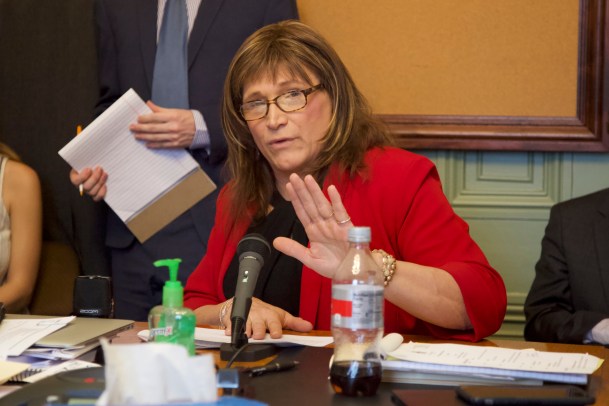
“These are the towns that essentially can generate and throw off revenue that’ll help us get into the areas that you lose money on,” district administrator Christine Hallquist said Tuesday.
Officials plan to cover parts of each of these towns: Albany, Barnet, Barton, Brighton, Burke, Concord, Coventry, Craftsbury, Derby, Glover, Greensboro, Groton, Hardwick, Irasburg, Lyndon, Newark, Newport, Ryegate, Sheffield, St. Johnsbury, Sutton, Walden and Waterford.
Hallquist said the district expects to start construction on those projects next July, involving 571 miles of fiber.
Other towns won’t go without broadband service in the meantime, Hallquist said, even if they have to wait for fiber. The district will look to use wireless broadband to serve those areas.
The district was formed to bring high-speed internet to Vermont’s most rural region after other possibilities were exhausted. The Kingdom’s three counties are the worst-served in the state, and only one other of Vermont’s 14 counties has as high a percentage of addresses without broadband.
Some of the unserved towns are sparsely populated, so the district would likely lose money providing service there.
That’s why the new study calls for buildouts in more populated communities, such as St. Johnsbury, where nearly 90% of addresses have internet speeds that meet the federal definition of broadband.
Hallquist said income from those towns would give the district enough revenue to extend service to remote areas.
The study’s infrastructure plans describe a three-year timeline, but the district is now looking at a 10-year plan that charts out projects in other towns. Hallquist said the long-term plan should be finished by April 1.
In the interim, she said, the district has been connecting some Kingdom residents to existing infrastructure.
“As we speak, we’re connecting 40 customers in the Albany and Irasburg area to an existing fiber line,” in partnership with Kingdom Fiber, an internet provider in the region, she said.
The study also details costs for the district and anticipated customer numbers.
For the first several years of construction, the study says, the district should expect to pay $35 million. The district’s initial debt for the projects will total about $7 million.
In the first decade of operation, the report estimates the district will have nearly 5,100 subscribers and will plateau.
Hallquist contested the $35 million price tag listed in the report.
“The construction costs are high due to the fact that Tilson is a high-margin contractor,” Hallquist wrote in a supplemental letter about the study. “They have an aggressive plan to grow their business nationwide by focusing on higher margin areas as well as grant funding. They need to cover their higher fixed costs, as well as provide a return to their investors.”
Hallquist said in an interview that by working with local contractors the costs could be lowered to about $25 million. Construction timelines might change, though, because lead times for materials may increase in the near future, she said.
“I anticipate the run on fiber material to be just like the run on toilet paper,” Hallquist said.
