

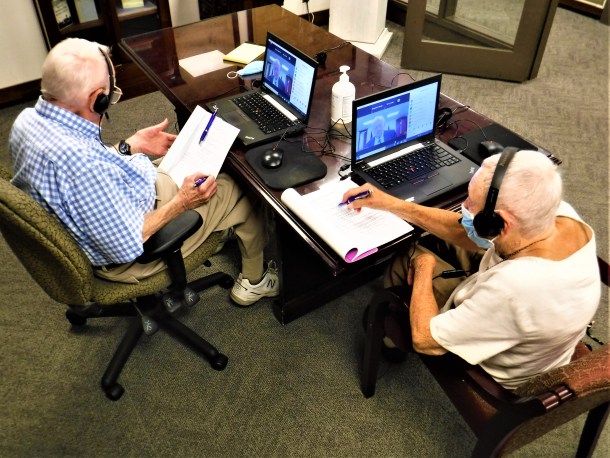
BRATTLEBORO — This Southern Vermont hub successfully held the state’s first online town meeting Saturday, road-testing a model other communities may try if Covid-19 remains a threat in March.
“We will learn from this experience,” meeting moderator Lawrin Crispe said during the nearly 13-hour session. “Hopefully it won’t happen again next year, but if it does, we’ll know more.”
More than 100 townspeople plugged into the Zoom video conferencing platform at 8:30 a.m. to debate 20 agenda items postponed since the pandemic delayed this year’s original March 21 meeting date.
“Who knew that we’d have to do this?” resident Christopher Chapman told fellow participants. “I’m very, very grateful to the town staff for enabling this. They’ve had to turn on a dime a lot.”
Local leaders struggled for months with how to gather several hundred people under state guidelines that limit crowds to 75 indoors or 150 outdoors. After weighing a myriad of possibilities, officials opted for an advanced version of Zoom with special security and voting functions.
That meant teaching beginners what keys to click and video-conferencing veterans to disregard their usual practices and follow different directions.
Officials held a public technology tutorial this past Labor Day weekend and since have invited people to call for individual instruction.
“We asked you to reach out so that you could test your connection, and you certainly did!” Assistant Town Manager Patrick Moreland wrote in an email that encouraged participants to log on up to 90 minutes before the meeting’s scheduled start to ensure success.
Even so, participants spent the first hour and a half of official business working out technical difficulties — people had the most problems understanding the mute button — before debating the first article.
“It’s pretty slow to begin with,” said Corwin Elwell, retired town manager and 92-year-old father of the current officeholder, Peter Elwell. “Hopefully it will pick up a little.”
Participants went on to quickly approve eight articles — including one that required them to figure out how to vote electronically for two of three candidates for the local Capital Grants Review Board — before spending almost two hours debating what to pay the five members of the selectboard.
(The ultimate answer after two failed amendments: The same as last year.)
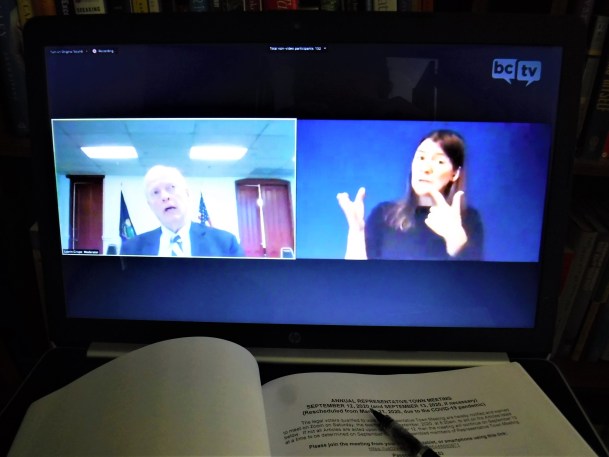
Participants moved on to lengthy debates on whether to spend money on a firetruck and Love Brattleboro marketing campaign and to increase human services funding by 10% (yes to all) and to waive penalties for residents who don’t pay their property taxes (a majority instead opted to steer people to the town’s board of abatement).
Most Green Mountain municipalities decide budgets and other ballot questions at annual town meetings in early March. Brattleboro, the state’s seventh most populous locality with about 11,000 residents, aims to keep attendance manageable by electing some 150 representatives who wait to gather later that month.
To prevent “Zoom-bomb” disruptions and nonresidents from voting, the town only shared its meeting link with locals approved in advance and invited everyone else to watch on Brattleboro Community TV. It set up a “technical hotline” for home and office participants and opened the downtown public library for people without internet access or ability.
The agenda lacked one article from the original proposed in March: the town’s general budget. Representatives are required by charter to approve a spending plan. But when the Selectboard couldn’t schedule a meeting before the July 1 start of the current fiscal year, it turned to a temporary state measure that allowed it to adopt a budget to ensure municipal operations continue.
Even without that discussion, Saturday’s meeting nearly matched last year’s record run of 13 hours.
“For the love of God, could you call the question?” one attendee said shortly before 9 p.m.
The moderator gaveled the meeting to a close soon after.
“There are very many people who have worked tirelessly to make this all happen,” Crispe said at the end of the Zoom session. “Let’s hope we don’t have to do it again.”
