


Editor’s note: Mark Bushnell is a Vermont journalist and historian. He is the author of “Hidden History of Vermont” and “It Happened in Vermont.”
It’s the only thing most people remember George Aiken saying: “Let’s declare victory and get out.” Or “Let’s declare victory and go home,” as some recall the line.
Aiken was talking about Vietnam, but today people use the phrase to make an argument against any seemingly intractable situation. The line from the late Republican senator from Vermont is used by politicians, talk show hosts, newspaper columnists, bloggers and ordinary folk. A Google search for the quote produces more than 5 million hits.
So much breath and ink and so many gigabytes expended to quote something that Aiken never said.
The oft-repeated quote is actually a mangled and inaccurate paraphrase of what Aiken really said. A more accurate paraphrase might be, “Let’s declare that we have achieved victory in our struggle to meet attainable military goals and then redeploy our troops in cities that the enemy could have no hope of capturing, thus forcing them either to escalate the war, and thereby face the condemnation of the world, or agree to negotiate.” But that’s not exactly pithy.
Aiken had long been uneasy about American military involvement in Southeast Asia. He feared it would bog the country down in an Asian land war and possibly escalate into a major conflict with China or the Soviet Union. But he also believed the United States had an obligation to the South Vietnamese people, since it had transported several hundred thousand refugees to South Vietnam after the signing of the Geneva Accords of 1954, which ended French colonial control in the region. Aiken preferred financing anti-Communist groups in Vietnam to placing American troops on the ground.
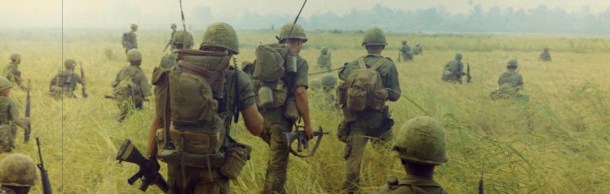
By early 1966, Aiken realized the difficult situation the war presented to the United States. After participating in a Senate mission to assess the prospects for peace, he returned discouraged. “If we can get out of Vietnam with the respect of the world and still insure South Vietnam will be left for the South Vietnamese, it would be a near miracle,” he said.
Aiken realized that the United States could not achieve total victory, but that withdrawing immediately, or anytime soon, was unthinkable — it would only make the situation worse.
He had another idea. Taking to the Senate floor, Aiken explained his thinking in his now-famous, and misquoted, Vietnam Speech on Oct. 19, 1966.
Two years earlier, he explained, the situation in Vietnam had been dire. The United States had fewer than 20,000 troops in the country and “there actually existed a clear and present danger of military defeat for the American forces.” The Johnson administration responded by greatly increasing troop levels to secure the military situation, he said, though it didn’t reveal how close America had been to defeat. The troop surge meant the North Vietnamese could only engage in “a war of harassment and surprise guerilla tactics.” The remaining threat to U.S. forces, Aiken said, was either Chinese intervention or the erosion of South Vietnamese society. And, ironically, the large-scale U.S. military commitment across the South made it harder for the South Vietnamese government to assert its authority.
Then Aiken launched into the part that has gotten paraphrased incorrectly, but which is preserved in the Congressional Record. “(T)he United States could well declare unilaterally that this stage of the Vietnam war is over — that we have ‘won’ in the sense that our Armed Forces are in control of most of the field and no potential enemy is in a position to establish its authority over South Vietnam.” After all, that had been the U.S. military’s true objective, he said.
But then Aiken made clear that he didn’t intend just to go home.
“Such a declaration should be accompanied, not by announcement of a phased withdrawal, but by the gradual redeployment of U.S. military forces around strategic centers and the substitution of intensive reconnaissance for bombing,” he said.
Whether he liked the idea or not, Aiken said that American troops would have to remain in the country for years. The United States could neither attain a complete victory nor withdraw. The situation in the region was important to America’s security, he said, “if only because we so foolishly made it so.”
Aiken believed that Vietnamese society needed fixing, but he was skeptical that it was a job for the United States. “What makes the Vietnam War so incredible to so many here and abroad is the spectacle of the United States, largely through deployment of its matchless military power, attempting to reengineer the society of Vietnam,” he said on another occasion. “Of course, sweeping changes in Vietnamese society are needed if the Vietnamese people are to defend themselves … But how can we believe that this is a task which can be accomplished largely by Americans, and by American armed forces at that?”
Aiken wasn’t sure the proposal he laid out in his speech would work, and he never got a chance to find out. Johnson ignored the advice.
Johnson didn’t take the suggestion kindly, briefly banning Aiken from the White House. Aiken wasn’t the only one to feel Johnson’s wrath over the idea of changing war policy. During a meeting with Johnson a few days after Aiken’s speech, Leonard Marks, director of the U.S. Information Agency, mentioned the senator’s policy advice. Johnson didn’t appreciate being reminded of the speech. “He looked at me — he had a way of staring at you — and finally I blinked,” Marks recalled. “I said, ‘What do you think?’ He said, ‘Get out of here.’”
Several years later, after Johnson had left office, Marks visited the former president at his ranch in Texas. Marks told Johnson that that had been the only time the president had ever snapped at him. Marks asked Johnson why he’d been angry.
Johnson responded: “Because you and George Aiken were right.”
