



Editor’s note: Mark Bushnell is a Vermont journalist and historian. He is the author of “Hidden History of Vermont” and “It Happened in Vermont.”
The islanders guarded their privacy jealously. When a group of tourists made the mistake of pulling their boat onto the private island for a picnic, they were accosted by one of the inhabitants. It is hard to say what was most frightening about the man, his unintelligible screaming, the axe he carried or his odd attire. He wore a red wig. And nothing else. Unless you count the mud he had smeared across his body.
Though the tourists couldn’t understand his shouts, they got the message, and clambered back into their boats, leaving the island behind. Once they had gone, the naked man found his fellow islanders and told the story that has been repeated in those parts ever since. He was part of a clan of avid storytellers who made the island their home each summer for two decades starting in the 1920s.
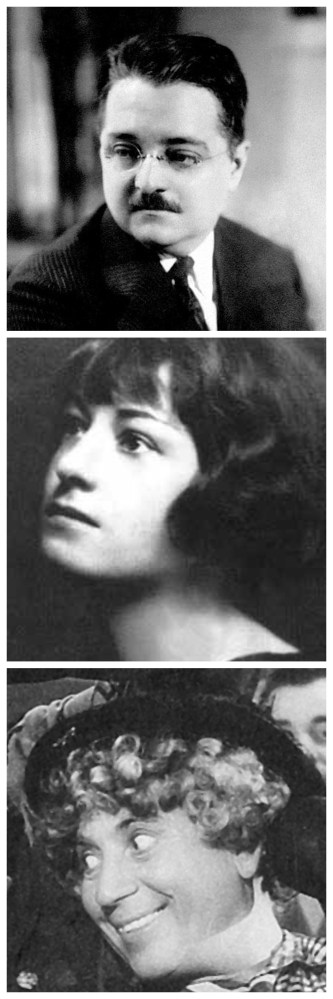
His name was Harpo Marx. He and other famous actors, writers and artists adopted the island, Neshobe Island in the middle of Lake Bomoseen in Castleton, as their private refuge. “The thing we cherished … along with its natural beauty, was its isolation,” Harpo later wrote, which helps explain why the comedic film star would go to such lengths to protect it.
The island was discovered, as far as the New Yorkers were concerned, by Alexander Woollcott. Little remembered today, Woollcott was perhaps the most influential literary critic of his day and he seemingly knew everybody, from politicians to movie stars. Woollcott first saw the 8-acre island in 1924 with his financial adviser, who owned it and wanted to sell. Woollcott instantly decided it would be the ideal summer retreat for his famous friends.
Woollcott was a member of the Algonquin Round Table, an informal group of New York’s literati and glitterati, who met daily for long lunches and wickedly witty conversation at the Algonquin Hotel. The public knew of their sharp-edged banter, because it frequently ended up in the newspaper columns of journalists who were members. (Told that the famously quiet Calvin Coolidge had died, writer Dorothy Parker is said to have asked, “How can they tell?”)
Woollcott convinced some of his Algonquin friends to form the Neshobe Island Club and buy most of the island. From the start, Woollcott dominated island life. He eventually paid off the mortgage, giving him ownership of half the island, and in 1937 he built a large house on its highest point. Owners and guests not staying at the Stone House, as it was known, lived in the Club House.
Life on the island was primitive at first. Any bathing was done with cold water, a pitcher and a basin, or in the lake. Other amenities included outhouses, kerosene lamps and wood stoves. Many club members preferred things simple. But a debate flared between the so-called Masses (who wanted to keep things simple) and the Classes (who wanted modern amenities). The Classes won and brought the luxuries of running water and refrigeration to the island.
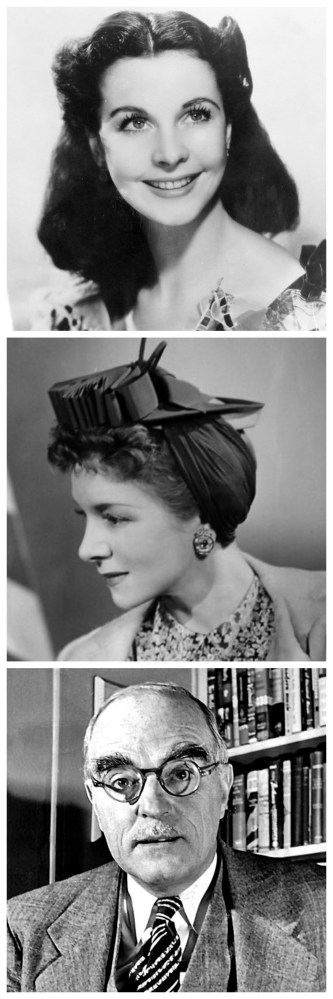
There to enjoy the amenities were celebrities like actors Laurence Olivier, Helen Hayes, Vivien Leigh, and Ruth Gordon; writers Noel Coward, Ring Lardner, Thornton Wilder, Robert Benchley, and Margaret Mitchell; composer Irving Berlin and entertainment magnate Walt Disney. Many were just visiting – a single invitation from Woollcott meant nomination to his “Who’s Who” list, quipped Harpo; a second invite meant you had made it. The ultimate honor, Harpo said, was membership in the island club, which he himself earned.
Woollcott dictated the day’s routine. A keeper of odd hours, Woollcott would insist that others keep them with him. Once at 2 a.m., a guest was alarmed to find him pounding on her door, and assumed the cabin must be on fire. Woollcott explained that he had just finished writing something that he wanted to read to her.
He also insisted that guests greet the day with a dip in the lake, no matter how cold it was, before coming to breakfast, which was served at 7. Breakfasts stretched on for hours, Algonquin style, with lots of animated conversation and Woollcott reading aloud from his daily mail.
Despite Woollcott’s rules, much about island life was informal. Some club members and guests preferred to spend much of the day nude. Dorothy Parker showed up for a visit, carrying a hatbox. Some days, the gardening hat it contained was all she wore. Harpo had greeted the island’s invaders naked because he had been skinny dipping when he spotted them.
The Algonquin crowd was a competitive lot, always trying to one-up each other’s latest quip. They brought that competitiveness with them to Neshobe. It showed up particularly in their cutthroat games of croquet in which players took particular glee in knocking their opponents’ balls into the lake.
Harpo wrote in his autobiography of a particularly hard-fought game he had with Woollcott. At one point, Harpo wanted to smash his ball into Woollcott’s, but a maple tree stood in the way. Undeterred, Harpo took an old tire that had been used as a boat bumper, sawed it in half, and lay half of it around the tree. Harpo then slammed his ball into the tire, around the tree and into Woollcott’s. Woollcott responded by slamming his mallet into the ground and storming off into his house.
The other regular game on the island was called Murder and was played during cocktails. The game would start with players drawing lots to see who would be the murderer and who the district attorney. While the district attorney announced their identity, the murderer’s identity remained secret. During cocktails, the murderer would wait for the moment to strike, then say to his or her victim “you are dead.” The victim would remain motionless until others noticed, then the district attorney would question the other partygoers to reveal the murderer.
One night when Woollcott was the district attorney, no murder victim had turned up by the time dinner was ready. Someone noticed that one of the guests, author Alice Duer Miller, was missing. Woollcott refused to allow dinner to be served before the case was cracked. Club members and guests scoured the house and turned up nothing. Finally, at 11 p.m., a club member spied Miller through the keyhole of the back bathroom. Hours earlier, Miller had gone in to use the bathroom and found the words “YOU ARE DED” scrawled in red lipstick on the toilet paper. Miller had gamely played her part and remained in the bathroom.
Woollcott instantly knew whose work this was. Without asking any questions, he wheeled on Harpo and declared him the murderer, then berated him for breaking the rules by not speaking the words to his victim.
The island’s celebrities, and their unorthodox behavior, spawned rumors and gossip. Some have claimed that every home on Bomoseen was sure to contain binoculars to watch this exotic wild life. Apart from Harpo’s naked wild man act, relations between the island’s inhabitants and those on the mainland seem to have been cordial. Local residents often worked for the club, ferrying guests, groceries and messages to the island. Others worked as handymen or cooks. The only locals who visited the island uninvited were ice fishermen who would rest there occasionally in the winter when the New Yorkers had returned home.
Club members and guests on the island didn’t just play. Some found the island a source of inspiration. Book manuscripts were completed there, as was part of the screenplay for the movie adaptation of “Wuthering Heights.” Stage actresses walked around the island, rehearsing lines for upcoming productions.
The Neshobe Island Club faded with the health of its founder, Woollcott, who suffered a series of heart attacks. At one point, Woollcott quipped that on doctor’s orders he was only allowed to play croquet if he were permitted to win. Woollcott died in 1943, hours after suffering a heart attack during a live broadcast of his weekly radio show “The Town Crier.”
The next day, a group of Castleton residents marked his death by issuing a statement that they would “long remember with deep appreciation the many benefactions of Alexander Woollcott.” During his years on the island, Woollcott had not held himself aloof from the town. In fact, he had taken the time to serve as a trustee for the town library and had donated many review copies of books he received.
Woollcott had requested that his ashes be buried at his alma mater, Hamilton College in New York state. Harpo suggested that a more fitting tribute would be for them to be “blown through the fifth wicket of the Neshobe Island croquet ground.”
