



As anxiety builds among parents, teachers and officials about how Vermont schools will reopen this fall, Democratic candidates have been working to define how they envision a successful and safe reopening for Vermont’s schools.
And while most have been laying out safety protocols — and supporting a contested idea proposed by the Vermont National Education Association to prop up a school reopening task force — one Democratic candidate for lieutenant governor, Brenda Siegel, said she doesn’t think Vermont should have in-person schooling because she doesn’t think all districts have the resources they need to open successfully over the next month.

“I think it’s a good goal to reopen schools,” she said at a Wednesday afternoon press conference on the Statehouse steps in Montpelier. “But what I’m saying is that we can’t do it without having addressed these concerns. And we have not addressed these concerns.”
Siegel said her concerns rest with the lack of accessible broadband in the state that would allow for hybrid in-person and remote learning. She also said she’s concerned by the lack of universal meals to keep students fed equitably while attending school and that all schools may not be able to reengineer their teaching spaces to afford for social distancing.
She also criticized the Scott administration for neglecting to include the voices of teachers, custodians, bus drivers and other school employees in the state’s reopening plans.
“Of the Scott administration, it has been a long-term problem where he has not included educators in the decision-making table,” she said.

When Education Secretary Dan French rejected the NEA’s proposal for a commission in early July, he said in a statement that the administration already has a state-level planning group that has representation from many education stakeholder groups.
Gov. Phil Scott has also previously said that the criticism leveled at his administration for not embracing the NEA’s task force has been politically motivated. Scott has expressed disappointment that these concerns about the NEA commission were being raised days after the Legislature adjourned.
“I thought it was unfortunate that, two days after the Legislature had adjourned, that they called for more oversight,” he said at a press conference early July. “I would have thought the committees in the House, in the Senate in education, might have wanted to check in.”
“This is politics, it’s a campaign year,” he added. “There’s a series of elections in November and August, so I’ll leave it at that.”
Schools will reopen soon after parties choose their candidates in the Aug. 11 primaries.
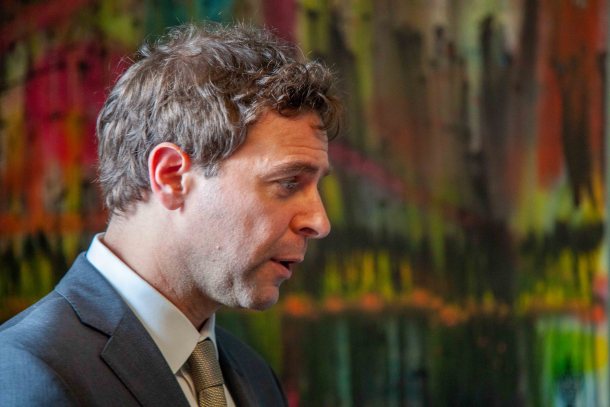
Scott’s comments came after Pro Tem Tim Ashe, D/P-Chittenden, made clear that he adamantly supported the NEA task force that was being proposed. Ashe, who is also running for the Democratic lieutenant governor nomination, called Scott’s comments “nonsensical.”
Ashe said teachers and other schools employees should be helping the administration craft a state-level plan to reopen schools. “We’ve seen administrations, whether it’s in Vermont, or other states or at the national level, who say they’re working on it and they’ve got it figured out,” he said. “But if they’re not including people who actually have to implement it, it means that there’s a high likelihood that by the time we see the proposal, the guidelines won’t work in practice.”
Don Tinney, president of the NEA, said that while French rejected the proposal from his association, he said he’s continuing to advocate for a similar, state-level task force to be installed this fall, as schools reopen, to specifically coordinate adjustments to the state’s reopening procedures. It would also include stakeholders at the school level: educators, nurses, custodians and bus drivers.
“It’s critical that we hear from folks who know their students’ first names,” Tinney said.
This debate about how to safely open schools is happening as candidates are vying for the support of state employees and organizations like the NEA that have traditionally endorsed Democrats and Progressives for office. Darren Allen, NEA communications director, said it’s not typical for the organization to endorse candidates during primaries but that an endorsement will come from the organization during the general election.
“We would say to those candidates that teachers are paying attention to politics,” Allen said. “And candidates out there know that.”

Sen. Debbie Ingram, D-Chittenden, is another Democratic lieutenant governor candidate supporting the NEA’s proposal for a state-level commission. “Maybe the agency has final say,” Ingram said, “But it just seems to be common sense to want to get advice and consultation from people on the ground.”
She said schools need to construct innovative, alternative classroom spaces so that if teaching needs to remain online, but broadband access isn’t accessible to some families, there still may be a congregate setting that would allow social distancing that students could still access to learn.
Molly Gray, who is also running for the Democratic LG nomination, held a press conference about school reopening last week, during which she focused primarily on the state’s lack of a contingency plan if reopening means more Covid-19 cases and schooling has to return to all online.
She highlighted the need for universal broadband. She called for “an emergency needs assessment” for educators and families that don’t have access to the internet.

“We’re talking about schools reopening, but we’re not talking about preparedness if schools have to close. And we still have a fourth of Vermont that can’t get online,” she told VTDigger in a follow-up conversation about the press conference.
She called for a “perennial education advisory committee that includes teachers, administrators, parents, and student representatives” to help guide the state’s school reopening response. However, she wouldn’t explicitly state if she supports the task force proposed by the NEA.
“I don’t want to necessarily comment on what the Vermont Department of Education and the NEA is doing because I think they’re figuring it out right now. There’s been some differing views,” she said. “But for me, the bigger issue right now is how to make sure we’re thinking about preparedness.”

As for the Democratic gubernatorial candidates, both Patrick Winburn and David Zuckerman have said they fully support the creation of the NEA task force. And they’ve both criticized the Scott administration for axing it.
In an emailed press release, Winburn said Scott’s meeting with education stakeholders about reopening schools needs to be “based on more than ceremonial meetings.”
“Our schools never closed – only the buildings,” he said in the release. “Teachers and support staff moved mountains to ensure learning continued, even in the worst of times. They should be at the table, not on the menu, with reopening discussions.”

Zuckerman said he thinks Scott’s rejection of the task force is indicative of his administration’s refusal to incorporate broader perspectives.
“What we’ve seen with this administration is that they’re very insular,” he said. “They don’t welcome as wide a range of views as probably should be included.”
But Democratic candidate for governor Rebecca Holcombe, who previously served as education secretary under the Scott administration, has a more nuanced perspective.
“I just think it’s too simplistic to say this,” she said, referring to the commission, “or nothing. I think the concern is legitimate, I’m just not sure a statewide task force is the most efficient way to do it.”
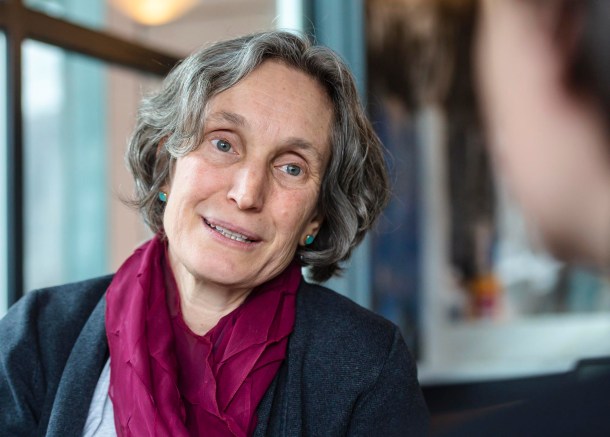
She said if she were posed with the idea, she would have tried to understand why there were enough concerns to validate the need for a state-level task force. She thinks the specific modeling, concerning how students will be temperature checked or socially distanced on a school bus, could be better defined by the particular local needs of a school’s community, rather than at a statewide level.
“We need to take time to listen to those concerns and figure out how to respond to them,” Holcombe said. “Because people are worried. And the way you address fear is you figure out what’s the source, what’s the specific questions, and then you provide them the guidance they need.”
