


Come New Year’s Day, members of state-recognized Native American tribes will qualify for free hunting and fishing licenses.
Gov. Phil Scott on Monday signed H.716, a bill allowing “certified citizens” of Vermont’s indigenous tribes to receive a free permanent fishing license or a free combination hunting and fishing license — as long as they meet state requirements for the latter.
Tribal citizens need only submit a current and valid tribal identification card to receive a license.
“It’s a milestone, basically, in Vermont’s history that they have now acknowledged and recognized the fact that Abenaki has always retained their rights to hunt and fish in our territories,” said Chief Don Stevens, who leads the Nulhegan Band of the Abenaki Nation, which has tribal headquarters in the Northeast Kingdom.
Vermont currently recognizes four tribal bands of the Abenaki Nation, and in the months since the bill’s January introduction, advocates have framed the legislation as a question of indigenous peoples’ rights.
“This is a huge step in righting a wrong that has been done for hundreds of years,” added Stevens, one of five Abenaki chiefs who advocated for the bill to legislators.
Seven House legislators introduced the bill in January, and the chamber approved it in June. Senators passed the bill June 26, and it landed on Scott’s desk last week.
Much of the push for the proposal came from a desire to honor past land deals Abenaki citizens had made with colonists and, later, United States citizens. In some of those deals, Abenaki citizens had retained the right to hunt and fish on properties they were selling.
“It’s not like they’re giving us a new thing,” Stevens said. “It’s (that) they’re honoring the agreements that we had in place.”
Records of one such deal from the 1700s — referred to as King Philip’s Deed — are included in documents from the House Committee on Natural Resources, Fish and Wildlife.
Abenaki tribe members staged “fish-in” protests in the 1970s and ‘80s — fishing without state licenses — in an effort to regain hunting and fishing rights, along with land. Participants were fined by wildlife wardens.
A Franklin County judge in 1989 ruled that members of a late-’80s fish-in were not subject to state fishing regulations because they were tribal members. But the Vermont Supreme Court in 1992 reversed the decision.
Only in 2006 did Vermont acknowledge the Abenaki as an indigienous people, and state recognition didn’t come until the 2010s.
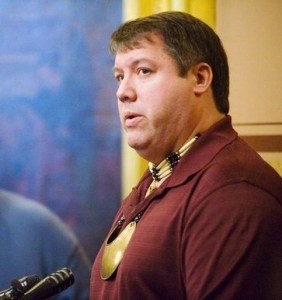
“It’s a small but, I think, important recognition of long-standing historic harm done to the Abenaki,” Department of Fish and Wildlife Commissioner Louis Porter said of the bill. “Clearly the Abenaki did not intend to forgo their rights to hunt and fish in Vermont — whatever the legal obligation or not, that is a right that has been long denied to them.”
Attorney General TJ Donovan and Lt. Gov. David Zuckerman also both voiced support of the bill in two letters submitted to the Legislature.
Donovan’s letter cited four deeds and treaties from the 1600s and 1700s as examples of indigenous people seeking to retain unrestricted hunting and fishing rights in land deals.
The Legislative Joint Fiscal Office estimated in May that the bill could result in annual revenue losses between $30,000 and $45,000 for the Fish and Wildlife Department starting in the 2021 fiscal year. That conclusion was based on the belief that tribe members with existing, paid licenses would opt for free ones.
Porter believes the estimate “significantly undercounts the … fiscal impact.”
That’s because he believes members of Abenaki bands, many of whom live outside more densely populated areas like Burlington, might hunt and fish at a higher rate than the average Vermonter.
“Having said that, we will manage as best we can to deal with that,” Porter said, adding that even if the true figures exceed $45,000, “It’s not going to bankrupt the Department of Fish and Wildlife.”
Porter said he had asked the Legislature to consider different ways to account for lost revenue, such as a mechanism by which his department would bill the Attorney General’s Office at the end of each fiscal year for half the cost of all lifetime licenses issued through the bill. But an amendment to create a system like that failed.
Still, Porter said he and his department support the legislation.
“We view ourselves as the successors (to) and drawing inspiration from those who lived here and to some extent did those same activities that we do now,” he said, adding that indigenous people had been thoughtfully preserving and managing wildlife long before Europeans came to North America.
He said his department would leave it to tribes to determine who is a “certified citizen” as described in the bill, and that officials would likely issue licenses upon seeing tribal ID cards and check with tribes later to make sure recipients were citizens.
Stevens said the bill could give Abenaki tribes a foundation to work toward other efforts. And he sees Scott’s signing of the legislation as indicative of a broader shift in the state.
“What gives me hope is that the social climate in Vermont is steadily changing to be more friendly toward minority populations, including Abenaki,” he said. “It’s more and more acceptable to do the right thing, instead of denying our existence and denying the heritage of our people.”
Having watched recent protests and policy discussions around the Black Lives Matter movement, he thinks Vermonters “have finally turned that corner.”
