


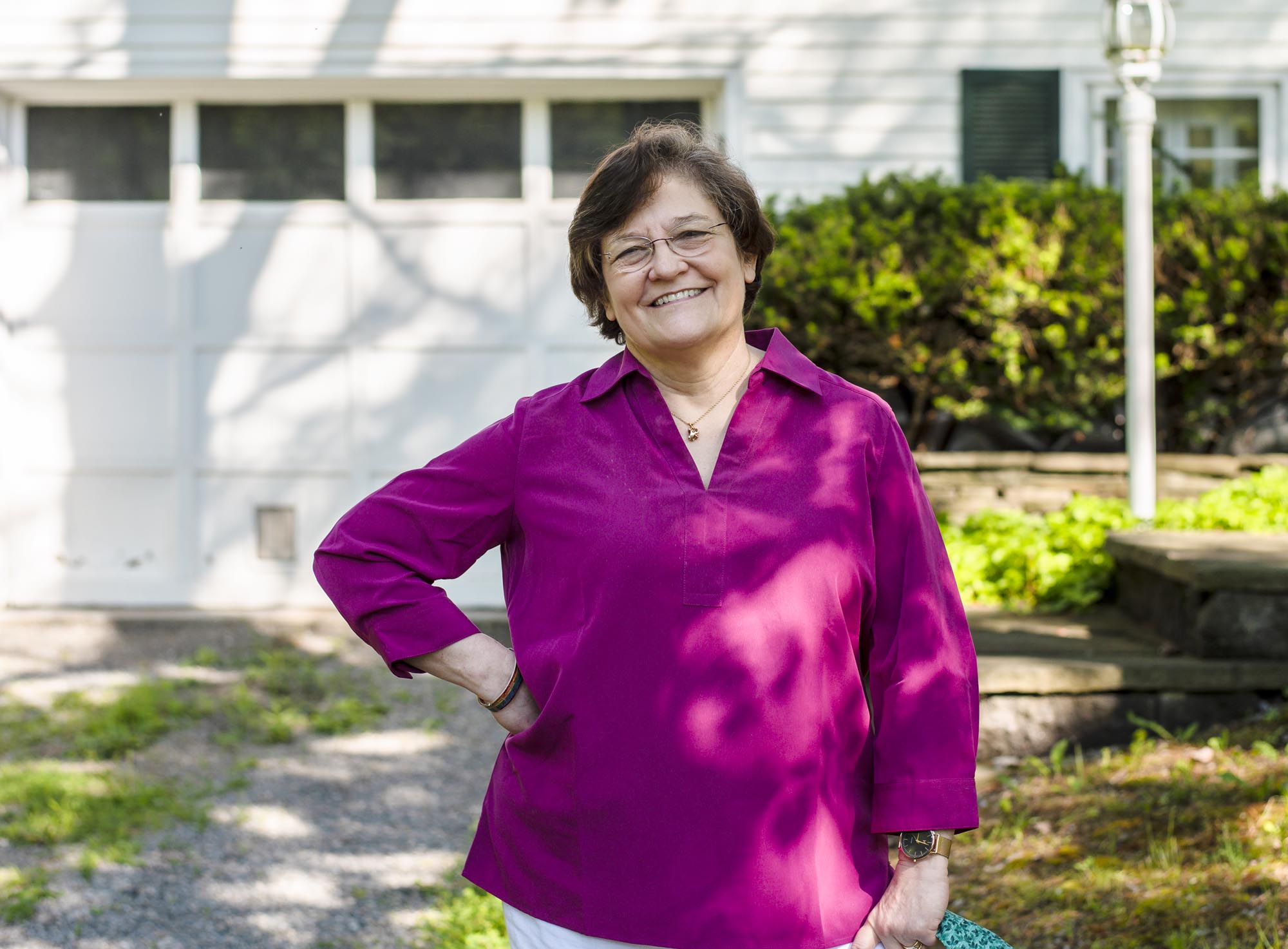
Oct. 12, 2017 was a seasonably cool evening. Debbie Ingram, coming off her first year in the Vermont Senate, left her Williston home and got into her car to drive down the road to the grocery store.
Ingram never made it there. Instead, she ended up in a ditch, her blood alcohol content more than twice the legal limit.
Now, almost three years later, Ingram, a social justice advocate and ordained minister in the United Church of Christ, says she hit bottom with the drunk driving arrest and it gave her the “wake up call” she needed.

“It really made me realize, ‘Oh my gosh, I do still have this disease and the treatment for it is I can’t drink at all,’” Ingram said, sitting under a tree in the shadow of the Unitarian Universalist Meeting House at the top of Church Street in Burlington.
Ingram has not shied away from speaking publicly about the experience of her arrest. Instead, she’s used it to inform her work as a legislator in Montpelier, where over the course of four years, she’s developed a reputation for promoting equity and social justice legislation. Now, Ingram is seeking the lieutenant governor’s office, from where she hopes to engage Vermonters in the lawmaking process and shape criminal justice and health care reform.
Ingram was fined $300 and sentenced to up to three months probation after her arrest. She was also required to to complete a safe driving course and engage in alcohol treatment. She says she hasn’t had a drink since that Thursday night in October. The blemish on her record apparently didn’t hurt her reputation with voters.
A year after her arrest, she was reelected to a second term in 2018 to represent Chittenden County.
She won more than 40,700 votes — third most among six incumbents behind Senate President Pro Tempore Tim Ashe and veteran Sen. Ginny Lyons, a Williston Democrat.
For Ingram, the community’s willingness to accept her history of substance use and reelect her was another example of how Vermont has embraced her since she moved to the state in 2000 to take advantage of its civil union law.
“You’ve seen the worst of me in some ways,” Ingram said, referring to her mugshot and police video footage that appeared in the press at the time.
“It’s kind of hard to embarrass me,” she said, in the voice that retains a shadow of her Southern roots.
Ingram, diminutive in stature with her oval spectacles perched snuggly on the bridge of her nose, does not shy away from speaking about her use of alcohol.
“It’s been almost three years now and I continue to be very diligent about my sobriety,” she said of the 12-step recovery program she participates in, as well as her efforts to strengthen her support network.
This year, she sponsored legislation, S.291, which proposes lowering the blood alcohol content limit from .08 to .05 in an attempt to force a cultural shift in how Vermonters approach drinking. However, the bill was not taken up and floundered in committee during the session.
In 2020, after two terms in the upper chamber, Ingram is running in what is expected to be a competitive four-way Democratic primary for lieutenant governor — with a list of candidates that include Senate President Pro Tempore Tim Ashe, Assistant Attorney General Molly Gray, and former gubernatorial candidate Brenda Siegel.
Through June, Gray has outpaced her Democratic competitors in fundraising, buoyed by her ability to continue campaigning while Ashe and Ingram remained involved in an extended legislative session as lawmakers focused on responding to Covid-19.
Ingram announced she would run for lieutenant governor on Jan. 15. Since then, she has raised more than $46,000.
By comparison, since Gray announced her campaign in January, she has brought in a total of $191,000. Ashe has raised roughly $80,000.
Ingram is banking on her experience in the Legislature and as executive director of Vermont Interfaith Action — a nonprofit coalition of congregations that advocate for social justice — as well as her service as an ordained minister in the United Church of Christ (UCC).
Lise Sparrow, a UCC minister in Guilford who has known Ingram for about 15 years, said she believes Ingram’s work with the church gives her a statewide network of potential support.
“Anyone who I’ve mentioned that she’s running is ecstatic,” Sparrow said.
“It does give her a natural constituency,” she added of Ingram’s connections and influence in the United Church of Christ.
Ingram first ran for Vermont Senate in 2012. She made it through the primary but didn’t win one of the six Senate seats in the general election. Four years later, with two seats vacated by departing incumbents, she was successful.
Since 2016, Ingram has served on the Education and the Health and Welfare committees. She has prioritized social justice legislation.
This has included repeatedly introducing bills to change Columbus Day to Indigenous Peoples’ Day, a measure that was enacted in 2019. She has also advocated for ethnic studies in education, the creation of a racial equity panel, and race data collection in law enforcement.
She has supported more affordable housing, universal school meals, expanding child care and after-school programs. And as a senator, Ingram has attempted to use other pieces of legislation as vehicles to bring her priorities forward.
“She would definitely try to add amendments to bills,” said Lyons, the chair of the Senate Health and Welfare Committee.
“One of her interests is in diversity and ensuring that there’s racial equity so if there were an opportunity to add that into a bill she would bring that up,” Lyons added.
Lyons, who also lives in Williston, said she was surprised by Ingram’s Jan. 15 decision to run for lieutenant governor.
“She didn’t, at least appear to me, to be aspiring to higher office while I worked with her in the Senate,” Lyons said. “I know that she has good organizational skills and really wants to continue contributing to Vermont.”
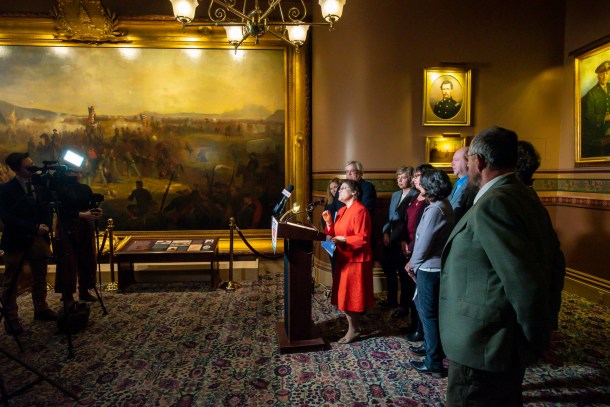
Ingram says she had been considering a run for statewide office for some time. Part of her motivation, she said, was the lack of women elected to the state’s highest offices. The position became open after Lt. Gov. David Zuckerman announced he would run for governor.
“Also as an LGBTQ person I feel some responsibility to young people coming along to kind of be a role model,” Ingram added. “We need more representation from marginalized communities.”
If she is successful in her bid, Ingram says she would hold town halls across the state to both educate constituents about matters at the Statehouse and learn what issues are affecting people the most.
“There aren’t any designated duties so you can really make of it what you’re interested in,” she said.
How Ingram came to Vermont
Ingram, 58, grew up in a small rural town outside of Savannah, Georgia. Her father served as mayor, and both of her parents were fervent churchgoers. They were also, she said, “major FDR-Democrats.”
Ingram’s father died when she was 16. She turned to her faith to make sense of his death.
“That’s really been the basis of my faith going forward,” Ingram said in a recent interview.
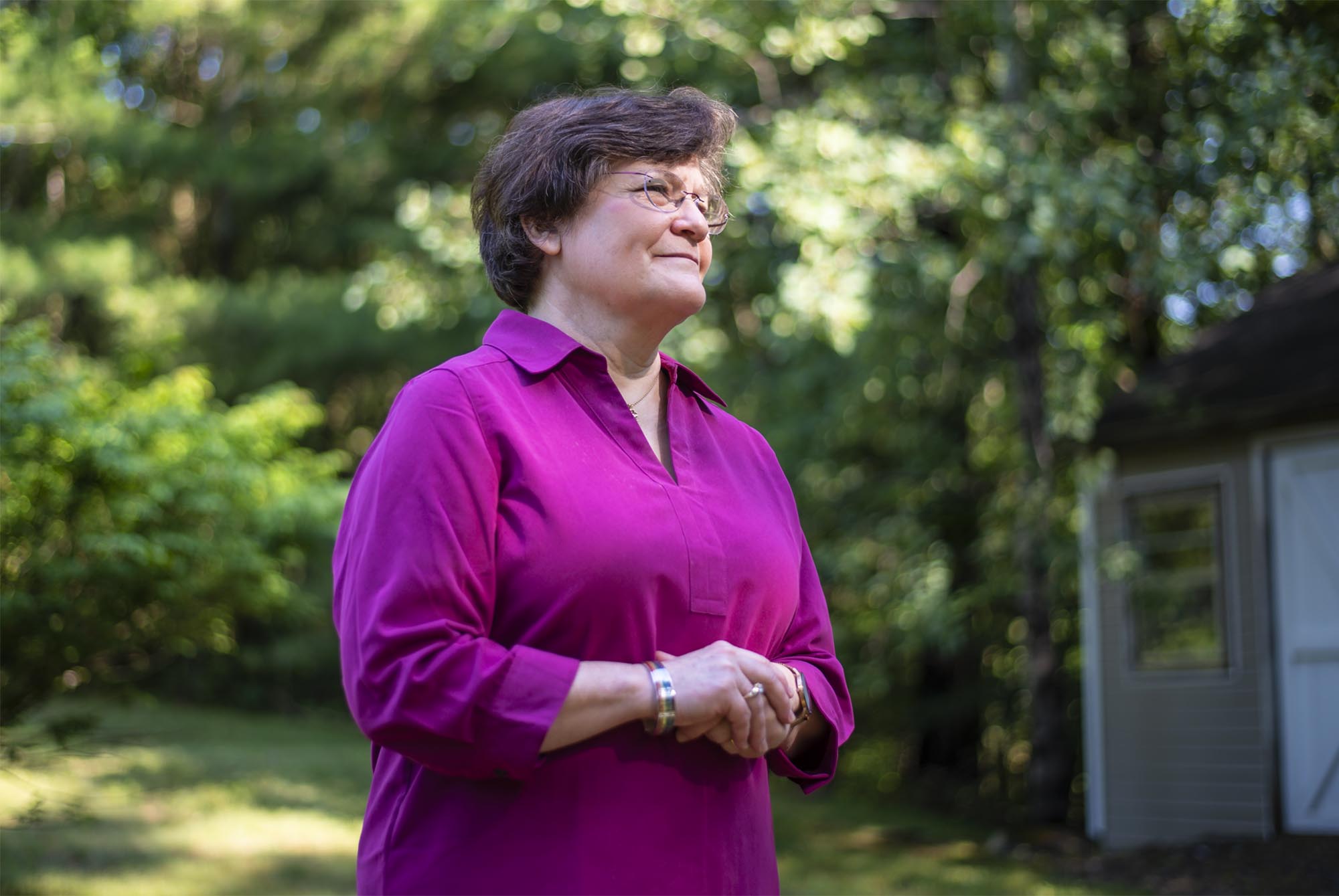
The Presbyterian Church would continue to shape Ingram’s life in positive and negative ways before she came to Vermont in 2000.
After graduating from Stanford University, Ingram spent most of her 20s in Los Angeles working in film and television production, a dream of hers since she was a young teen. Ingram recalls that the most popular project she worked on was the ABC television show “The Wonder Years” — which ran for six seasons between 1988-1993.
“I just really worked my way up the way you have to if you don’t have any connections,” Ingram said.
“I was working as a development executive for a large production company and I encountered comedy development which I always laugh and say is very good preparation for both politics and the ministry.”
While working in the entertainment business, Ingram maintained her religious ties attending Presbyterian Church in Southern California and finding solace in the community there.
“I got very active in the Presbyterian Church there and I really started feeling more at home with the folks that I was going to church with than I did with my colleagues in Hollywood,” Ingram said.
So at 28, Ingram quit her job and enrolled in the Fuller Theological Seminary in Pasadena. While she was in school she was given the Parish Pulpit Fellowship award which allowed her to travel to the United Kingdom to continue her divinity training.
“It’s a good preaching award,” Ingram said.
She went to Cambridge University to continue her studies, along the way working in a Sheffield inner city church, a suburban church in Birmingham, and even preaching in Westminster Abbey.
Ingram arrived back in Los Angeles in 1993. She began working for a Presbyterian Church in Bernardino County while rekindling her relationship with the woman who would become her life partner.
Ingram says that she and her partner remained in the closet. Their choice was to stay silent or face ostracization from the church she had been a part of since she was a young girl.
However during a discussion with church members about LQBTQ acceptance, people began to assume Ingram was gay.
“I really basically got run out of that congregation because they thought I was gay. I never actually even admitted that I am,” Ingram said in a recent interview with a laugh.
“The suspicion was enough, so there was a big groundswell against me,” she added.
Forced to change their lives, the pair decided to move to Bangladesh — where Ingram’s partner had connections and conducted research in the past — for seven years. During that time Ingram worked as a consultant and worked with non-governmental organizations on promotional videos with mostly Bangladeshi film crews.
Meanwhile her partner worked for Care International, a humanitarian aid NGO founded in 1945. They decided then to come out.
“We decided we wanted to be out from the very beginning and we sent a letter to all of our friends and relatives and then when she negotiated her package she insisted on them treating our relationship equally,” Ingram said.
The couple started pondering a return to the U.S. in the late 1990s. After Vermont passed its civil union law in 2000, Ingram and her partner vacationed in Vermont.
“We came, got a civil union and traveled all over the state,” Ingram recalls. “We fell in love with Vermont and so then a year and a half later we decided to move back to the U.S. and we decided to move here.”
Ingram and her partner remained together until 2007 when their civil union was dissolved.
“Our relationship kind of fell apart,” she said. “I usually tell people my relationship with her didn’t last but my relationship with Vermont flourished.”
After the split, Ingram decided to stay in Vermont, and return to her faith, in spite of the earlier rejection by the Presbyterian Church in California.

Ingram’s first position in Vermont was filling in for a pastor on sabbatical at the Richmond Congregational Church. Then she became the executive director of Vermont Interfaith Action. After that she was ordained in the United Church of Christ, where she also held several leadership roles.
“It was very moving because I had been shut out of any of those kinds of roles in the Presbyterian Church in California. So it was really wonderful to be accepted for who I am here,” Ingram said.
“I found refuge here in Vermont, not just in the state and the way the laws have been set up but also in the church here in the United Church of Christ,” she said, fighting back tears.
Sue Brooks, former president of the Vermont Interfaith Action board, said Ingram has taken the nonprofit from being a “kind of a little pissant troublemaker” to a powerful voice advocating for social change in Vermont.
The religious nonprofit has pushed for progressive policies in recent years. Ingram and the organization have lobbied for the state to adopt a livable wage for all Vermonters, paid family leave, expansive criminal justice reform, finding a solution to homelessness and other policy measures.
“She’s done all this in a very quiet way,” Brooks said. “She’s not a noisy troublemaker.”
