

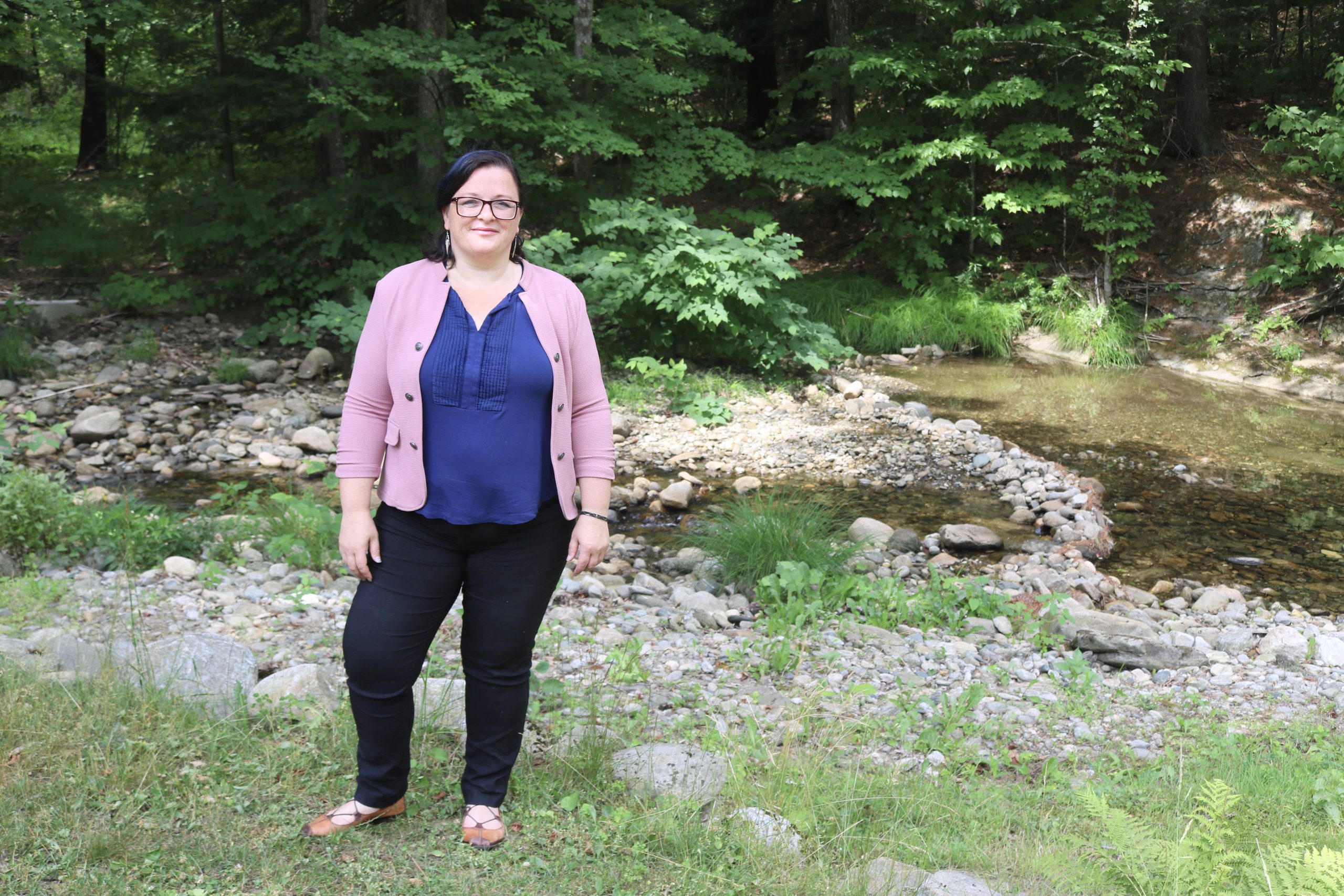
NEWFANE — While sitting on the back lawn of the Four Columns Inn, Brenda Siegel theorized about how she would use the lieutenant governor’s office to ensure that regular Vermonters can effect change in the Golden Dome.
“I envision a Statehouse 101 type of class,” she said with a laugh. “This is what the Statehouse is, these are the committee rooms, this is a map.”
The hypothetical classroom symbolizes a central cause behind Siegel’s campaign for lieutenant governor: Vermont politics needs to be more accessible to the marginalized. Because if the people’s voices aren’t loud enough, power can’t shift, Siegel says. And the people aren’t loud enough because they don’t have reliable transportation or they can’t afford to take time off from work to testify before lawmakers.
In Siegel’s words, the system blocks them out.
Siegel, 43, is widely known as an activist. She’s on the shorter side with a round face and dark hair. She currently has a few blue streaks in it — a sign that despite her professional attire, she’s got some sass.
She spelled out her vision for the LG position while sitting in a bright red Adirondack chair on the back lawn of the Four Columns Inn. The early July scene was idyllic. A stream runs through the Four Columns Inn property amid an abundance of foliage and blooming flowers. The inn and restaurant is a hub in Newfane. And while it’s one of her favorite places to visit, Siegel said, she says the prices on the brunch menu are more than she can afford.
Siegel is a single mom. She became pregnant with her son, Ajna, when she was 24. In her early adult life, also while taking care of a child on her own, Siegel said she was hit with crisis after crisis that contributed to her financial instability.
Her brother died from a drug overdose when she was 19. About 20 years later her nephew, the son of her brother, would also die from an overdose in 2018. When her son was a toddler, Siegel said they had to leave the low income housing they found, along with all of their belongings, after a lead paint job went wrong and contaminated their home and also poisoned Ajna. And then in 2011, when Tropical Storm Irene hit, they lost everything again, she said.
“I didn’t expect that I would end up in poverty. I didn’t expect that I would struggle financially,” Siegel said, who had grown up in an upper middle class family in Brattleboro.
“I have never experienced homelessness,” she said, “and that’s only by the grace of having a family who I could live with at times when I couldn’t support myself.”
These personal experiences led her to understand how difficult it is to climb out of poverty and find stability. Even when you’re well educated and have a supportive family, it can be impossible to navigate complex benefit and resource systems, Siegel said.
“It’s a full time job of fiery hoops that you have to jump through that are too small for your body to get through those systems,” Siegel said.
“Even though I had been politically active, even though I had had the upbringing that I had where I did experience enormous privilege, even though all that was true,” Siegel said, “the second that I was struggling financially and that I was alone with a baby, I believed my voice not to matter.”
Siegel made an unsuccessful attempt for the governor’s seat in 2018. Back then, she said, she was undoubtedly the underdog. It was her first campaign — she claimed 21% of the vote in the Democratic Party primary won by Christine Hallquist, a third-place finish which she saw as a victory. Additionally, it gave her a name recognition boost that she’s using in this race.
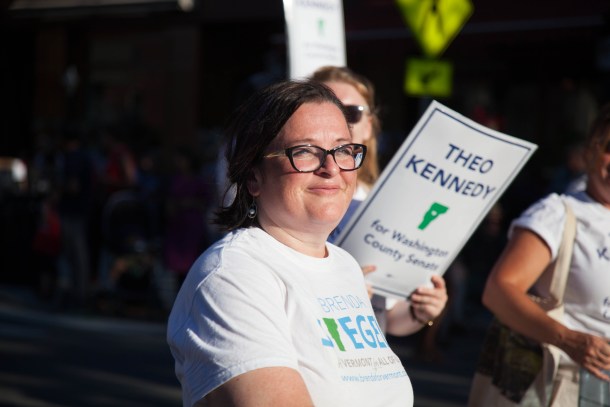
Her fundraising lags behind some of her Democratic competitors. Assistant Attorney General Molly Gray is leading the pack while Sen. Tim Ashe, D/P-Chittenden, follows. Siegel has brought in about $46,000 as of July 9, according to the Secretary of State’s Office, which is about even with Sen. Debbie Ingram, D-Chittenden, who is also vying for lieutenant governor.
Siegel blames her low numbers on a lack of institutional connections or wealthy family members donating to her campaign, which she says is a handicap in her effort.
“Every ounce of political clout I’ve earned and I’ve fought for,” she said.
Her career in politics and activism first began when she interned for Bernie Sanders’ office in 2001, before she became pregnant. Since then, her reach and interest in activism has grown. Just after her son was born she opened a yoga and breakdance studio. That morphed into a traveling after-school program that taught the anatomy and physiology of dance and movement. Her teaching took on more of a social justice and civic engagement lens, which is most of the work she does now, she said.
It’s difficult to keep track of all the political organizations Siegel is involved in. She’s chair of the Newfane Democratic Committee, a member of the Raise the Wage coalition and active within Rights & Democracy, a progressive nonprofit that also endorsed her for lieutenant governor. There are still others: she’s involved with activist organization the Putney Huddle, she’s on the board of the Community of Vermont Elders and a member of the legislative equity caucus.
And she’s been a vocal supporter, and critic, of legislation she feels either supports or detracts from the causes she’s deeply invested in. This past session, Seigel was a champion of a bill, H.162, that would decriminalize small amounts of the narcotic buprenorphine, a prescription opioid-addiction treatment drug.
She’s also been a vocal critic of H.783, a bill that aims to facilitate the creation of more addiction recovery homes. Siegel says some components of the bill would allow recovery homes to remove residents more easily if they have a recurrence. That provision aims to keep other tenants on the path to recovery, but at the cost of another resident’s instability, Siegel argues.
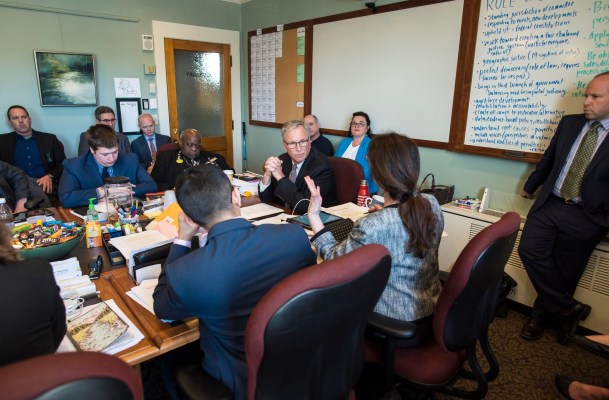
If she’s this invested in legislation, why isn’t she running for the Legislature? While the lieutenant governor has little power over the progression of bills in the Statehouse, Siegel views the position as an opportunity for a different kind of organizing under the Golden Dome.
“One thing that I’ve seen,” Siegel said, “is that the uprising from people around the state has to happen if we want change. I’ve heard more than once” — from the lawmakers Siegel aims to persuade — “you don’t have enough people coming to us on this issue. And that’s really hard to do … because these are not people that have the ability to take time out of their day and come to Montpelier.”
She plans to use the position to affect legislation in a different way. She envisions that her office can create groundswells of grassroots support for legislation that needs momentum to cross the finish line.
The breadth and fervor of her activism hasn’t gone unnoticed, said Rep. Mari Cordes, D-Lincoln, who has also endorsed Siegel’s run for office. As a fellow activist drawn to issues of social, economic and racial justice, Cordes became aware of Siegel in the same organizing circles she was involved with. Now they work to support each other’s progressve work.
“She has a lot of energy and a lot of compassion,” Cordes said. “She has ‘lived experience’ as someone who has been without and someone who has lost loved ones to the opioid crisis.”
Cordes said Siegel’s vision for the lieutenant governor position — defined by her intent to uplift the voices of marginalized Vermonters — reminds her of current Lt. Gov. David Zuckerman’s model of leadership.
“Getting out into the community, connecting with ordinary Vermonters, listening to their concerns and finding ways to lift those concerns up so they can get addressed,” Cordes said. “I think that’s critical and I think the lieutenant governor position is perfect for that.”
Cordes described Siegel as “fierce,” a word that Laura Chapman, chair of the Putney Selectboard, also used to depict Siegel, who she has been friends with for years.
“I mean, she’s fierce,” Chapman said. “I recently said that, in my mind, she’s very much like a female Bernie Sanders.”
Chapman made this connection because of Siegel’s strong commitment to her progressive principles — very much in the same style of Vermont’s junior senator.
But beyond Sanders’ progressive beliefs and political triumphs that led him to presidential bids in 2016 and 2020, he’s also known to be uncompromising to a fault, possibly representing another parallel to Seigel.
Chapman recalled the debates Siegel would find herself in during conversations among the Windham County Democrats group, which both women were a part of.
“She is always willing to push for the right agenda, not the agenda of compromise. And so I often found that we were sitting in a room of people who were pushing back hard, saying we needed to compromise. And Brenda always pushed it one more tick. You know, one more level,” Chapman said. “And that’s something that’s so needed in our world.”
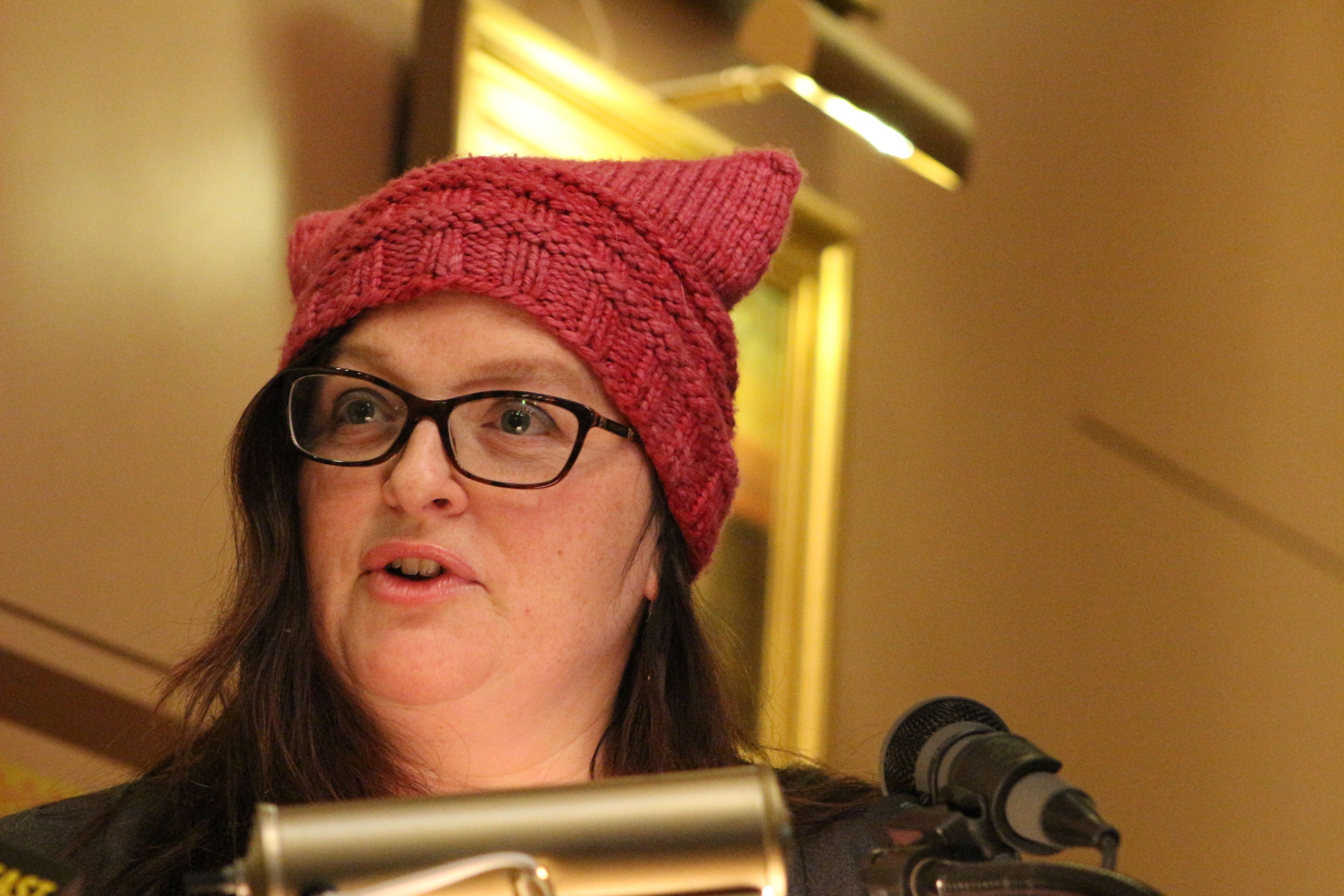
Siegel’s passion for issues of justice and equity overflows at times when she speaks. And she hasn’t been afraid to call out pieces of legislation that don’t align with her principles.
But she is willing to engage in difficult conversations. She said she’s sat down at the Republican tables in the Statehouse cafeteria to hash it out over policy. And she said she walks away remaining friends with those lawmakers.
But as lieutenant governor, she wouldn’t be able to directly impact policy. Her main role would be facilitating Senate floor action and filling in for the governor when they are out of state. Will she be able to rein in her passion?

Here’s where Siegel says her argument for the position comes full circle: She said it’s time for others to step up to the plate and do the advocating. And she wants them to help her do that as lieutenant governor.
“Effective leadership isn’t all about only one strategy for moving policy. It’s about using multiple strategies that you’re good at and knowing where your strengths are and knowing when it’s a moment to say this is not for me,” Siegel said.
“Maybe I need to find other people who can do this too. Also knowing when to step back from the podium and let other people’s stories come forward.”
Clarification: This story was updated to include a more precise description of factors that Siegel feels handicap her campaign.

