


Most of the top candidates seeking statewide office reported substantially higher incomes than the average Vermonter, according to tax returns and financial disclosure forms filed with the Vermont Secretary of State.
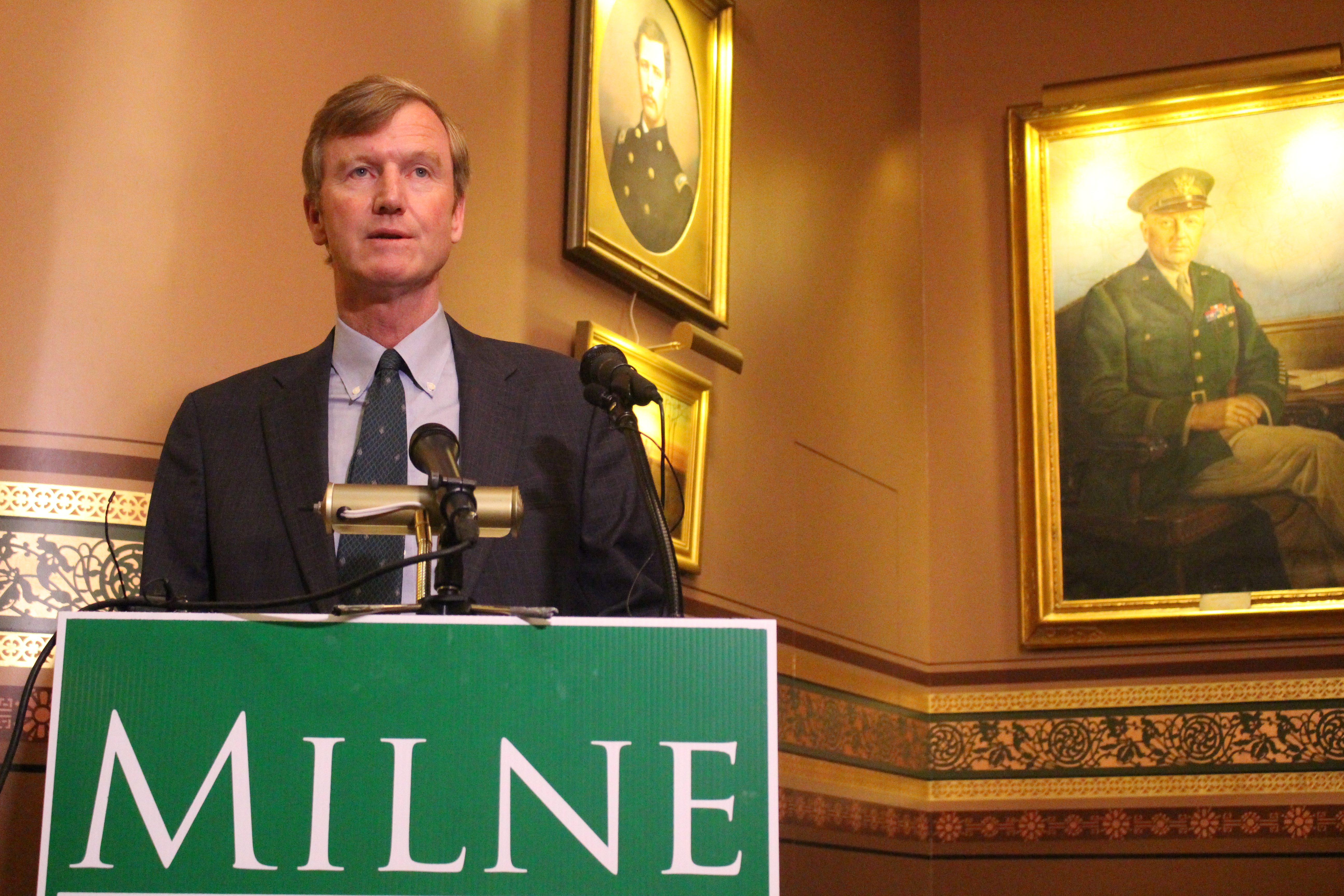
Scott Milne, a Republican running for lieutenant governor, reported an income of more than $2 million in 2018 — compared to the median Vermonter’s $60,000 income — with the majority coming from $1.7 million in capital gains and more than $300,000 from his travel agency Milne Travel, according to the tax returns statewide office seekers are required to file.
Milne, who ran for governor in 2014 and U.S. Senate in 2016, told Seven Days that the bulk of his income came from the sale of Ethereum cryptocurrency, a digital credit similar to Bitcoin.
The other top earners seeking higher office include Gov. Phil Scott, who is seeking his third term; Rebecca Holcombe, a former education secretary running for governor as a Democrat; former Republican lawmaker Carolyn Branagan, who is challenging Beth Pearce for state treasurer; outgoing Rep. Linda Joy Sullivan, D-Dorset, who is mounting a primary challenge to incumbent Doug Hoffer; Patrick Winburn, a Bennington lawyer running for governor as a Democrat; Sen. Debbie Ingram, D-Chittenden, who has thrown her hat in the ring for lieutenant governor; Secretary of State Jim Condos; Lt. Gov. David Zuckerman, who is now running for governor; and Attorney General TJ Donovan.
Holcombe reported that she and her husband — James Bandler, a journalist with Propublica — had an income of just more than $400,000 in 2019. Winburn and his wife reported $235,000 in 2018 and Zuckerman — a Progressive Democrat — along with his spouse had an income of $191,193 in 2019 including about $24,000 in dividends and more than $171,000 in capital gains.
Zuckerman told Seven Days that much of the income came after he inherited investments in the wake of his mother dying earlier that year and chose to divest from fossil fuel, airline and pharmaceutical companies.
Scott, the incumbent Republican governor, and his wife reported an income of $292,000 in 2018.
Other candidates disclosed much less income in recent years.
Brenda Siegel, a progressive advocate who is running for lieutenant governor after a failed gubernatorial bid in 2018, reported making just slightly more than $8,000 in 2018. John Klar, a farmer and a self-described Agri-publican who is challenging Scott in the Republican primary for governor, made $34,539 in 2019.
Senate President Pro Tem Tim Ashe, D/P-Chittenden, who like Siegel is seeking the Democratic nomination to be lieutenant governor, reportedly made $47,000 in 2018. Ashe and Paula Routly, the publisher and co-editor of Seven Days, are domestic partners and filed separate tax returns.
Statewide candidates must file their most recent tax returns — because the tax deadline was extended this year due to the coronavirus, some candidates reported their 2018 earnings. There is no tax return requirement for individuals seeking seats in the Vermont Legislature. Those candidates only need to fill out a brief financial disclosure form which requires reporting any source of income of $5,000 or more.
Sen. Anthony Pollina, P/D-Washington, the chair of the Vermont Progressive Party who has long advocated for campaign finance reform, said he thinks the disclosure forms, though limited, are “adequate” for legislative candidates — particularly considering the opposition financial disclosure efforts have faced in the Statehouse.
“I don’t think it’s a perfect system,” Pollina said. “There has been a lot of resistance to doing it in the first place and it was not easy to pass into law what we did pass about the broad strokes of where your income comes from.”
“I don’t think legislators or candidates have much to hide, but I just think people are resistant to feeling like they’re required to disclose things about themselves that they don’t think should be public,” he added.
Paul Burns, the executive director of the Vermont Public Interest Research Group (VPIRG), said he supports the distinction in the requirements for statewide office seekers and state legislators because of the difference in the “capacity for making decisions about how state dollars are deployed.” But he said the requirements for legislators could be “strengthened somewhat.”
“Even the requirements that exist today are modest and provide information that is fairly vague,” he said. “It’s not very intrusive and it is, in some ways, not nearly as helpful as many voters would probably want it to be.”
Following the 2018 election, the House Ethics Panel found disclosures for about 30 members of the House were not released by Election Day.
This year, compliance appears to be higher, with disclosure forms from just six candidates — three incumbents and three newcomers — currently missing from the Secretary of State’s database.
The three incumbents whose forms are missing — Rep. Matt Birong, D-Vergennes; Rep. Diane Lanpher, D-Vergennes; and Rep. Chip Troiano, D-Stannard — all said that they have filed the required forms with their respective town clerks.
“Sometimes, it’s not the fault of the candidate that their financial disclosure doesn’t get filed,” said Rep. John Gannon, D-Wilmington, who chairs the House Ethics Panel.
“Sometimes clerks fail to file the financial disclosure with the Secretary of State’s Office. Now, obviously the candidate has some responsibility to make sure that that does get filed. But, I mean, I think that happens in certain circumstances,” Gannon said.
The statute requiring candidates to file the forms, though, includes no enforcement mechanism for non-compliance. The House Ethics Panel sent out reminders during the legislative session in 2019 to members of the body whose forms were missing. No such reminders have been sent out ahead of Election Day this year, according to Gannon.
Larry Novins, the executive director of the Vermont Ethics Commission, said the body has “no ability to do anything about” candidates who do not file the forms because it has “no authority” over them. Vermont’s Ethics Commission can review ethics complaints, but has no investigative or enforcement power.
The disclosure form requirement was created as part of Act 79, passed in 2017, which established the Ethics Commission.
“Theoretically this stuff should start going through the Ethics Commision once that has some teeth,” Pollina said.
“I think it’s a measure of what kind of a priority this is that it has no real enforcement mechanism today,” Burns said. “It’s very much like our ethics law that lacks any capacity for investigation or enforcement of ethical violations. Yes, these are real deficiencies, I think, as a matter of public policy.”
Two bills currently being considered by the Legislature — S.198 and H.634 — would require the commission to draft an enforceable code of ethics for all state employees, including legislators.
The House bill would also require candidates to certify the truth of their disclosure forms and for executive office holders to file disclosures annually, as opposed to just in election years.
“We like to consider our public servants to be ethical and to be complying with the law,” Novins said. “But we don’t have any means, really, to make sure that that happens. And that discussion needs to continue and it needs to be a little more fruitful.”
Novins added that the Legislature’s decision to require financial disclosure forms was a “good step in the right direction,” but he said the system would benefit from more enforcement.
“As in all first steps, it would profit from having a second step,” he said.
