


VTDigger is posting regular updates on the coronavirus in Vermont on this page. You can also subscribe here for regular email updates on the coronavirus. If you have any questions, thoughts or updates on how Vermont is responding to COVID-19, contact us at coronavirus@vtdigger.org
This story was updated at 1:52 p.m.
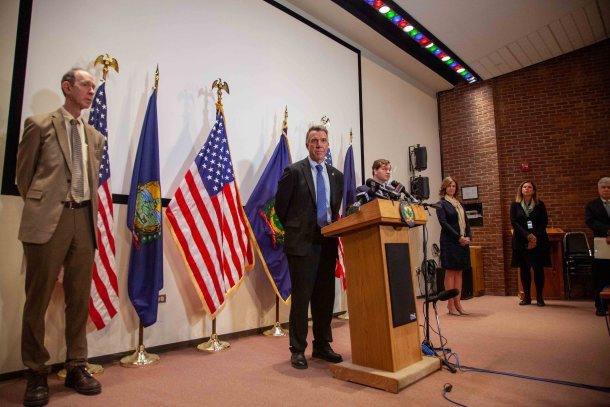
Gov. Phil Scott on Saturday extended an earlier executive order closing exercise facilities, hair salons, spas and tattoo parlors by 8 p.m. on March 23.
The order also limits non-essential gatherings to no more than 10 people at once in a single space.
The measure is aimed at reducing the risk of COVID-19 infection to people who are elderly or have chronic medical conditions, and at slowing the spread of virus overall.
“We will continue to make decisions based on science and guidance from our experts,” said Scott in a statement. “I don’t make these decisions lightly and my heart goes out to these workers and small business owners who are feeling the negative effects.”
Scott’s order is the latest in a series of directives that have closed K-12 schools, child cares, and dine-in restaurants and bars in an effort to limit the spread of the virus, which is estimated to have infected at least 17,000 people in the U.S. as of Saturday. Two deaths from the virus have been reported in Vermont.
Like many U.S. governors, Scott, acting on guidance from the U.S. Centers for Disease Control and Prevention, had earlier limited public gatherings to 50. That led to a wave of changes. Some businesses, like Globalfoundries in Essex Junction, had employees work remotely if possible; some small businesses have suspended operations altogether. Darn Tough, the Northfield sockmaker, sent its manufacturing employees home.
Many salons closed down on their own last week, many because clients were canceling. But others have been operating through the mounting crisis. Scott’s order will particularly hurt those without emergency reserves.
“I probably have a month’s worth of money I can pay my bills with,” said independent stylist Joe Hutchinson, who was spending his Saturday morning calling clients to cancel. He said his day had been fully booked.
“I can’t reschedule, due to we don’t know when we’re reopening,” said Hutchinson.
A national movement
Scott’s orders are similar to those undertaken by other states. The states are responding independently to the crisis, but most are relying heavily on guidance from the CDC, the National Institutes of Health, and a few other federal entities.
As of March 20, 45 states had decided to close schools, according to Education Week. With laws and rules changing every day, there’s no definitive tally available of the other actions states are taking regarding bars and restaurants; crowd sizes, essential workers, and the ordered closures like the one Scott issued Saturday.
Not everyone is accepting the directives. In New Hampshire, political and religious activists have sued to stop New Hampshire Gov. Chris Sununu’s restriction on public gatherings to 50 or under. The suit, in Merrimack County Superior Court, asks a judge to issue an injunction against the ban.
One in four Americans is now effectively sheltering in place, the New York Times reports, with the states of New York, Connecticut, New Jersey, Illinois and California closing all but the most essential businesses.
Few objections heard in Vermont
Betsy Bishop, the president of the Vermont Chamber of Commerce, said she hadn’t heard from any members who want to resist the ban.
“Most people that I have been talking to believe that we need to take these drastic actions,” she said. The Chamber is trying to mitigate the impact of the closures by advocating for some policy changes that will help its members weather the downturn more easily.
One is complete abatement for the state’s rooms and meals tax from February and March. The tax, which is due March 25, is drawn from all restaurants and lodging properties, a sector that saw business drop to nearly zero almost overnight. The tax is 9%.
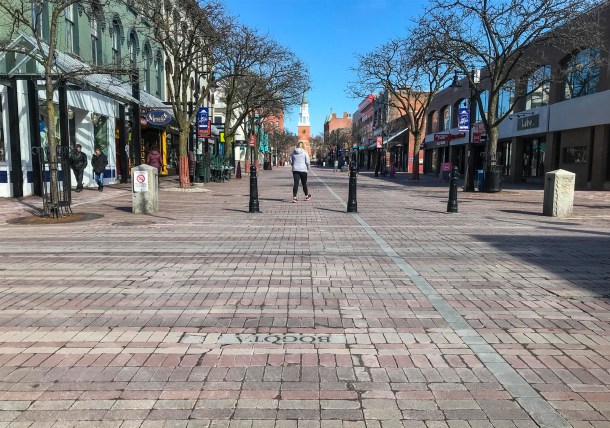
“If that is allowed to happen, that money can stay within the restaurant so they can be prepared to hire people as soon as the order is lifted,” said Bishop on Saturday. “We have been working with restaurants and the governor’s office and legislators to have them understand what is at stake.”
Another change sought by the Chamber is changes to the individual employer experience rating, the rating that determines how much employers pay in unemployment insurance. Those who make heavy use of the insurance pay more. In the case of the COVID-19 pandemic and shutdowns, some employers maintain they should not be penalized for letting workers go, because they were ordered to close. Many others who weren’t ordered to close — such as inns and B&Bs — have closed anyway because all their reservations were canceled. The state acceded to a similar request on this in the wake of Tropical Storm Irene in 2011.
“Our initial conversations have been very positive with multiple different folks in the Legislature,” said Bishop. She also noted the Vermont legislative session has been suspended from March 13 through March 24. “But of course they have to meet at some point to make that happen.”
Iri Sunj, who owns Salon Vermont with his wife Ines Ogorinac, called the shutdown “economically devastating,” but said it was overdue. He had written to the governor’s office recommending the move.
“It was evident early on that this industry is intimate and that social distancing is nearly impossible regardless of how much one sanitized, especially that it is transmitted by people without any symptoms,” said Sunj, who is also an R.N. “A viral pandemic cannot be contained if only few industries are closed, but rather all non-essentials and people staying at home,” he said.
Sunj said he and his wife would suspend rent payments from the 10 stylists who work as independent contractors in his salon.
Hutchinson, in Fairlee, said he could understand why larger salons should be closed to limit contact between more than 10 people at a time.
But “our salon’s pretty small – there are only three stylists including myself – and we would have been fine,” Hutchinson said.
Classifying who is ‘essential’
Also on Saturday, Scott proclaimed that non-essential gatherings of more than 10 people were no longer allowed. That rules out social events, but doesn’t include a host of business operations.
Still considered essential, the executive order said, are “normal operations at airports, bus or railway stations where persons may be in transit; typical office, construction, manufacturing, grocery, food production, retail and retail banking, professional or other employment environments; gatherings of the press; or operations of the Vermont Judiciary or General Assembly consistent with their constitutional authority.”
The conversation about who is essential and who isn’t is another important one for the Chamber. Bishop said she’s hearing from a lot of members in the business community who say they are essential.
States and the federal government need to decide together who is essential and who isn’t, said Bishop.
“I have to say, these businesses have very good arguments as to why they are essential,” she said.
