

VTDigger is posting regular updates on the coronavirus in Vermont on this page. You can also subscribe here for regular email updates on the coronavirus. If you have any questions, thoughts or updates on how Vermont is responding to COVID-19, contact us at coronavirus@vtdigger.org
Vermont schools are not only expected to keep educating and feeding students during the coronavirus crisis — Gov. Phil Scott has given them an additional charge: providing childcare for workers considered “essential” to the state’s response.
Some teachers have balked and under pressure from the state teacher’s union, Scott administration officials have stressed that school staff concerned for their health can stay home. And that’s left many local district leaders wondering if they will have enough capacity to carry out the work ahead.
“We’re going to have to figure out if we have enough staff to cover those essential functions. And then, if we don’t, we’re going to figure out what’s the priority,” said Franklin Northeast Supervisory Union Superintendent Lynn Cota.
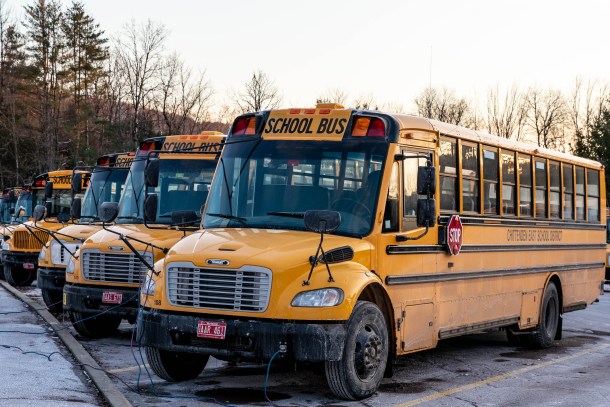
Within a matter of days, Vermont’s public schools have been asked to radically retool how they teach, feed, and care for children. On Wednesday, fleets of buses departed school parking lots across the state, including in Burlington, to drop off bagged lunches and breakfasts to strategic drop-off points in their communities. Most schools are offering the meals to anyone under 18, no questions asked.
Schools have surveyed families and distributed laptops to those who don’t have computers at home. In living rooms across Vermont, students will be teleconferencing into classes, or at work completing worksheets sent home on Tuesday.
But with both schools and child care providers shuttered to the public, the state is also scrambling to find care for the children of those on the frontlines of the outbreak.
In an executive order issued late Tuesday evening, Scott ordered public schools to provide care for the children of eligible families, and noted that districts should prepare to offer extended hours of care, as needed.
Vermont isn’t the only state employing this tactic in the rapidly evolving public health crisis. Michigan’s governor has also ordered schools open emergency child care centers, and a similar proposal is under consideration in North Carolina.
But alarmed at the possibility of catching or spreading the virus themselves, many teachers and support staff have balked at requests from their superintendents to come into work. And in a message to its members Wednesday morning, after the governor had announced his childcare mandate, the state’s teacher and support staff union told its members it would demand the administration sit down with them to hash out the details of the plan.
“While we agree that all of us have a role to play in these trying times, the governor’s decision to not involve us in these discussions was ill-advised and seriously disappointing,” said VT-NEA president Don Tinney.
“Our team’s goal is to insist that this program be completely voluntary, that it respects the latest health and safety protocols defined by health experts,” he added.
Secretary of Education Dan French clarified in a Wednesday press conference that no school employee was required to be in a school building “if they have concerns about their personal personal health.”
He added that certain people were specifically exempted, including those over 60, those with compromised immune systems or living with someone who was immunocompromised, pregnant educators, educators with infants, and educators “suffering from anxiety.”
Scott’s childcare mandate to schools only applies to eligible children aged 6 through grade 8. Private child care facilities, meanwhile, are being urged – but not required – to provide services to the infants and toddlers of “essential” workers. Those childcare centers not serving the families of such workers have been ordered to shut down completely. The state is using an online form to try and connect eligible families with care.
Essential persons are defined broadly under the governor’s mandate, and include healthcare workers, first responders, utility workers, criminal justice personnel, some state employees, and those working in food distribution and grocery stores. Administration officials have also stressed the list could expand.
“How am I going to get teachers to do the work if I don’t have volunteers that want to do the work? I just don’t know how I navigate that,” said Jackie Wilson, the superintendent of the Bennington-Rutland Supervisory Union.
Wilson said she’s sympathetic that quick, top-down decisions are necessary in a crisis situation. But she also wonders about how realistic the state is being about the services schools can maintain if they remain closed in the long run, particularly with reduced staffing.
The Scott administration has also said they expect remote learning plans to be in place so students can progress academically in the event schools need to stay closed past April 6. But an estimated 20 percent of students in Wilson’s sprawling, 12-town supervisory union don’t have access to the internet at home.
“I’m concerned that there’s an absence of understanding as to what the real capacity is to handle these challenges and the way we’re being asked to handle them,” she said.
In the Orange Southwest School District, Randolph Elementary had a program up and running Thursday morning serving children whose parents work at the nearby Gifford Medical Center. For now, it’ll take children from preschool through sixth grade, said principal Pat Miller, and currently has enough capacity for about 20 kids.
But while Miller said she’s proud and grateful for district employees who have volunteered to staff the program, she readily admits she doesn’t have enough people available to serve all the kids technically entitled to it under the governor’s order.
“I am worried that I don’t have enough personnel – appropriate personnel – to do all those categories,” she said.
Already, the district is triaging requests from parents, and asking those who contact them if anyone at home is available to provide care, even if they’re working remotely.
