


VTDigger is posting regular updates on the coronavirus in Vermont on this page. You can also subscribe here for regular email updates on the coronavirus. If you have any questions, thoughts or updates on how Vermont is responding to COVID-19, contact us at coronavirus@vtdigger.org
Gov. Phil Scott’s announcement Sunday afternoon that schools would need to shutter by Wednesday to stem the spread of COVID-19 came with large asks but few instructions.
Anticipating such a shutdown, many districts had already begun quietly making contingency plans. But the governor’s directive still left schools with just days to redesign lessons for remote instruction, figure out how to maintain special education services, and devise ways to feed the thousands of children who rely on schools for food — all while minimizing human contact.
“There’s a thousand logistical things that have to be worked out. And I think people are just going to have to be patient with each other,” said Jay Nichols, the executive director of the Vermont Principals Association.
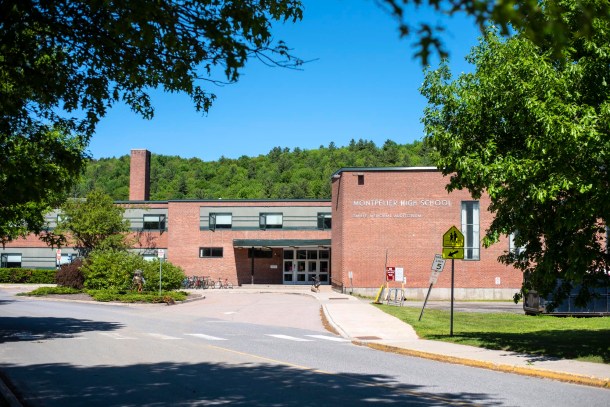
In the Montpelier-Roxbury school district, Superintendent Libby Bonesteel said staff “started going into insane planning mode last Monday.”
Preliminary plans are in place to feed students once the shutdown occurs using both a drive-through method and by busing meals to drop-off points. And a hotline is being established to get students mental health support remotely.
But Bonesteel still worries meals won’t get to every student who needs them and that remote mental health support won’t be as effective as in-person counseling. She’s also concerned for her staff, who have been asked to pivot on a dime while also contending with what this public health crisis will mean for their own families.
And while Bonesteel said she’s fairly confident educators will be able to work through the kinks of online learning, she struggles to see how special education services will be delivered to students who must stay outside the classroom.
“That’s going to be a much higher learning curve. How do we provide services that really influence learning for our most vulnerable population?” she said.
Keri Cole, a parent in Woodstock, said she knows a special ed teacher who is communicating with parents by text.
“She’s doing things with parents like sending home particular assignments and then they’re communicating through text pictures with their phones,” Cole said.
Online learning is already a regular part of the curriculum for many students who use internet programs as part of their regular classroom practices. In normal times, students who can’t get online at home have been able to work online at school or at libraries. But with libraries closing too, many school officials are sending homework in paper packets.
“Probably a third of my students don’t have reliable internet access at home,” said Mark Tucker, superintendent of the Caledonia Central Supervisory Union. On Monday, with students still available in the building to answer questions, Tucker had staff survey the children to find out how many would be able to work online.

“We’re going to try not to put an online expectation on a kid who doesn’t have reliable service at home,” said Tucker.
In some homes, there’s Wi-Fi, but it doesn’t allow more than one person to work at once, said Jacki Murano of Searsburg, who is chair of the local school board and the parent of a third grader and sixth grader. Murano said connectivity speeds where she lives in southern Vermont are about the same now as they were 20 years ago when she was a high school student in Townshend.
“At our house, somebody can’t be watching a tutorial on YouTube while somebody else is doing math drills,” she said. “The internet doesn’t support it. You sit there watching the screen buffer.”
In the North Country Supervisory Union, Superintendent John Castle said educators were “scrambling” to figure out how to support special education students, who make up about 25% of the supervisory union’s population.
North Country Supervisory Union is also surveying parents to get a clearer picture of both in-home internet access and the need for food. As in Montpelier-Roxbury, buses will likely deliver meals to regular drop-off locations. But Castle also wonders what remote learning will look like in households that don’t have internet connectivity, either because the community lacks access to broadband or because families can’t afford it.
“Without question, there is going to be a real interruption in learning. We have to recognize that. That there will be a diminished ability for students to access their learning this year,” he said.

Connectivity concerns aside, Jeff Renard, the director of the Vermont Virtual Learning Cooperative, also argues that pivoting to online instruction is not as simple as some might think.
“That’s one of my biggest fears. The expectation that’s being put on teachers to just make this really dynamic change and not allowing them to really acclimate to the use of technology and connecting with their students first,” he said.
In many schools, teachers are being asked to report to work even after buildings close to students, at least for now. That’s alarming many educators, who worry about catching the virus – or passing it on – and who suddenly find themselves without child care options as their own children’s schools shut down.
Darren Allen, the spokesperson for the VT-NEA, said there was “no consistency from district to district” about whether employees were expected to report to work physically.
“Whatever instruction they’re able to do, however they’re able to help kids, they’re going to do it. But again, underlying everything is a fear for their own health and safety,” he said.
Paying hourly workers is also an outstanding question. At a press conference Monday, Scott said that he expected “everyone to be paid,” including school support staff, whom he noted would likely be called upon to deliver the services the state has pledged to maintain even while schools close their doors. But he acknowledged that the details of how that would look still needed to be worked out.
“We haven’t fully developed a plan,” he said.
In the Rutland Northeast Supervisory Union, Superintendent Jeanne Collins said the district plans to use buses to deliver both food and learning packets. Students who don’t have computers at home, meanwhile, will be loaned laptops. But that still won’t be enough, she said.
“There will be some homes where there won’t be an adult available to help guide the learning. And we don’t have an answer to that yet,” Collins said.
And while Collins also thinks the governor’s idea to have schools help offer child care to health care workers and first responders is a “fabulous” idea, she’s still unclear what it should look like in practice.
“How am I supposed to provide child care with competing licensing regulations between the agencies of education and human services? Am I supposed to be using my building and my staff? And what do I do with the fact that staff may not want to come in and do that?” she said.

