


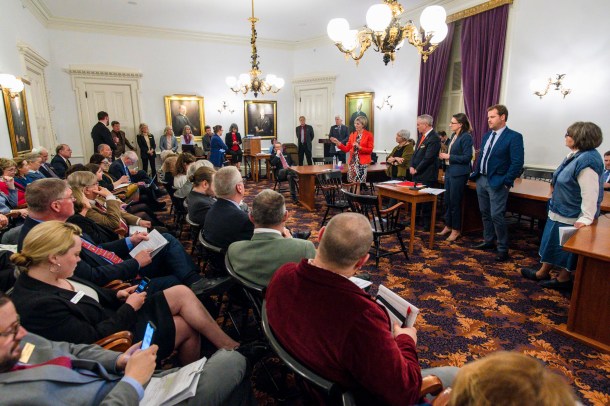
The Vermont House on Wednesday approved a bill that would establish a legal market for marijuana in Vermont and clear the way for dispensaries to open up shop in the state as soon as 2022.
The bill mandates a 20% tax, gives a head-start on retail sales to current medical marijuana dispensaries and allows saliva testing for drivers who are suspected to be impaired.
Marijuana has been legal to possess and grow in small quantities since 2018, but sale of the drug has remained illegal in Vermont.
It has been a priority for many Democrats in the Statehouse to expand the state’s legalization laws to provide a safe way for consumers to obtain cannabis and curb the black market.
“Vermont’s current law is awkward because it’s a legalized product without providing safe, legal access to it,” Rep. John Gannon, D-Wimington, said ahead of Wednesday’s vote.
Only six out of 43 Republicans voted for S.54, while more than a dozen Democrats voted against it.
If Gov. Phil Scott vetoes the legislation, House Democrats would need 10 more votes to sustain an override. Scott has signaled he could support a tax and regulate market for marijuana — only if saliva tests for drivers who appear to be intoxicated could be administered without a court order.
Before it reaches Scott’s desk, however, the House and Senate, which passed over the bill in 2019, will need to reach a compromise.
Many lawmakers who opposed Vermont’s original legalization law in 2018 supported this session’s marijuana bill, arguing that now that the substance is legal, it needs to be regulated.
“What we have currently is the worst of all worlds,” said Rep. George Till, D-Jericho, who opposed the marijuana bill two years ago.
“The current system has no control over the content or the safety of the products,” he added. “S.54 corrects these problems.”
Under the legislation, marijuana sales would have a 20% combined tax rate, including a 14% excise tax and a 6% sales tax.
The Senate had proposed a lower tax rate including a 16% excise tax and 2% local options tax.
After four years, legal marijuana sales in Vermont are projected to bring in about $13 million, according to a mid-range estimate from the Joint Fiscal Office.
A three-member Cannabis Control Board would regulate the market and determine which businesses receive licenses to sell or cultivate the substance.
Retail dispensaries could start selling cannabis products in 2022. But the state’s current medical marijuana dispensaries could begin selling the drug to the general public five months ahead of other marijuana businesses.
Under the House legislation, towns would have to vote in favor of allowing dispensaries before they could set up shop.
During Wednesday’s debate, many House members criticized the legislation because it removed the local options tax the Senate version had included.
Rep. Cynthia Browning, D-Arlington, who voted against the measure, argued that without revenue from a local options tax, towns will not be incentivized to welcome marijuana establishments.

This could hobble the new industry, lead to a dearth of marijuana dispensaries, and encourage the black market, she said.
“You may end up with a patchwork across Vermont of wet and dry — or smoking or non-smoking,” Browning said.
“You’re not going to discourage the black market because the safe legal cannabis will not be available,” she said.
Wednesday’s vote came nearly a year after the Senate passed its bill to tax and regulate cannabis over to the lower chamber, where lawmakers have generally been cooler to the idea of legalizing marijuana sales.
House Speaker Mitzi Johnson, D-South Hero, in particular, has been reluctant to support the policy, citing concerns about roadside safety, youth usage and the impacts a marijuana industry could have on the environment.
But she made clear late last year that she wouldn’t stand in the way of the legislation from becoming law, if its proponents addressed those concerns.
The governor is open to supporting a taxed and regulated system for marijuana, but has said his support is contingent on funding for prevention education to help curb youth drug usage, and public initiatives that could help prevent impaired driving on the roadways.
The House’s marijuana bill sets aside marijuana tax revenue to pay for afterschool programming.
Scott pitched a universal afterschool program in his 2020 budget address that his administration has said would help curb drug use among minors. The governor also suggested using cannabis revenue to fund the program.
In addition, 30% of the revenue raised by the cannabis excise tax would also be directed to a statewide drug use prevention fund.
The measure would also legalize saliva testing, a method used by law enforcement officers to test for drug use on the roads.
The testing method, however, is controversial because there is currently no saliva test that can determine whether a person is impaired at the time it is administered.
The test can only determine whether cannabis, or other drugs, are in someone’s system when it is given. But cannabis can be detectable in a user’s saliva weeks after it is smoked, or consumed.
For this reason, Democrats in the Senate have vigorously opposed the testing on the grounds of civil liberties concerns.
As a compromise, in an attempt to assuage both the Senate and the governor — who insists that saliva testing must be legal for the bill to earn his support— the House had made it a requirement for police to obtain a warrant before using saliva tests.
But the governor said earlier this month that he could not support the legislation unless the saliva could be administered without a court order.
House Minority Leader Pattie McCoy, R-Poultney, who voted against the measure, said she also wants saliva tests to be administered without a warrant — in the same way that police can now give breathalyzer tests at the roadside.
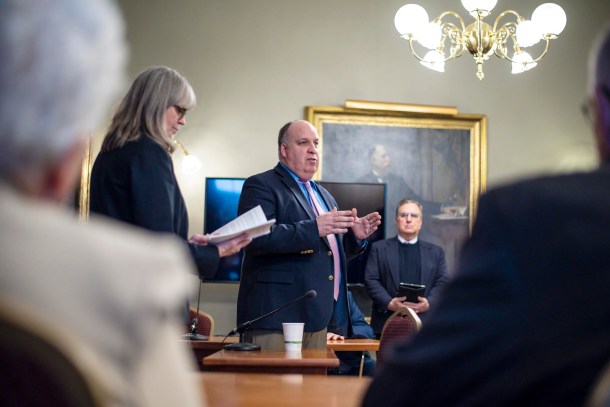
“Let’s make it the same thing: ‘This is what you do for liquor and this is what you do for cannabis,’” she said of the saliva tests. “It’s affecting your judgments and your abilities, so I don’t understand what the difference is.”
Many Vermont farmers and small cannabis growers are against the legislation, arguing that it makes it difficult for them to participate in the new marketplace.
Under the House’s version, marijuana would not be considered an agricultural product, and would fall under the regulation of the Cannabis Control Board, a body that some small growers suspect will lack transparency, and favor more corporate interests.
“I’ve had three farming people write to me because they didn’t feel like they were going to compete fairly in the newly-created marketplace,” said Rep. Randall Szott, D-Barnard, who voted against the bill.
The legislation is expected to pass on a second vote Thursday.
