


Shawn Tester, standing in the House Chamber, seemed to sum it all up for the dozens of Northeast Kingdom residents who came to the capital Tuesday.
“I think we’re doing really good work to try to solve some of these challenges,” said the CEO of St. Johnsbury’s Northeastern Vermont Regional Hospital. “And we just need help.”
Tester was speaking to members of the House Rural Development Caucus as one of many Kingdom residents and advocates who gathered for the second annual NEK Day in the Statehouse.
The event, organized by the Northeast Kingdom Collaborative, aimed to highlight progress made in the region and to point out problems still needing solutions.
Twenty-five speakers testified before eight legislative committees throughout the day. Earlier this month, the collaborative’s director, Katherine Sims, said participants planned to celebrate the benefits of state funds and initiatives.
One was last year’s broadband bill, Act 79, which bolstered plans for broadband rollout in Vermont and provided financial paths for local “communications union districts” to expand access in rural areas.

“This committee, in Act 79, did a remarkable thing,” Michael Birnbaum told members of the House Energy and Technology Committee.
Birnbaum runs Kingdom Fiber, a company that leases public fiber lines in Craftsbury to provide internet service. Both he and Evan Carlson, a Lyndon entrepreneur and broadband advocate, told legislators about strides they’ve made in bringing high-speed internet to the Kingdom, which has some of the worst broadband access in Vermont.
Birnbaum described his company’s expansion of fiber coverage in Craftsbury, and Carlson outlined how 26 towns in the Kingdom have signed on to ask voters about forming a regionwide communications union district.
The proposed district is the “first big step to being able to make some progress,” Carlson said.
But there’s much more to do, and legislators could help, speakers said.
Chris Campbell, who has worked with organizers of the effort as a consultant for the firm Tilson, pointed the committee to the Federal Communications Commission’s Rural Digital Opportunity Fund.
The pool of $20.4 billion will provide money for areas lacking broadband service to expand their infrastructure, and Campbell suggested the state should try to incentivize high-quality bidders in Vermont to engage in the process.
Tester, the hospital CEO, seized on that topic too in front of the Rural Development Caucus.
He told a story: His sister and her wife lived out of state and, in the last year, had been looking to return to the Kingdom. They liked the rural lifestyle it boasts. The sister has a remote job, and her wife had accepted an offer in the region.
But after a six-month search for a house, they called off their plans, Tester said. His sister, whose job relies on internet access, couldn’t find a place that had high-speed coverage and the rural character the couple sought.
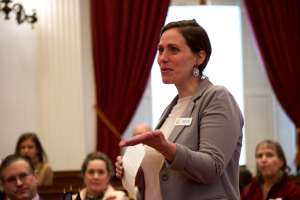
“If we don’t solve that high-speed internet problem,” he said, “it’s like an anchor dragging us down.”
Abby Long, director of the Kingdom Trail Association, pinpointed another tension between the region’s rural nature and its need to improve infrastructure: Act 250, the state’s conservation-focused regulation on development.
The law has been criticized as choking efforts to capitalize on outdoor recreation in the state.
“Everything that Vermont looks at as a … treasure to attract people to visit and move to Vermont is in jeopardy,” Long said.
She emphasized the economic impact provided to the Kingdom by recreational amenities like her organization’s trail network. And she asked the legislators in attendance to revise restrictions on land use.
“Seize this time and make that change,” Long said. “We really want to continue to have Vermont be a leader in the nation for outdoor recreation that shows this balance between stewardship and supporting our rural economies.”
