


The small independent antique store, once a common feature of the Vermont landscape, is becoming as rare and prized as a Herman Miller lounge chair in great condition.
Antique stores are going out of business as the trade moves online, tastes change and elderly owners retire.
In 1979, the Vermont Antique Dealers Association had 119 members. By 2004 it was down to 77, and now there are only 44, said Brian Bittner, a Shelburne antiques dealer and collector who is the past president of the association.
“On Route 7, 20 years ago, there were probably 20 to 30 antique stores from Manchester to Burlington,” said Bittner, whose father and grandparents taught him the business. “We’re talking about active antique stores and dealers. Now there are a handful.”
In the last year, the antiques mall in east Middlebury has stopped doing business, and Camelot, a large cooperative with about 80 dealers that had served Bennington for 35 years, also closed abruptly. A few years ago, the East Barre Antiques Mall started closing in the winter.
Many of the remaining establishments selling antiques are open only limited hours or in the warmer months, often in the proprietor’s barn or garage.
“Back in the 1990s and 2000s, I could take off and be gone from two to three days all the way to Maine,” said Steve Tillotson, who runs Tillotson Trading Architectural Antiques in East Corinth. “You could come back with a pretty good truckful and feel good about it. You can’t do that now because there’s nobody open. In the summer, you might catch some, but you can’t just go out on the road and see what you will find.”
The antiques business has been struggling nationally and even internationally for several years. Most detailers attribute the retail slump to the internet, which has not only provided an alternative to ordinary store activity, but has made it much easier for people who are searching for rare items to find them without an exhaustive search in person. A lot of the transactions have gone online to eBay, antiques shows and fairs, and to specialized websites.
The hunt moves online
The internet’s influence on the market has been complex, said Bittner. Until the 1990s, there was little information about what was available, so collectors had to visit brick-and-mortar stores and use reference and price guides created by experts from museums, the trade, and universities.
After trade started online, “all of a sudden there was much more access to information and knowledge,” said Bittner. “With eBay, you now have an online platform where you can sell anything worldwide, to a broad group of collectors. The price guides became obsolete.”
That caused the crash of collectibles, for example Hummel figurines.
“That price guide was written by one of the largest collectors of Hummels, and the values were outrageous,” Bittner said. “Now – and it’s also a shift in taste and style – not a lot of people want Hummels, and they were also overvalued, and when eBay came around, everyone who had a Hummel started selling it for $100 apiece, and that price didn’t sustain because there were actually way more of them than were thought.”
Changing preferences
Consumer tastes in furniture have also evolved, with buyers moving away from the “brown” Georgian or natural wood Early American items such as the large matched dining room chair sets that used to be the bread and butter of antiques stores. American pewter and bone china are also in a slump, as are farm and kitchen tools from the 19th century including barrels, pails, eggbeaters, and wagon wheels.
Large items in general tend to move more slowly.
“People are searching for eBay-able-size antiques and collectibles,” said Laura Hearne, an antiques dealer who works with her mother and sells through a store in Dover and at Stone House Antiques in Chester. She said she’s noticed business drop off over the last 15 years. “People who come up to go skiing will pick up smalls, but they’re not there to buy furniture unless they are local,” she said.
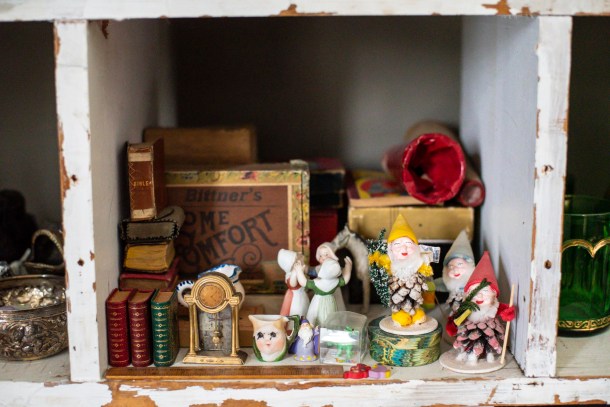
Meanwhile, many of the people running the small mom-and-pop roadside stores are retiring, and they’re not being replaced.
As for buyers, in the U.S. and abroad, home design long ago moved away from formal rooms toward open spaces with a more casual feel, pushing things like grandfather clocks out of place. About 10 years ago, business picked up slightly with a rush of enthusiasm for mid-century modern pieces that pay tribute to the world’s then-fascination with space exploration. But even interest in mid-century modern has waned, and the desire for 19th or 18th-century furniture hasn’t recovered to the levels that dealers saw before 2010.
“There’s no way a person can make a living sitting in a shop selling stuff these days,” said Tillotson. He’s been in the antiques business since 1979. He sees old favorites – such as the oak and mahogany pieces that used to be the staple of the antique business – selling now as used furniture.
“Cupboards that were bringing a thousand dollars, now they’re bringing $300 if you can sell it,” said Tillotson.
Bittner said he knows dealers who have a dozen grandfather clocks and can’t get back even half of what they paid for them.
“Many of them are going to be destroyed,” he said.
Evolution, not extinction
But it’s not all bad news. Bittner said he and thousands of other dealers, including many from Vermont, still gather at the Brimfield Flea Market in Massachusetts — the largest antiques show and flea market in the Northeast.
“One of the shifts in the market is that there are more active dealers who are pricing things competitively, pricing them to sell, setting up in one group,” Bittner said. “The collectors and museums and curators and decorators go to them all at once.”
And some items are flourishing. Kyle Scanlon, who runs an estate sales business from Essex, said high-quality early Vermont paintings still bring in a good price. And good early American or Victorian furniture, such as well-constructed 18th-century pieces that have never been refinished, stay in demand.
“It would have to be the best of the best, which is rare,” said Scanlon.
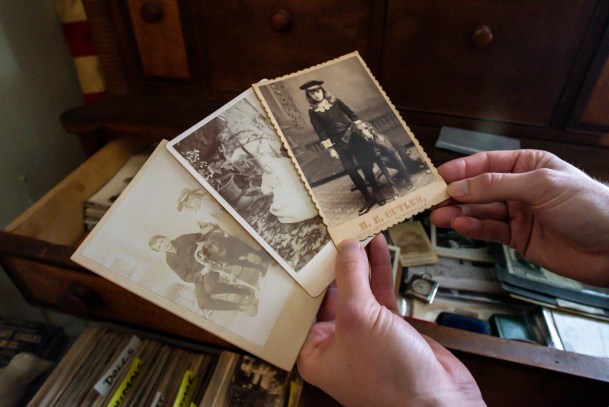
Bittner, who is 33, said the market for vintage clothing is strong, as well as that for some jewelry, watches, silver, and artwork. Good daguerreotypes — images from a photographic process used in the middle of the 19th century — are highly valued, as are other important historical items. Last year, Bittner bought a George Washington signature and an Abraham Lincoln signature from separate Vermont estates. The Lincoln signature is now in the Abraham Lincoln museum in Springfield, Illinois, and the Washington signature sold to a high-end dealer in Connecticut.
“There are a lot of small part-time hobby-like antiques stores with not very valuable stuff,” said Bittner. “But for people who are more keen, more knowledgeable, using a lot of online tools and information, there’s still a fairly robust antiques commerce going on.”
And there are also some small stores that have found a way to keep customers interested, said Scanlon, who is president of the Vermont Antique Dealers Association. Scanlon, 50, mentioned Barge Canal Market and Vintage Inspired in Burlington as places geared more toward the tastes of younger people.
“It’s a changing of the guard,” said Scanlon. Stores with items from the 1950s, 1960s and 1970s are flourishing if they choose interesting pieces — such as old advertisements — that people remember from their childhood, he said.
“You go into those stores, and I can’t believe the traffic they get,” he said. “It’s blending the world of antiques with fun, interesting items. They’ve adjusted to the times and to what the market demands.”
While Bittner has seen many stores close in the last five to 10 years, he said he also expects many of his friends and associates to stay active in the business for many years.
“We’re not talking about a business that is going to vanish,” he said.
In East Corinth, a place far removed geographically and economically from Chittenden County, Tillotson’s not so sure.
“I don’t see it coming back in the immediate future,” he said of his own trade in antiques and architectural salvage. “The economy has to come back pretty strong so people have disposable income so they can start buying again. When they are watching their pennies they don’t just buy.”
Correction: In the original version of this story, Steve Tillotson was originally misidentified as Randy.

