


Irene Choi is a news reporter with the Vermont Cynic, where this article was originally published.
The University of Vermont, the state’s flagship public university, has one of the highest in-state tuition rates among comparable state universities around the country.
In fact, across the board Vermont’s public colleges and universities, including UVM, have the highest tuition rates for state colleges in the nation, according to the College Board’s 2019-20 Annual Survey of Colleges.
But over the last five years, 44% of in-state students at UVM have had their tuition covered in full.
According to the university, for the 2019-20 school year, tuition is $16,392 for in-state students and $41,280 for out-of-state students. With the average cost of room and board and meal plans, along with the comprehensive fee, in-state students pay $31,748 and out-of-state students pay $56,636.
The biggest reason for the university’s price tag is its lack of state funding, said Marie Johnson, director of student financial services at UVM.
“Being a small rural state, we don’t have big business to help fuel tax revenue,” she said.
Within the 44% of in-state students receiving free tuition for the 2018-19 school year, 12% are children or dependents of full-time faculty and staff at Vermont’s public colleges and universities. A student whose parent has been working at one of those schools for at least a year can get a four-year degree at UVM tuition free, with some conditions.
Tuition awards to the remaining 32% are based on need or merit, according to Richard Cate, vice president of finance and university treasurer.
The 2,897 Vermonters who enrolled in 2019 include about 1,275 who received full tuition. The entering first-year class of undergraduate students is made up of roughly 21% state residents.
Sen. Philip Baruth, D/P-Chittenden, chair of the Senate Education Committee and an English professor at UVM, said he believes higher education is undervalued in Vermont.
“Vermonters in general, and certainly people in the Legislature, often have a certain skepticism when it comes to higher education,” he said. “They’re more likely to want to put money into job creation, and that’s a battle that I fight every day in the Statehouse.”

But, the high cost of tuition for students is also a relevant issue in the Statehouse, Baruth said.
“Vermont is not a wealthy state,” he said. “I often hang my head in shame at how little we support higher education.”
UVM gets much less than many other state universities, Cate said.
“About 6% of UVM’s budget is from the state, but in many states it’s 25-40%,” he said. “Seventy percent of our budget is just from tuition.”
However, UVM is still able to give aid to students and keep the university afloat, Cate said.
“We have enough to continue to give financial aid,” he said. “There’s not a lot of extra money around, but we make it work.”
Approximately the same percentage of in-state students have received free tuition over the past five years, Cate said.
The total amount of aid given to the university depends on the yearly price of tuition, he said. “The university gives back $160 million a year in assistance or financial aid to students,” he said. “As tuition goes up, that number goes up, too.”
Even with the tuition freeze for the upcoming academic year announced last November, the university will still give out the same amount of financial aid, Cate said. “It probably will not rise because it shouldn’t need to,” he said. “It never goes down if it goes anywhere.”
However, education in Vermont is still too expensive and often unaffordable for many Vermonters, said junior Leah Kelleher, a Vermonter who attends UVM on a tuition-free scholarship.
“I think that public college should be a human right,” she said. “I think it’s such a shame that there are students where education is not even a possibility for them because of the cost.”
UVM should also do more to make sure prospective students are aware of the scholarship opportunities available, she said.
“I think the university could do more to build those relationships,” she said. “There are still so many Vermont students who I’m sure would think about college a little more if it was more affordable.”
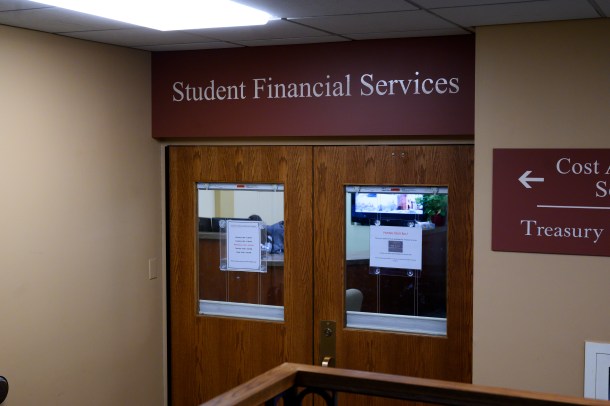
In order to make in-state students more aware of the scholarships and grants available, the Office of Student Financial Services connects with students all over the state, Johnson said.
“Staff will go out to talk about applying for financial aid to encourage higher education,” she said. “It’s about making those personal connections.”
Options include the Catamount Commitment, a program that pays all tuition costs and fees for students eligible for federal Pell grants, and the Green and Gold Scholarship, a program for Vermonters who graduated from high school as valedictorian. Thirty-six such graduates chose to enroll at UVM last fall.
