


BROOKLYN, N.Y. — Two brothers are seeking $10 million in damages from the NYPD after the law enforcement agency confiscated a shipment of hemp from a Vermont farm and arrested one of the brothers on felony charges.
Brooklyn prosecutors on Tuesday dropped the criminal charges against Ronen Levy, who was arrested in November when he went to pick up 106 pounds of hemp a Vermont farm had sent via FedEx to his brother’s CBD business.
The case illustrates the potential perils cannabis entrepreneurs face as they navigate the rapidly changing policies in the new industry. The discrepancies can be daunting for Vermont producers looking to sell their hemp in other states, where it’s possible to get snarled in confusion over emerging regulations and the differences between hemp and marijuana, which contains higher levels of the psychoactive compound THC.
At a press conference Wednesday, Sanford Rubenstein, an attorney known for taking on high profile cases of police brutality in New York, announced the Levy brothers’ claims and called on the New York State Assembly to legalize marijuana.
Rubenstein said a win in court would send a “clear and loud message that if you don’t follow the appropriate procedures and you don’t follow the paperwork and you mistake hemp for marijuana, your municipality will pay damages to the victims.”
The claims against the NYPD include $8 million for false arrest, false imprisonment and other charges related to Ronen Levy’s arrest. Oren Levy, who owns Green Angel CBD, is seeking $2 million related to the confiscation of his hemp — which he said even if he does get back, has probably deteriorated in quality to the point that it can’t be used. The claims also name the city and arresting officers.

Brooklyn District Attorney Eric Gonzalez dropped criminal charges against Ronen Levy Tuesday, after confusion about what the prosecutor’s office would do with the case.
Gonzalez acknowledged Tuesday that the cannabis the police seized contained less than 0.06% THC, confirming that it meets federal classifications for hemp. However, he asserted that the shipment was out of compliance.
In New York, as in many other states, the laws concerning hemp are rapidly changing. Just Monday, New York Gov. Andrew Cuomo signed into law a bill that sets up a regulatory system for growing and processing hemp. However, Gonzalez says the newly enacted regulations don’t address criminal law that continues to classify the cannabis plant as marijuana, regardless of the THC level.
He said in a statement that he was dropping the charges “in an exercise of discretion,” and said he felt the case is better addressed “as a regulatory than a criminal matter.”
Rubenstein says the case is a reason for New York state to move to legalize marijuana. A push to legalize fell short in the state’s legislature earlier this year. But in the meantime, he said, law enforcement needs to be better informed about laws concerning hemp.
“Police departments have to be properly trained to know the difference between hemp and marijuana,” he said.
An NYPD spokesperson said the department will review the claims when they are served.
“In New York State, hemp sale and possession/distribution is only permissible when the buyer and seller have the proper permissions from the New York State Department of Agriculture and Markets,” the department said in an emailed statement. “In this case, neither the seller nor the buyer had those permissions. The plants were illegal marihuana and both parties were violating New York State law.”
Oren Levy disputes the police assertion that the shipment was in violation of Department of Agriculture and Markets regulations. Levy says he was in compliance with state license requirements for buying and selling hemp.
Daunting discrepancies for Vermont hemp producers
Meanwhile, though the farm that grew the hemp has not been directly entangled in the legal proceedings, its owner has been watching the case closely.
Jahala Dudley, of Fox Holler Farm, is looking for transparency from New York authorities about where the cannabis shipment is now. Levy paid Dudley approximately $17,000 for the shipment, which he estimates he could have sold in retail for up to $60,000.
“I would like to know what happened to my hemp,” Dudley said Wednesday. “That’s a product that I was paid for and I grew.”
An assistant district attorney in New York said yesterday that because the hemp seems to have been imported into New York outside of regulatory guidelines, it would be up to the NYPD and the Department of Agriculture, which oversees the hemp industry, what would happen to the shipment. NYPD did not respond to a question about the status of the hemp.
Police seizures are not uncommon, Dudley said. Just last week, one of her shipments was temporarily held up by police in Philadelphia. But usually, there is a process for it to be released.
The discrepancies in hemp laws and enforcement across state lines is daunting for Vermont producers, who have limited selling and processing options within state lines.

Vermont farmers flocked into the new hemp market this year after the 2018 Farm Bill lifted federal restrictions, and many new producers found disappointing returns on their crops. Out-of-state buyers are “extremely” important to Vermont farmers, Dudley said. She sells very little of her smokeable hemp in state. But, she’s found business from out of state buyers like Levy.
“We have an incredible opportunity here to have a robust market and a giant export,” Dudley said. “But unless we’re on the same page with other states we’re not going to be able to take advantage of this opportunity.”
Stephanie Smith, chief policy enforcement officer at the Vermont Agency of Agriculture, said Wednesday that hemp growers are looking to other states to sell their products.
“Vermont producers are likely producing for an out of state market — we’re certainly not growing just for in state,” Smith said.
She advised people in Vermont’s industry to be careful to be aware of the laws and regulations in other states.
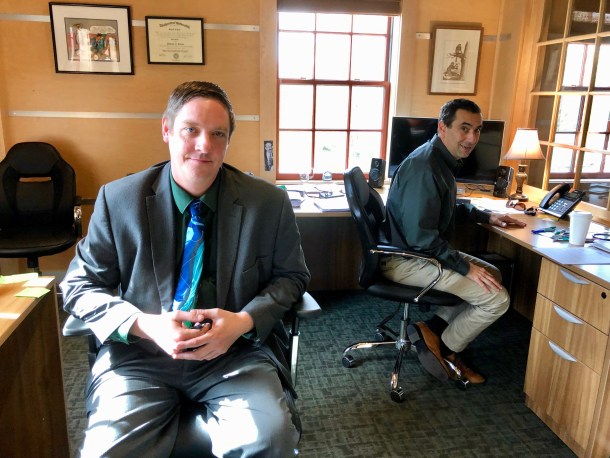
Attorneys Timothy Fair and Andrew Subin, who represent Dudley and many others in Vermont’s cannabis industry, say complications with shipping cannabis are common. When clients are sending large amounts of hemp across state lines, they set up networks of attorneys in the states where the product is passing through, so someone local is on call if there’s confusion with law enforcement. They’re also in touch with a California company that specializes in shipping cannabis about potentially using their services for Vermont companies.
“Obviously we want Vermont to be one of the leaders in the cannabis industry,” Subin said. “To be able to do that we’re going to have to rely on sending our product across the country.”
While Dudley is not considering any legal action in the case, Subin and Fair were supportive of the Levy brothers’ litigation against New York City and the NYPD.
“This is the type of thing that needs to happen to get people’s attention and hopefully prevent this from happening again,” Fair said.
Editor’s note: This story was updated at 11:08 a.m. on Dec. 13 to include Oren Levy’s position on police assertions that he was out of compliance with Department of Agriculture and Markets regulations.

