


Advocates are celebrating the fact that Vermont’s homeless population numbers have dropped by about 30% in five years.
But despite the decline statewide, Judi Joy, manager for Good Samaritan Haven in Barre City, said her shelter is at capacity. The organization operates four facilities with a total of 77 beds.
In fact, this is the worst winter she’s experienced in Washington County. The demand for temporary shelter is the highest in recent memory.
“We’re full,” Joy said. “There is much more homelessness, poverty, lack of affordable housing. All of the above.”
Shelter officials across Vermont said they do not have enough room to meet demand, whether it’s for short-term beds or transitional housing.
A volunteer point in time count of homeless Vermonters logged 1,089 people without permanent housing in 2019, according to the Vermont Coalition to End Homelessness. In a survey of shelters, VTDigger found roughly 384 shelter beds and 56 family units available in the state, excluding domestic violence shelters.
After combing the 211 database for short-term daytime and nighttime shelters, VTDigger reporters called all open shelters to confirm the number of beds and find other information. When shelters did not respond, we used 211’s reported information instead. VTDigger did not include shelters specifically for people involved in domestic violence situations.
While not every homeless Vermonter is in need of short-term shelter, and may have other options like a friend’s couch or a motel stay, several shelters confirmed there were not enough beds in their area to accommodate everyone who needed one.
Grand Isle, Orleans and Essex counties do not have any shelters, and many others are the only temporary or emergency housing option in a particular county. However, even Chittenden County, which has the most shelters, is struggling to support its homeless population, shelter officials said.
Washington County’s homeless population rose from 123 in 2015 to 141 in 2019.
And while Chittenden County saw an overall drop in homelessness from 2018 to 2019, from 359 people to 309, there was a spike in the number of “chronically homeless” people from 48 to 74 over that same time. “Chronically homeless” is defined as people living with disabilities who experience extended periods of homelessness.
Since Anew Place’s BTV Shelter, a winter warming shelter, opened Nov. 1 in Burlington, it has been full, said Katie Ballard, the shelter’s intake coordinator. It has had to turn away about six to 10 people every day, Ballard said.
When the BTV Shelter reaches capacity, Ballard said staff calls other shelters to find placements. But many others are frequently full too, or people are turned away because they don’t meet sobriety requirements. BTV Shelter is the only facility in the area that does not require clients to be sober.

People can call 211 to receive a motel housing voucher for the night, which Ballard said her shelter will direct people to if they don’t have any other options. Vermont’s “cold weather exemption” allows people to receive motel vouchers during nights where the temperature is below 32 degrees.
Stephannie Peters, executive director of the Bennington Coalition for the Homeless, said her 16 bed shelter runs at capacity almost every night. “They’re waiting for a housing voucher, or for the availability of affordable housing,” she said. Their organization is the only overnight shelter in Bennington County.
Other vast regions of the state rely on a single shelter to provide for homeless residents or travelers. There are no overnight year-round shelters in Caledonia County, only daytime or part-time warming shelters, which only operate during the coldest months of the year.
Upper Valley Haven, one of the largest overnight shelters in southern Vermont, always has a waiting list, although they share it with other shelters and centers in the region, said Laura Gillestie, communications director for the the haven.
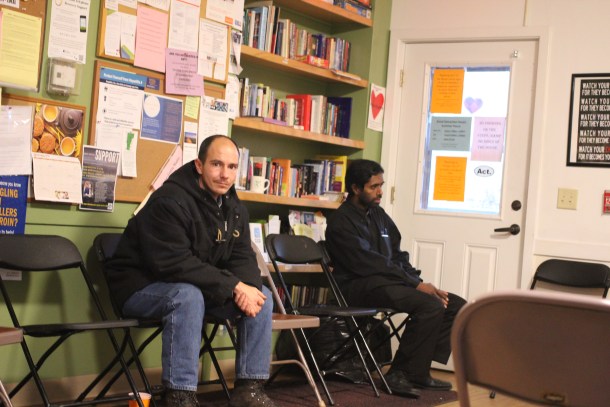
In Addison County, the housing shortage leads to people staying longer in short-term shelters, said Peter Kellerman, director of John Graham Housing and Services, limiting the number of beds they have free.
“It’s rare to see them come in and out in 90 days,” he said. “They’re staying for six months and beyond that.”
It’s not just that housing is limited. The guests often have disabilities, trauma, or other cognitive and behavioral challenges that are obstacles to getting a steady job or place to live. But even those that can live on their own get stuck waiting for an apartment, Kellerman said.
Safe Haven, a transitional housing facility in Randolph, is the only shelter of any kind in Orange County. Christie Everett, director of acute care services, said their normal stay of three to six months has grown to a year to 18 months “because of the lack of affordable housing.”
Shelter officials have not been able to point to a specific reason to explain why shelter demand is so high when Vermont’s overall homeless population has shrunk. Becky Holt, development and communications director of the Committee on Temporary Shelter in Burlington, said she thinks the problem is systemic.
Holt said her organization doesn’t see temporary shelter as a fix to homelessness. If the state is able to develop more affordable housing and institute liveable wages, she thinks a decrease in homelessness would lead to less pressure on shelters.
“It’s not one thing. It’s a combination of all kinds of conditions. The landscape shifts,” Holt said. “There’s a lot of challenges that create homelessness.”
Note: To compile shelter beds, two VTDigger reporters contacted 24 short-term shelters listed in Vermont’s 211 database that did not specialize in domestic violence. Most responded directly; for the rest, VTDigger included information from the 211 database instead. To add your shelter or update information, contact erin@vtdigger.org or grace@vtdigger.org.


