

Editor’s note: Mark Bushnell is a Vermont journalist and historian. He is the author of “Hidden History of Vermont” and “It Happened in Vermont.”
When people die, their lives often get reduced to a handful of memories. Recollections of a few incidents or perhaps just a single comment, whether remembered accurately or not, is all that gets passed down to future generations. Even when there are enough fragments to assemble a crude portrait of a life, the picture that emerges often fails to offer any deep sense of the person’s character or motivations.
I was reminded of how hard it is to understand all but the best-documented figures from the past when I read an essay about the perplexing William Barton, a Revolutionary War hero after whom the town of Barton was named. Read through the basic facts of Barton’s life — that’s all we have — and you might envision a brave war hero and hardy settler. Or you might see him as an unscrupulous land speculator and unapologetic cheat. Or, when you learn that he languished in jail for years for failure to pay a trifling debt, he might seem like someone making a stubborn but principled stand, or he might come off as more than a bit nuts. Trying to understand the multifaceted nature of people and events makes history fascinating, and frustrating.
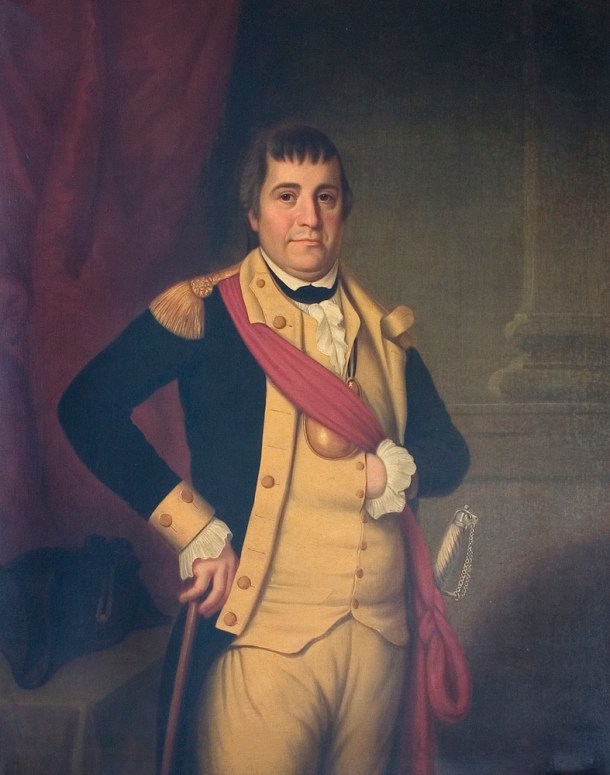
That Barton was hailed a hero during the Revolution is clear. Born and raised in Rhode Island, Barton was living in that state when the war erupted. He was supposedly moved to join the Continental Army after reading a newspaper account of the Battle of Bunker Hill during the summer of 1775, according to Alton Hall Blackington in “Case of the Rejected Hero,” an essay that is part of the 1970 collection, “Mischief in the Mountains.” Barton, who was 29 at the time, left his wife, as well as the hat shop he owned, and enlisted.
Barton was soon entrusted with command of a fort at Tiverton, Rhode Island. The British, who held the nearby coastal town of Newport, were commanded by Gen. Richard Prescott, who had made local enemies, including Barton, by turning his men into vandals, allowing them to chop down the town’s beautiful trees, tear up its wooden sidewalks and even pull up wooden grave markers in order to build campfires. As a further insult, the British used the town’s churches as army barracks and horse stables.
Barton concocted a secret plan of revenge, apparently not even telling his superiors. On July 4, 1777, he led a team of three dozen volunteers that piled into five whaleboats and rowed for 26 hours through rough seas before reaching their destination. They stealthily pulled their boats onto a beach about a mile from the farmhouse that Prescott had seized for his headquarters. On the way to the farmhouse, the men overcame the few guards they encountered. After kicking in the front door, Barton hustled to the general’s bedchambers, where he found Prescott naked and drunk. The general had apparently heard the commotion and was trying pathetically to get dressed. Barton and his men hauled Prescott back to the boats. Prescott was eventually shipped south as a prison to Gen. George Washington’s headquarters in New York. The Rhode Island Assembly commended Barton for his heroism. Congress expressed its thanks by presenting him with an ornate ceremonial sword.
After the war, Barton opted not to return to his former life, leaving behind his wife, children and business. He eventually became one of the first settlers in what is today Barton. We can only wonder why. Perhaps he hungered for more adventure or thought he would become some sort of land baron in sparsely settled Vermont and, once successful, planned to summon his family to join him. If that was the plan, it didn’t turn out that way.
Barton was among the men granted land in the town, which was initially known as Providence, after the Rhode Island city. Other grantees included naval hero John Paul Jones and Ira Allen, though unlike Barton neither ever settled there, apparently viewing the land only as speculation.
Between the time the town was granted in 1781, and when it was chartered in 1789, the name was changed to Barton. Evidently, Barton had some clout. Nerve was more like it, according to his detractors, who claimed that Barton used a hunting knife to scratch the name Providence off the charter paperwork and then penned his own in its place. Esther Swift, in her book “Vermont Place-Names,” says that it remains a mystery how the name was changed. The story about the knife, though perhaps apocryphal, suggests that Barton struck people as egotistical.
He also struck some people as crooked. The first evidence comes from 1797 when a Solomon Wadhams of Brookfield bought a parcel of land from Barton. Or at least he thought he had. Turned out the land he paid for didn’t belong to Barton. Perhaps it was an honest mistake, a bad survey or something. Whatever the cause, the court sided with Wadhams, awarding him a $225 judgment against Barton.
That was not the last lawsuit Barton would lose. As the result of another land deal gone bad, Jonathan Allyn sued Barton for $3,000, a hefty sum in those days, plus court costs. A court-appointed panel sided with Allyn, but only awarded him $50.13 in damages and $51.10 in court costs.
The amount was hardly exorbitant. Barton could easily have paid it. But he refused.
Since Barton (the town, not the man) lacked a lockup, court authorities threw the 63-year-old in the jail in Danville. The jail was a basic log building beside the town green. Barton was ordered confined to the “jail yard,” which extended in a mile radius from the jailhouse. Chains wrapped around roadside trees marked the boundary.
Prison life wasn’t so hard, Swift suggests. It was more akin to house arrest. Barton probably didn’t live in the jail, but in a private home nearby. And there he remained until 1825. That’s the year the Marquis de Lafayette, the French nobleman who had so aided the Continental Army during the Revolution, was making a sort of reunion tour of the United States. When he reached Vermont, he learned that his old friend Barton had been imprisoned for debt for the past 14 years. Perhaps envisioning the 77-year-old Barton penniless and suffering under harsh prison conditions, Lafayette wrote out a promissory note to have Barton released.
How Barton reacted is anyone’s guess. His stubborn refusal to pay the court fees seems to have been to prove some point. But what was it? Was he trying to prove his innocence, the court’s lack of authority, his accuser’s vindictiveness? Who knows? Lafayette’s support might have felt like vindication. Or perhaps Barton found it a grave disappointment, the Marquis’ generosity having robbing him of the chance to make a martyr of himself; he would not die in jail.
Instead, he rode home to Rhode Island and to the family he had abandoned 30 years earlier. Which raises another question about William Barton’s life: How did his wife feel about his finally returning home?

