

Ryan Sauer grew up in Pownal, a town of 3,500 with no downtown and a Dollar General store. So when he graduated from the University of Rochester with a degree in optical engineering, he knew he was not headed back to his hometown.
Now he lives in Burlington, where he can bike to three coffee shops from his apartment.
“It’s nice to actually walk somewhere,” he said. “I used to be hours from everywhere except family.”
Sauer isn’t the only person to choose Vermont’s “big” city over the 200-some odd isolated rural towns that pepper the state.
Vermont’s total population is essentially stagnant and has hardly changed over the last decade. But Census data shows that where people live in the state has shifted dramatically as more people, like Sauer, have chosen to live in Chittenden County and surrounding towns in the northwest. The rest of the state — especially southern Vermont and the Northeast Kingdom — have seen population declines.
Vermont had about 560 more people in 2018 than it did in 2010, a paltry change even for its small population of 626,299. Birth rates are declining, and more residents are leaving the state than moving in. Vermont’s population migration and birth trends have hit rural areas the hardest, according to Census data.
The growth of population around Burlington is similar to what is happening with larger municipalities across the nation, said Emily Beam, a professor at the University of Vermont: “The emptying of rural areas, and the general shift of rural populations to urban areas.”
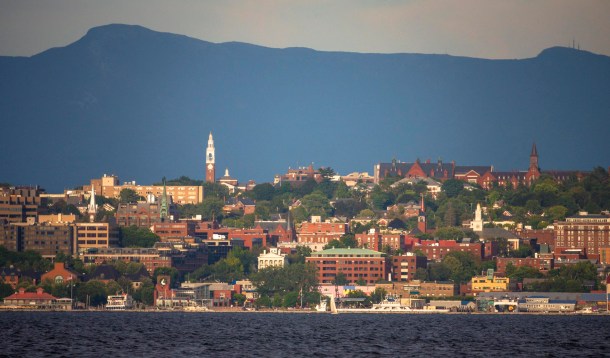
A tale of two cities: Burlington
Nearly a third of Burlington’s 42,000 residents are in their 20s, which makes it far younger than the rest of Vermont. The University of Vermont is a big draw, and, according to Beam, young people like the lifestyle and can find high-paying jobs and lifestyle.
“All of the areas where we see job growth are urban,” she said. “In Vermont, it’s services like health, education and professional work.”
Millennials and Gen Z-ers are following a decades-long drive to live in cities, with access to public transportation, restaurants and bars within walking distance, said Tom Torti, president of the Lake Champlain Chamber of Commerce.
“They want the very small city experience,” he said. “They’re coming here for social and environmental externalities not in New York or Boston.”
Emma Lencher, 29, agreed. The native New Jerseyan missed her years at the University of Vermont when she worked in New York City. So when she felt burnt out with her job, she jumped at the chance to work at Burton, a Burlington-based snowboard manufacturer.
Although the former New Yorker misses the subway as she commutes by car or bike to her Burlington job, she said it’s worth the payoff of being close to the mountains.
“The physical location of the city makes it easier to appreciate aspects of life outside of work,” she said.
Prosperity, however, comes at a cost. Housing is more expensive in Chittenden County and surrounding communities. Chris Donnelly of Champlain Housing Trust said in the past, he’d typically have one apartment for every six applicants. Now that figure is one in eight. Joan Shannon, a City Council member and real estate agent, says there is high demand from home buyers as well.
John O’Brien, now a South Burlington resident, spent months commuting from Jeffersonville to Burlington to avoid those high real estate prices. He said he and his wife saved money on housing and child care, but the hour-long, one-way commute ground him down.
“If there’s one backup for the morning commute, there’s no alternative,” he said.
The average rent in Chittenden County has increased 10% since the recession, American Community Survey numbers show. Now 56% of renters pay more than a third of their salary for housing, according to the 2013-2017 Census snapshot.
As Burlington becomes a destination, its surrounding towns and counties are becoming hubs of their own. Once purely a commuter town, St. Albans now attracts people looking for a good quality of life in the northwest while still staying close to Burlington or Montreal, said Rachel Smith, a realtor for S. R. Smith Real Estate.
“The renovation of downtown has made this a destination place,” said Smith, also a member of the Vermont Economic Progress Council.
But Franklin County tends to be “behind the trend of Chittenden County,” Smith said. She hasn’t seen the rate of sales in St. Albans that Chittenden County has experienced.
A tale of two cities: St. Johnsbury
At first glance, St. Johnsbury in Caledonia County could not seem more different than Burlington. A hub of manufacturing in the mid-19th century, the town of 7,200 has declined by about 250 people this decade.
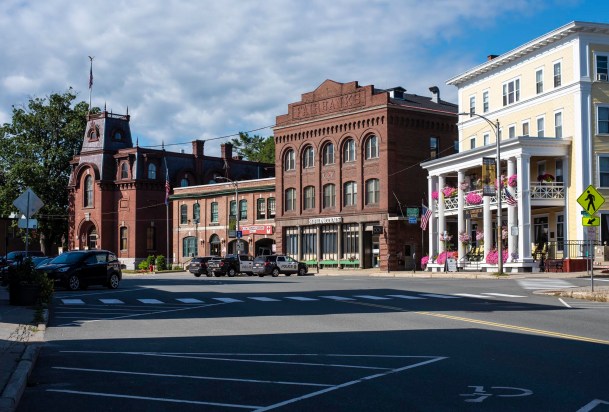
Yet when asked about St. Johnsbury’s trouble, assistant town manager Joe Kasprzak pinpointed the same cause as Burlington: housing.
“Young professionals are struggling to find quality housing,” he said. A report by Bowen National Research found that workers in the area chose to commute rather than look for a place to live among the city’s aging housing stock.
The town is developing new properties and bringing older properties up to code to encourage the move. Kasprzak said the two populations they most want to attract — seniors and millennials — are both looking for smaller apartments within walking distance of shops and restaurants.
Rural towns across the state have been scrambling to revitalize their downtowns and bring their economies into the future, said Paul Costello, executive director of the Vermont Council on Rural Development.
Smaller, rural communities are campaigning for broadband access and betting big on digital and creative jobs, he said. Some have capitalized on tourism, like Burke with its nearby skiing options.
Research shows rural Americans across the nation have one natural advantage on their side: happiness. Most rural Americans are optimistic about the future of their family and love the small-town lifestyle, according to a study by the Harvard T.H. Chan School of Public Health.
“For young people looking for purpose and community, Vermont has a chance to position itself as the answer,” Costello said. “We have clean energy, a great food system, a strong culture and a strong education system.”
For Sauer, the Pownal native now living in Burlington, the answer is not as clear. He misses the night sky and the chance to shoot arrows in his backyard without the neighbors nosing in. But when asked what it would take for him to move back to his hometown, he couldn’t think of anything.
“There’s going to be a lot of people who stay in their hometown. But there will be more people moving out than moving in,” he said.
