


Under the budgets that health care regulators approved last week, Vermont’s hospitals are expected to collect $2.72 billion in revenue in 2020, exceeding a revenue growth target that officials set earlier this year.
The budgets finalized by the Green Mountain Care Board on Sept. 11 authorize hospital revenues — and therefore the amount that Vermont spends on hospital care — to grow by about $100 million in fiscal year 2020.
That’s above the threshold the board, which regulates health care spending in the state, recommended in March. Last spring the board asked hospitals to keep revenue growth in the 2020 fiscal year at or under 3.5%.
The Green Mountain Care Board recently approved a 4.3% revenue hike for hospitals.
Kevin Mullin, the chair of the care board, said regulators had to take into account an expected increase in patients at some hospitals.
The University of Vermont Medical Center, the state’s largest hospital, which received approval for a 5.9% revenue boost in 2020, is driving much of the growth.
Hospital officials at UVMMC told the care board that they needed the flexibility to increase their revenues by about 6% next year, in large part because the hospital is seeing an influx of new patients—particularly those who are older and have more serious conditions.
Other hospitals that received increases above the care board’s guidance included Northeastern in St. Johnsbury, which will be allowed to grow by 7%, and Mt. Ascutney in Windsor, which can increase spending by 5%. Both hospitals report an increase in patients.
Mt. Ascutney told regulators that it recently added primary care doctors, which will increase patient demand. The hospital is also seeing patients who previously sought care from Springfield Hospital. Springfield filed for bankruptcy earlier this year.
Northeastern said Vermonters that previously left the state for medical care were returning to the hospital.
Many of Vermont’s struggling smaller hospitals, some of which are projecting losses next year, asked the board for flexibility to increase revenue.

Mullin said it’s “distressing” that hospital revenue growth is above the guidance put forth by the care board in the spring. Last year, regulators signed off on hospital budget increases of 2.1% last year.
In addition to controlling costs, the care board must also preserve the quality of care in Vermont.
“[The hospitals] did make a compelling case about seeing more patients,” Mullin said. “And at the end of the day we have triple aim at the Green Mountain Care Board and cost containment is central to that but on the same token access and quality of care are there as well.”
“We’re not going to make it so that someone who needs care can’t get it,” he added.
Mullin also stressed the care board was able keep to the average rate increase—or price patients pay for hospital procedures in 2020— relatively low.

The average rate increase at Vermont hospitals next year is 3.1%, below the regulator’s 3.5% target for 2020.
Overall, the care board cut the revenue growth requested hospitals from 4.6% to 4.3%, which they say represents $7.3 million.
But some have raised concerned that the growing budgets will mean higher prices for patients.
Mike Fisher, Vermont’s health care advocate, said that the increases in patient revenue will lead to higher health insurance rates.
“I get it that the board feels that they have to respond to what the hospitals say their pressures are or say their needs are,” he said. “But we can’t forget about what impact these increases have on Vermont families.”
Earlier this year, the board approved double digit rate increases for the state’s two insurance providers, Blue Cross Blue Shield and MVP, which the companies said they needed largely to offset rising prescription drug prices.
Sen. Ginny Lyons, D-Chittenden, the chair of the Senate Health and Welfare Committee, said she understands the financial challenges Vermont’s hospitals are facing, and that they alone are not responsible for the rising cost of healthcare in Vermont.
But she said that given the budget increases the board has approved in recent years, she wants to have a better understanding of how the panel is making its regulatory decisions, and whether they will lead to lower health care costs for consumers.
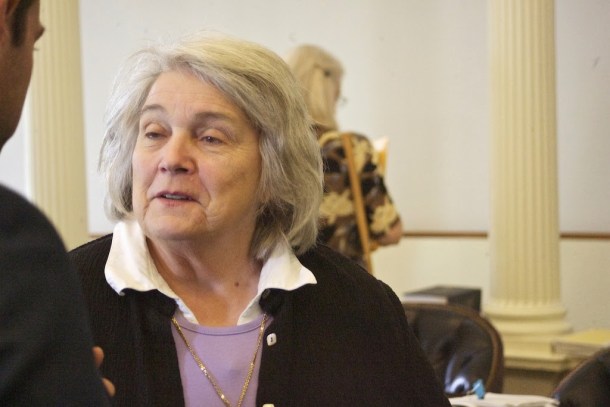
“It’s very complex, we agree with that,” she said of the budget process. “But at the same time, when the board was put in place, the goal was to reduce costs.”
“The Green Mountain Care Board has been around for a relatively short time and so we need to constantly look at what the trends are in their decision making and know that they are being effective,” she added.
Lyons questioned that UVM Medical increase, which amounts to $75 million in new revenue for the hospital next year.
“I think it’s hard for the average person to comprehend that amount of increase in one year and that there would be that much patient volume, regardless of what hospital it is,” she said.

