


Lawmakers, dairy farmers, and co-op executives met at the Statehouse Monday to discuss details of the potential merger between the St. Albans Cooperative Creamery and the Dairy Farmers of America, a national dairy co-op.
The St. Albans co-op board voted unanimously last month to recommend the merger to its members, who will vote at the end of the month on whether or not to consolidate.
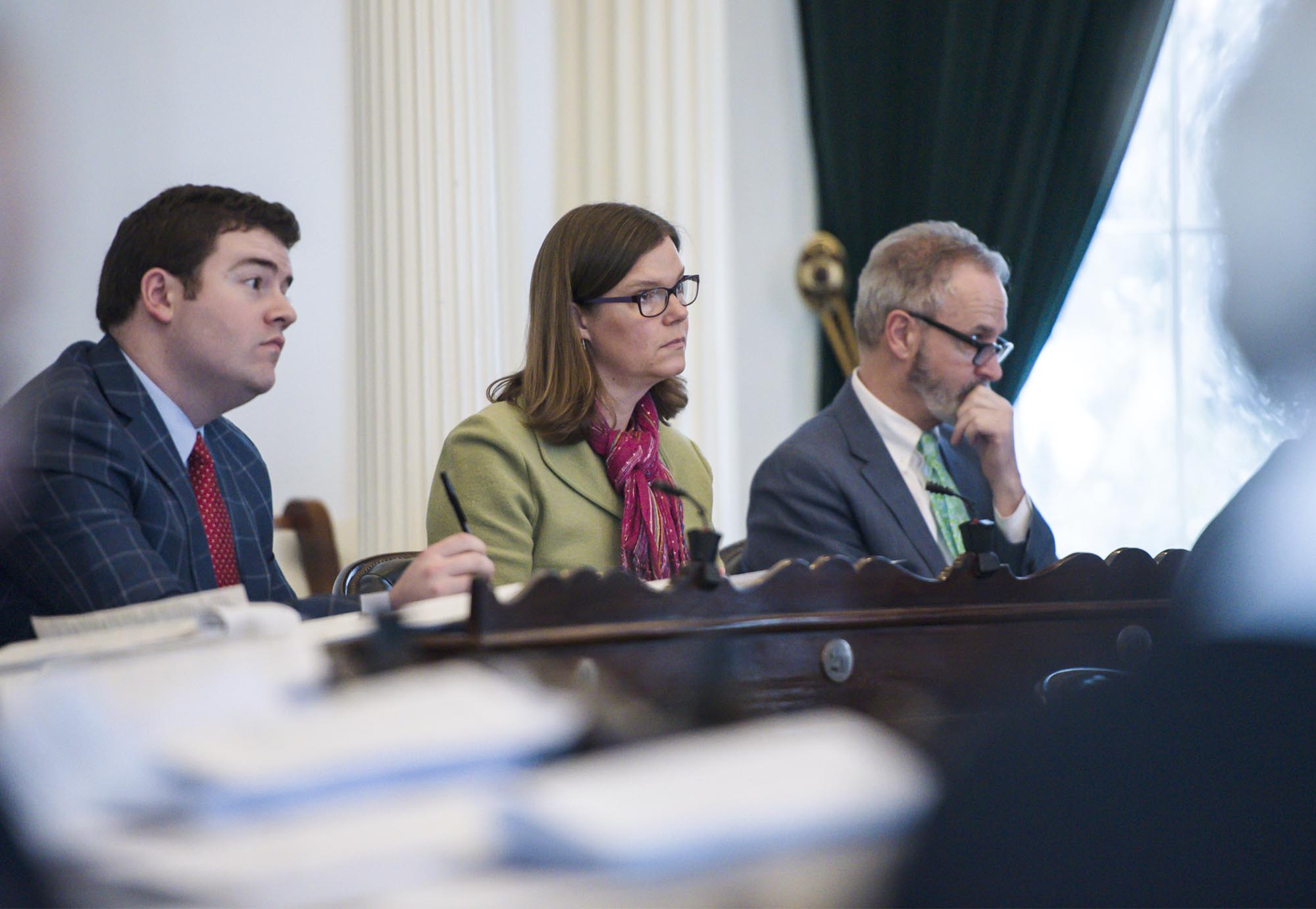
The Senate Agriculture Committee meeting provided an opportunity for stakeholders to debate the pros and cons of the merger and its impact on Vermont farmers. Though the committee has no say in whether the deal goes through, members were eager to express their concern about potential impacts of the merger on Vermont farmers.
If approved, 52% of Vermont’s dairy farms would join the national organization. Sen. Ruth Hardy, D-Addison, questioned the state’s dairy leaders: “Are we setting ourselves up for a ‘too big to fail’ situation?”
Diane Bothfeld, the director of dairy policy at the Agency of Agriculture, Food and Markets, said in short, no — ”There are other opportunities for buyers of milk here.”
But Hardy pushed back — the state’s second largest co-op, Agri-mark, is closed to new members. Other options would require farmers to switch to organic milk production. If farmers aren’t happy with the DFA, will they have other opportunities?
But several farmers in the room responded that opportunities alone aren’t enough.
“Having options are only good if they’re good options,” said Tom Bellavance, an Alburgh dairy farmer and member of the St. Albans co-op board. “Just having an option for the sake of having an option does not make sense.”
The DFA has promised to make a “major reinvestment” into Vermont. Brad Keating, the chief operating officer of DFA, said they’ve earmarked $30 million toward modernization of the St. Albans facility, and another $5 million for the transportation company that would go toward tractors, trailers, and power units.
The company also plans to “strengthen and stabilize” milk payments through things like product lines, marketing, and cost aversion. They think this will help farmers avoid risk.
“We are better off as DFA members being more vertically invested,” Keating said. “Getting a facility and getting a market for the milk and getting a competitive return and hopefully driving patronage and profitability that comes back to the farmers because the risk of not having a place to go with the milk is too high now.”
The price of milk has been dropping over the past several years in Vermont, in step with an oversupply of milk, a decline in milk consumption, and a highly competitive international market.
Several farmers and legislators raised concerns about several lawsuits that have been filed across the country in recent years, claiming the DFA created a monopoly that has resulted in them being able to lower their prices.
When asked if those suits give him any pause, Leon Berthiaume, CEO of the St. Albans co-op, said, “The only pause is that it’s so easy for someone to sue someone in our society.”
Sen. Hardy disagreed.
“I really hope that in five years, you guys come back and we can see that fewer of your farms have failed and that your farmers are healthier and get higher milk prices and have greater benefits,” Hardy said. “I know you’re trying to do the best you can for your businesses and your farms. I just clearly have concerns about Vermont farmers.”
Vermont Secretary of Agriculture Anson Tebbets said there’s no way to say for certain that DFA will increase milk prices for Vermont farmers, and that’s something farmers are going to have to consider for themselves.
“Dairy farmers now must decide if they want to join DFA,” Tebbets said. “It’s a larger collaborative that while offers less independence, has strength and resources. For farmers, this is personal. They’ll push the pencil, they’ll ask the questions and they’ll vote on their future.”

