


[S]OUTH HERO — Joan Falcao and Robert Fireovid became beef farmers six years ago, when they were both in their 60s. After decades of work in the D.C. area, the two had some experience with growing plants and none with raising cattle when they bought their 180-acre Health Hero Farm as part of a four-year partnership with a pair of experienced younger farmers.
Falcao had worked in database management and software for decades. Fireovid has an MBA and a PhD in chemical engineering and worked in biotech in the Chicago area; at GE in Worcester, Massachusetts; and in research for the U.S. Department of Agriculture. He later moved to the National Institute of Standards and Technology, where the two met in the late 1990s.
The couple bought out their partners in 2017 and now sell 15 to 20 beef cattle each year, raising British White and Angus and Devon crosses on a system of rotational grazing. While the pastures are certified organic, the cattle aren’t, because the couple uses fly control. “The organic fly control doesn’t work, and it’s awful to watch them suffer,” Fireovid said. They take meticulous care of the pasture, planting grass and clover, and they supplement the animals’ diet with organic salt and organic kelp.
Another farmer grows vegetables in the farm’s large greenhouse.
VTDigger spent some time on the farm with Fireovid and Falcao learning what it’s like to raise cattle after a life spent working indoors. The interview has been edited for length and clarity.
VTDigger: Why did you choose to farm in retirement?
Falcao: We thought producing good food for people was important. The more we learn about the food system in America, the more corrupt it appears to us. And we always wanted to get away from the city and traffic.
Also, I have donated to the Nature Conservancy ever since they got started, and to me it’s very important to save special places and keep them in your community.
Fireovid: I really believe in producing healthy food for me and for my community. I would love to produce more so more people could benefit.
VTD: Why Vermont?
Falcao: We searched for land and went south, naturally, because most retirees go south. Florida was too hot, and then we thought Pennsylvania might be nice but their government lets fracking happen, and that destroys water systems and habitats and that’s an awful thing to do. We started looking for intentional communities. But the main thing is we had friends living in Vermont already, and they had good things to say about it.
Fireovid: Unlike a lot of other rural states, it’s more progressive here, which is in line with our values.
Falcao: Here, people are encouraging. You’ve seen the innovation that comes out of Vermont. And there are a lot of grants in Vermont that you wouldn’t necessarily see in other places.
VTD: How did you learn to farm?
Falcao: Bob put an ad in the Northeast Organic Farming Association magazine looking for partners in 2011 or 2012, for people who had experience in farming and were interested in co-owning a farm.
Fireovid: We got several responses, and we settled on Eric and Hannah, who had been working on Eric’s father’s dairy farm up in Highgate. They had turned that farm over to grass-fed beef and vegetables.
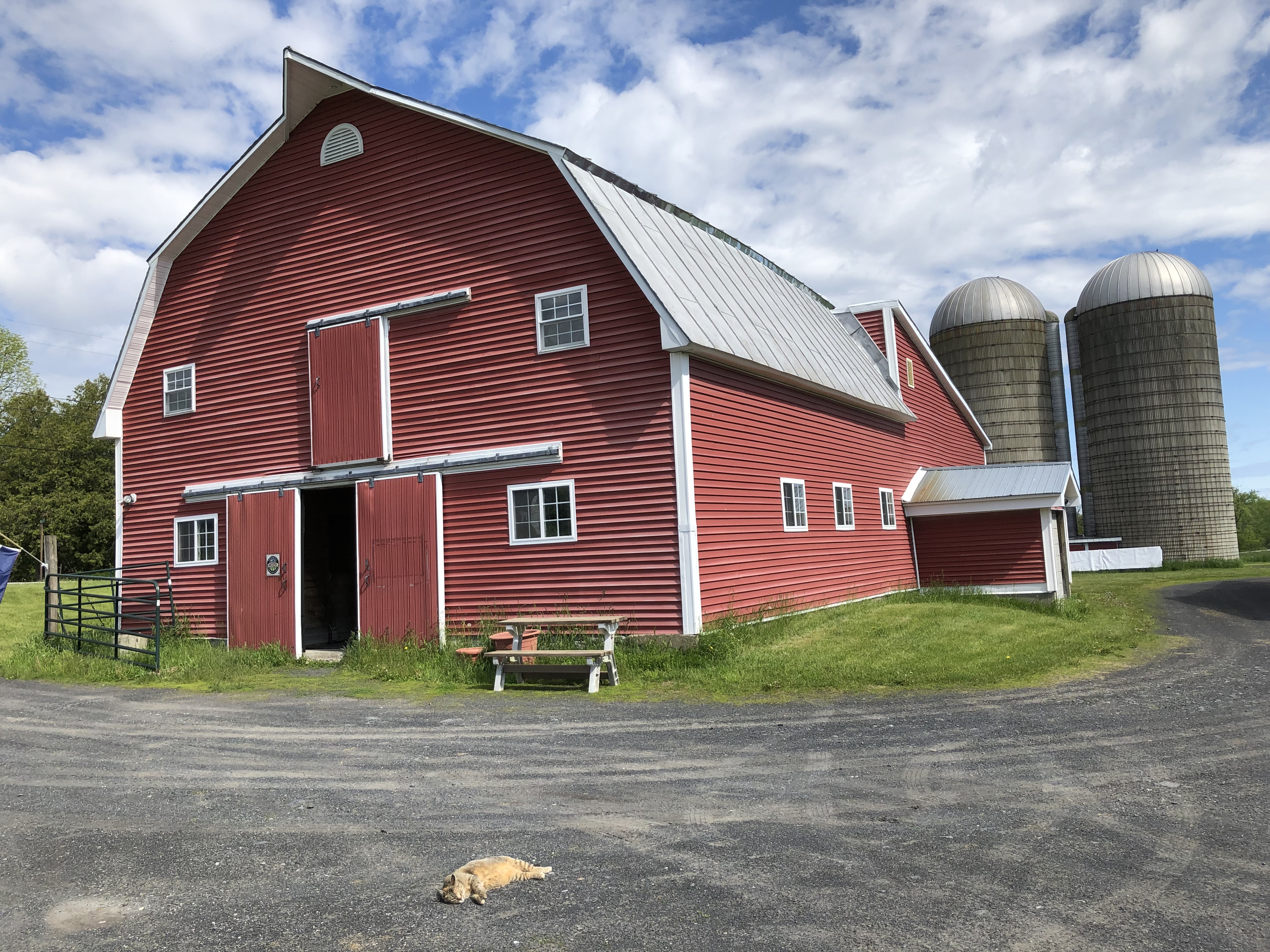
Falcao: We got to know each other, and then I came to Vermont to work as an intern and help with organic vegetable production. We understood how to grow vegetables, but the beef were big animals, and we were a little scared of them. We didn’t know much about it.
The Land Trust – not just the Vermont Land Trust, but the South Hero Land Trust – was looking for people to buy this conserved property, so we collaborated with them to come up with a proposal, and we were awarded the purchase.
The Land Trust holds the development rights; otherwise we couldn’t have bought it. It was worth over $2 million, and we paid around $400,000. The taxes were $25,000 a year, but under the current use program, they’re $4,000.
Fireovid: For the better part of a year the two families lived in one house, farming together, and then they moved a couple of miles away.
VTD: What did you gain from the partnership?
Fireovid: The partnership was a financial means for both families to have a farm. We provided the financing, but we needed expertise, and they set up a lot of the infrastructure — the fencing, the water lines. They taught me how to manage intensive rotational grazing, how to make hay, how to feed cattle in the winter, how to run equipment, how to maintain equipment. We learned a lot from them, but we’re still learning.
VTD: Why do this instead of something easier and less financially risky?
Falcao: We like to work; we find work motivating. And we like to see results. People need to have healthy food, and a farm is an important contribution to your community. Our children are well-educated and don’t need our money and we have pensions; that’s key.
And we enjoy being outdoors. In the wintertime, no matter what the weather, if we get the right clothes on we’re comfortable, even in terrible conditions. We have to go, because there are animals involved. The animals keep us young.
VTD: Did you learn anything in your professional lives that’s useful on the farm?
Fireovid: Cash flow is very important, but another big piece is minimizing investments. The head of GE at the time I was working there was Jack Welch, who was very good at managing and organization. I worked in purchasing or sourcing, and what we did often was to push as much of the production of anything that we needed — plastic parts, chemicals — on suppliers to minimize our investment and risk.
We try and do that here. We don’t have a baler; we contract that out. We try to minimize our investment as much as possible. It might end up costing us a little bit more money, but if there is a downturn of some kind, we’re less at risk.
VTD: Where else have you found information?

Falcao: We have gotten technical assistance from the University of Vermont Extension, from NOFA, and from the Natural Resources Conservation Service (NRCS).
NRCS also provided a lot of money to put up the fences and water systems because we’re right on Lake Champlain, and if we plowed the land we could be dumping topsoil into the lake, and nutrients.
UVM Extension had classes on nutrient management and spreading manure and business. A Greener World has information about humane certification, and FACT Food Animal Concerns Trust has webinars about farming. It’s a pretty great source; it’s real farmers talking about what they do from day to day.
VTD: Are any of your children interested in farming?
Falcao: They think it’s cool, but it’s not for them. It wouldn’t have been for us when we were their age.
