


The last holdout school boards resisting mergers under Act 46 appear to be inching toward consolidation, however reluctantly. But with just weeks to go before July 1 – when the unified district is supposed to open its doors – the transition could be messy.
An organizational meeting has finally been warned for this Thursday to swear in the transitional school board of the new unified elementary district for Athens, Grafton and Westminster. Seating a transitional board is the first step in getting a new unified district online. But it’s unclear what funds the unified district will have access to come July 1, since a unified budget can’t get in front of voters before the new fiscal year starts. And the local teachers union, meanwhile, says there have already been consequences for the administrative limbo – the company that administers health reimbursement accounts for the merging districts has dropped staff.
School board officials, meanwhile, pinned the blame for problems on the ground back on to the state, arguing all would be fine if it had simply allowed the districts to remain independent.
“What’s happening here is not the result of a few obstinate people not wanting to go along with governmental action. What’s happening here is the result of a poorly thought out decision from the State Board of Education,” Westminster school board chair David Major said. “They are responsible for turning fine, functioning schools into a mess.”
Back in March, the Agency of Education warned school boards that there could be “serious consequences to students and staff” if districts under order to merge didn’t begin working toward consolidation right away. That’s because of a strange loophole in Vermont law, the agency argued: in typical situations, districts who fail to get a voter-approved budget by June 30 can just borrow 87 percent of their prior year’s budget. But newly created districts don’t have a prior year’s budget, which means they don’t have a back-up, default budget.
Given the necessary warning periods for electing school boards and warning budgets, the state agency warned districts they would quickly run out of runway to get a budget greenlit by voters before June 30.
“A school district cannot operate in the absence of a voter-approved budget, regardless of whether it operates schools or pays tuition for its students,” the agency said at the time in a public memo.
Most districts did move forward. But the Windham Northeast districts stalled, recessing their organizational board meeting until the Vermont attorney general had weighed in on whether a merger would violate the contract clause of the U.S. Constitution. The AG never answered directly, although Dan French, the secretary of education, did write to the districts on May 7 to tell them that he had consulted with the attorney general and that, no, a merger would not violate the Constitution.
In Montpelier, meanwhile, lawmakers in the House and Senate each passed their own different versions of H.39, a bill delaying forced mergers for some districts by a year, which also addressed default budgets. But legislators couldn’t broker a deal on a compromise measure to bridge the gap between the chambers after talks blew up in conference committee, and ultimately ended the session in late May without a deal on default budgets or delays.
Ted Fisher, a spokesperson for the Agency of Education, said this week that, absent a voter-approved budget, some funds would still be available: as of Sept. 10, the new union district would have access to categorical grants (like small school grants) and 25% of the base education amount per equalized pupil. Federal funds owed to the district would also be available, as would any fund balances or monies held in reserve by those districts that had been merged together.
The transitional board, he added, would have “some authority to borrow money, at least in relation to pending obligations, and to make payments necessary to operate the district.”
But Fisher declined to clarify what “pending obligations” might include.
“Defining what is and is not a pending obligation is not the role of the AoE,” he said.
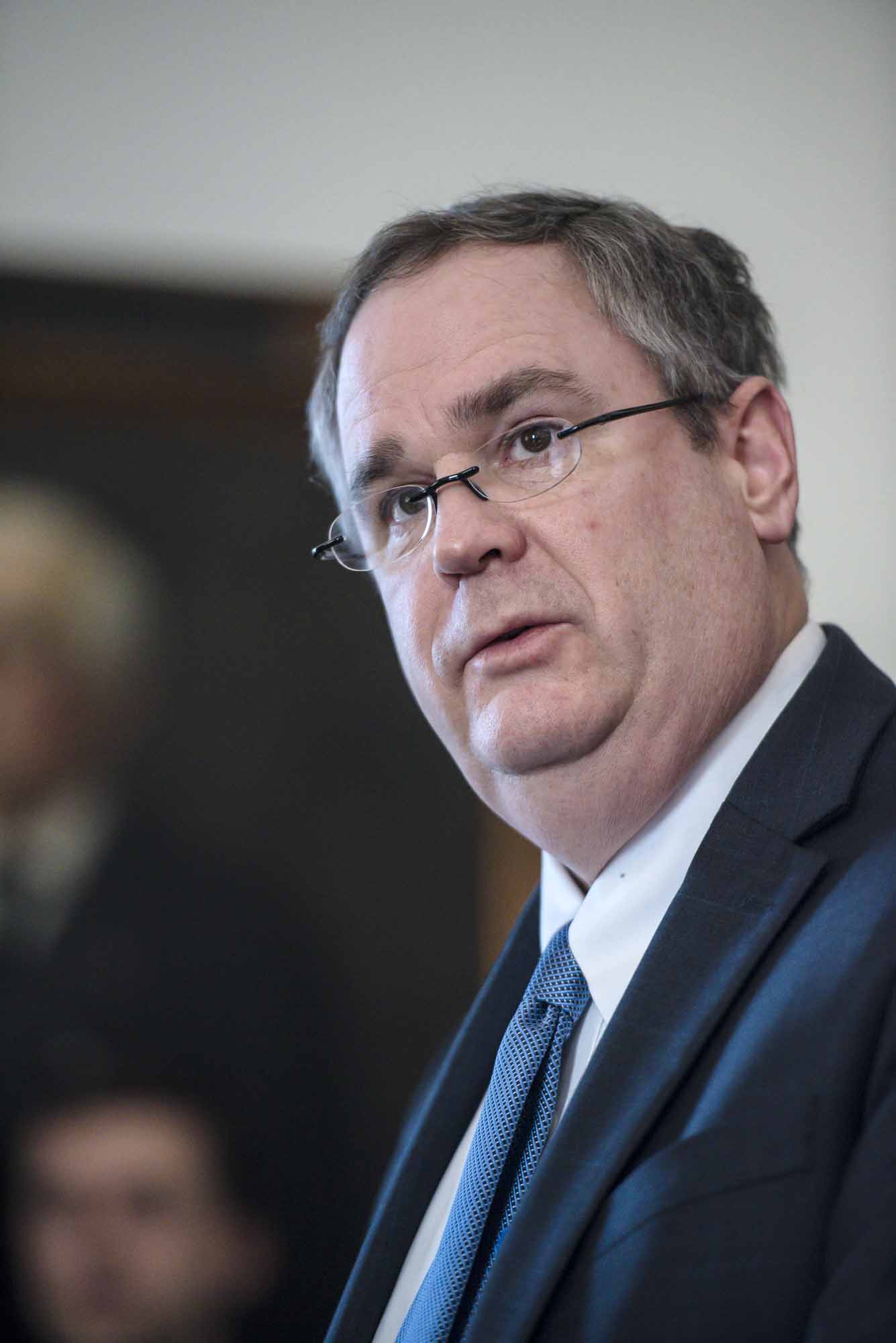
Chris Pratt, the superintendent at the Windham Northeast Supervisory Union, said he asked the agency a similar question and gotten a similar answer. But for now, he said his primary focus is on getting a transitional board in place so that some entity is actually able to spend whatever funds there are.
“It’s one step at a time right now,” he said.
Lily Hart, the president of the local teachers union, the Windham Northeast Education Association, said confusion is rampant among the teaching staff.
“I think uncertainty is a really good word for it. I think that is the key word. Because this is territory that is really uncharted,” said Hart, who teaches at Bellows Falls Union High School.
Hart says she believes administrators and school boards are trying to do their best to do right by staff and faculty come June 30. But Health Equity, the company that administers health reimbursement accounts for teachers, has already dropped employees in the three merging districts, she said, because there was too little time to make the shift.
It’s unclear how – or even if – teachers will be able to access money in their HRAs come July 1. That’s a huge concern, she said, since school employees often postpone health appointments until the summer to avoid missing class.
“To be in-eloquent about it, it sucks to make those arrangements in good faith and to be left holding the bag in what could be a big way,” she said.
As for what the state might do if school officials don’t, at a minimum, form a transitional board by June 30, Fisher wouldn’t say.
“The specific circumstances in which this might arise are varied,” he said. “It’s impossible to attempt to answer this question at this time.”
