



Rutland — It pays to stay nimble in the gingerbread man business.
From its factory in Rutland, Ann Clark Cookie Cutters turns out 4.5 million tin-plated steel cookie cutters a year. CEO Ben Clark, son of the founder, has big plans for the company, which has grown more than 400% in the last five years.
The company was making 500,000 cookie cutters in 2011 and 1 million in 2014. Clark is aiming to increase production to 6 million this year, and he thinks he can do it efficiently enough to crumble the competition, which is in China.
“We think the market is 8 million cookie cutters per year, and we want the whole sandbox,” he said.
Ben Clark’s parents started the company in Rutland in 1990. Ben Clark, who has a degree in mechanical engineering and an MBA, joined the company as sales manager in 1999 after working for Black and Decker and became CEO and majority owner in 2017. It now has 52 employees.
Clark, 54, and others at the company designed and built the machines they use now to press steel rounds into shapes at a rate of 22,000 a day. Twenty years ago, the company was limited to the gift market, but 10 years ago it increased production and started going after the kitchen store market, and now chains like Sur La Table, Williams Sonoma, and Kiss the Cook buy hundreds of thousands of cookie cutters.
Just seven or eight years ago, he said most cookie cutters were made in China. Now, he said, he’s closing in on ensuring that most of them are made by his 16,800-square-foot factory in Rutland that employs 52.
The transformation began about a decade ago when Clark started learning about lean manufacturing from the Vermont Manufacturing Extension Center, or VMEC. He toured King Arthur Flour and Vermont Country Store to see how they manage their inventory and order fulfillment, and then used what he learned at King Arthur Flour to set up his own warehouse.
And thanks to tutelage from VMEC, Ann Clark cut its inventory by about 55%, became much faster at turning orders around, and focused on speedily changing out its machines to go from making a moose to a gingerbread man in a matter of minutes. Now, the company makes 31,000 snowflakes a year (the third most popular design this year after gingerbread men and unicorns) but only has 500 on hand at any given time.
Before the switch, mistaken predictions about the market cost the company a lot of money. One year, Ann Clark sold 6,000 ghost-shaped cookie cutters. The next year, the company made 6,000 of the same shape, but sold very few. Now they never make more than 500 of any shape at a time.

“Today we’ll make 50 different shapes, and just keep changing over,” he said.
They also worked on basics like neatness and eliminating clutter. Clark said reducing the inventory and speeding up turnaround times was life-changing for the business.
“We wouldn’t be here otherwise,” he said.
Switching over to leaner methods and continuous improvement helps the company adapt to customers’ needs. This came in handy recently when one of the company’s competitors sent out an email saying that llama cookie cutters were on their way from the factory. When he saw this on the competitors’ email newsletter, Clark leapt into action.
“Two hours later, we said, ‘We’ll do a cartoon llama and a regular llama.’ Ten days later, we had those shapes out and were dominating. By the time our competitor got the product to the U.S., we already owned the market because we could do it that fast.”
Being the largest cookie cutter maker in the country, or the world, has brought with it a measure of fame for Clark. Thanks in part to an intern who later worked at the White House, the company last year was featured in the Made in America trade show at the White House, and Clark got to have breakfast in the White House, meet the vice president, and be interviewed on several television networks, including Fox.

“They wanted me to say tariffs are fantastic,” said Clark, who spends about $225,000 on steel a year. Instead, Clark said he expected to see steel prices go up as a result of the tariffs. In fact, about 10 days ago he learned the price Ann Clark pays for U.S. steel is rising 17 percent.
“My gut feeling is it’s going to last as long as the tariffs are there,” Clark said. “If your competition is raising their price 20 percent, for tariffs or any other reason, why wouldn’t you raise your price? We knew it was coming and it did.”
Being able to assemble and disassemble the cookie cutter machines means Ann Clark can turn around custom orders in rapid time. It has produced logo cookie cutters for professional sports teams, colleges and universities, and companies, like the Geico gecko and the Michelin Man.
Decorated cookies have been popular for decades, but they’re really having a moment right now, thanks in part to social media. The organizers of CookieCon, the domestic cookie decorating community’s largest trade show, started with 200 attendees in 2012 and said their event has grown so quickly that the March convention, in Reno, Nevada, had 800 tickets and sold out in about 14 hours. Mike Summers, who runs CookieCon with his wife in Idaho, said Ann Clark is the largest company devoted to cookie cutters. As for the industry that animates it, “cookie decorating certainly hasn’t always been as popular as it is now, but it’s not a mere flash in the pan either,” Summers said.
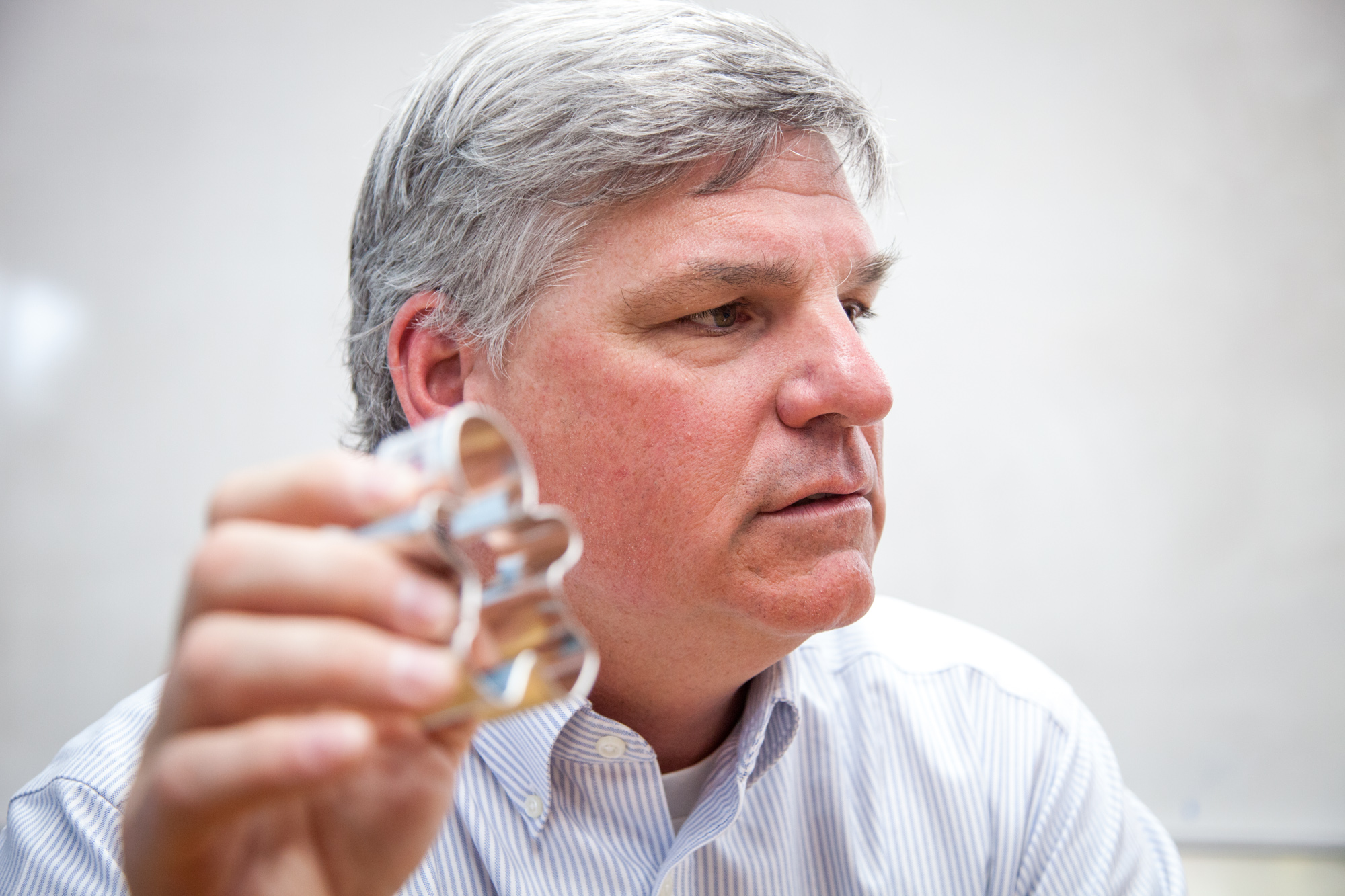
Clark’s set on sending his gingerbread men, llamas, stars and princess crowns worldwide. Any country with a robust middle class is a potential market, he said. In April, Ann Clark sent its first shipment to Amazon’s fulfillment center in Australia.
Clark splits his work time between running sales — online and in stores — and overseeing manufacturing. The company talked to Walmart, but it wasn’t a good fit, Clark said. He prefers Amazon.
“We’ve worked with the big box stores and they’re horrible,” he said. “They beat up their suppliers. “
The company just added a new staff member in marketing, the department that watches trends, and it launches two or three new shapes each week (popular right now: sloths. Two years ago it was mason jars). Clark carefully tracks industry data and competitors’ websites to see what is going on outside.
As for other products: “It’s a constant thought,” he said. “We’re actively talking about what we can apply our knowledge to.”
