


[S]amantha Pause was working as chief marketing officer at Mascoma Bank when the Lebanon, New Hampshire-based institution began the process of being certified as a B Corp, a company that meets high standards of verified social and environmental performance, public transparency and legal accountability.
Certified B Corps have a mission of balancing the bottom line with service to the community, and that’s something few banks have the leeway from shareholders to pursue. Mascoma fulfills this in a variety of ways. At 17 of its 25 branches, there are solar panels that deliver power back to the grid. The bank’s annual giving budget is based on 10 percent of its budgeted pre-tax income.
There are just nine U.S. banks certified as B Corps. Brattleboro Savings & Loan became a B Corp in December; it’s the only Vermont bank with the certification.
As a mutual bank, owned by its depositors, Mascoma Bank – which attained certification in 2017 – has more freedom than traditional banks to make the community and not profits a priority. Pause said she sees the community service as a type of dividend that the bank pays locally.
Started in 1899, Mascoma has $1.7 billion in assets and 325 employees, many of them at its operations center in White River Junction. Its 25 branches are split between Vermont and New Hampshire, with loan production offices in Portland, Maine, and Burlington. Its northernmost Vermont branch is in Bethel now, but the bank plans to open three branches in Burlington this year.
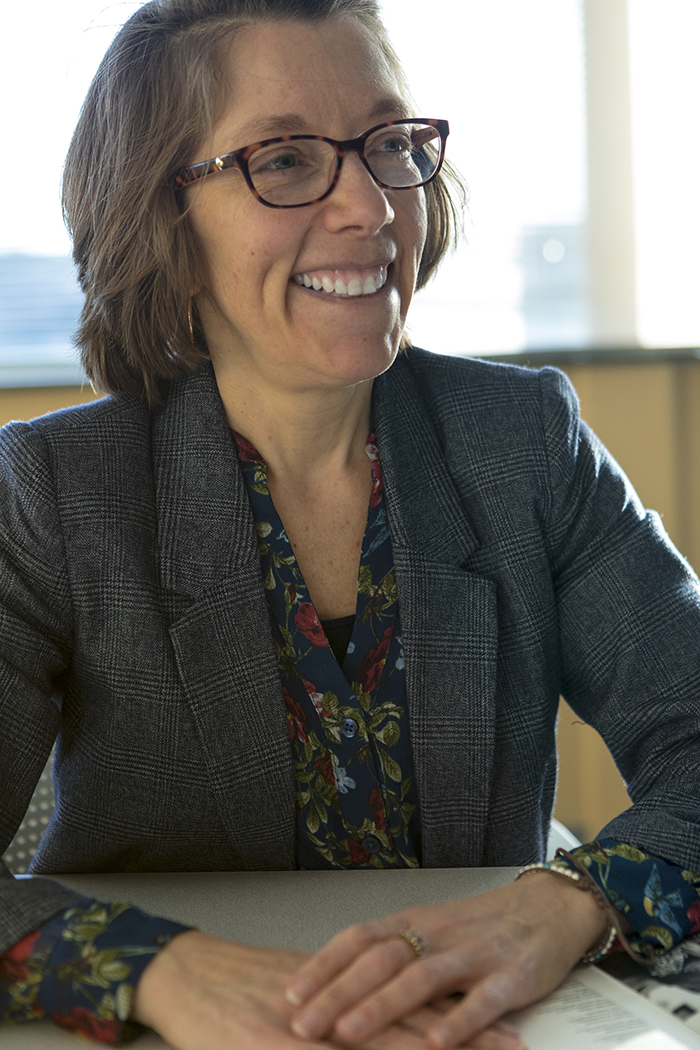
VTDigger spoke to Pause — senior vice president for marketing, sales and service — about the process Mascoma went through to become a certified B Corp. The interview has been edited for length and clarity.
VTDigger: Whose idea was it for Mascoma to become a B Corp?
Samantha Pause: It started with our CEO at the time, Steve Christie. We don’t have that extra layer of pressure to report to stockholders, and that allows us to focus on our customers and community for the long term. Not paying a quarterly dividend allows us to give it back to the community in terms of donations and sponsorships.
All banks do that, but because we’re not paying a quarterly dividend, we can do it at a different level.
Instead of stockholders, we have corporation members. They don’t get paid anything. They are people who are connected to the community and understand the importance of the mutual bank.
VTD: What was the process?
SP: We needed regulator approval to change our corporate structure to a benefit corp. We’re regulated by the Federal Reserve. We were the first bank that they regulate that became a certified B Corp.
Then we had to do the assessment all companies take with the B Lab. It took us a long time, and we realized the amount of work and expense that was going to go along with it.
There is a lot of reporting; you can’t just say, ‘Hey, we’re doing all these great things.’ You have to prove it. And you have to start monitoring what it is you are doing, and you have to have data. Then, you have to set some goals to improve it.
The assessment has five categories: customers, community, employees, governance and environment. We were doing pretty well everywhere but on the environment. We hadn’t been measuring our energy usage at all. I don’t know we really thought much about it – though we did recycle at all our branches. Now we’ve signed on with some net metering agreements, and we’re offsetting what we consume through a solar array. I don’t know if we would have considered that before. We looked at our cleaning supplies and whether we were using recycled paper.
We have Keurig machines for customers, and we’re looking at the recycling program for all those pods.
We changed pay scales because of the assessment. They ask if you’re paying at least a livable wage — not the minimum wage — to your employees. We gave everybody a raise, and changed our entry-level pay scale.
We have put up some new buildings, and try to make them as environmentally friendly as possible, with lights that turn off automatically. We’re looking at everything differently now.
VTD: How much does it cost the bank every year?
SP: I can’t give you a complete dollar figure, because we’re not tracking the differences on what we’re spending on paper now, on the changing pay scales. There’s also an annual fee to B Labs, based on the size of the business.
VTD: Is there an advantage to being a B Corp?
SP: It helps give us focus.
The driving force has to be because you truly want to do this because it’s the right thing to do; otherwise it’s probably not worth it. It’s a lot of work and it is going to cost you money. If you truly want to focus on being best for the world, yes, do it, because it opens up so many doors, and gets your culture focused on, ‘How do we do things right for everybody?’ It totally changes your thinking.
Before, we walked the walk very well, but because of that assessment, we’re so much more focused on the impact we have.
