

[T]wo insurers are requesting significant rate hikes next year for Vermont Health Connect plans, and they say rapidly rising prescription drug costs are partly to blame.
The state’s largest health insurer, Blue Cross and Blue Shield of Vermont, is proposing a 15.6% average rate increase. MVP Health Care is looking for a 9.4% average increase for its exchange plans.
Green Mountain Care Board members will review those proposals and issue decisions in early August. They’ll likely hear concerns about affordability, especially given the size of the increases sought for 2020.
“For many Vermonters, they already can’t afford to get the care they need,” said Mike Fisher, the chief health care advocate at Vermont Legal Aid. “They can’t afford their premiums. They can’t afford to use their health insurance.”
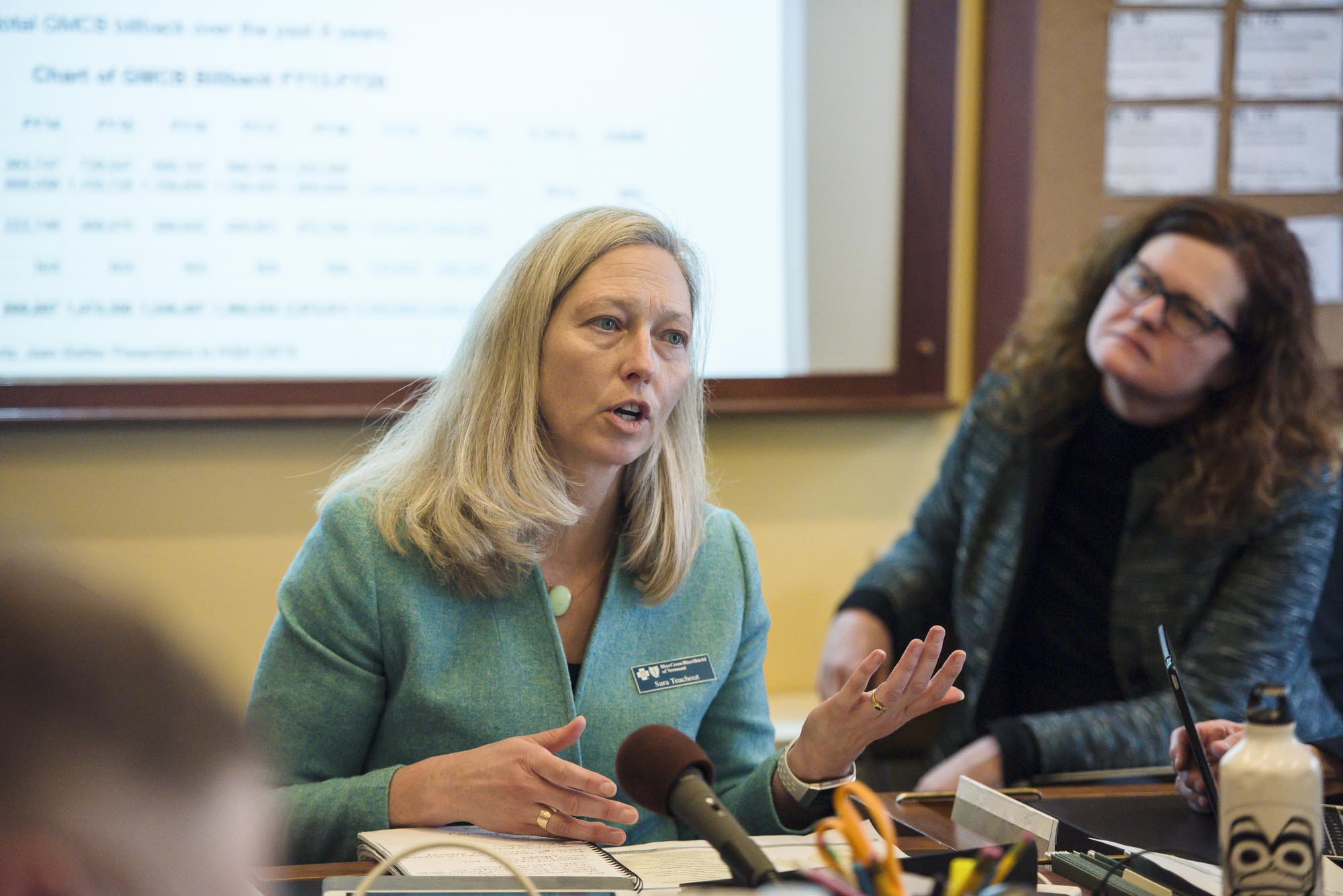
But Blue Cross spokesperson Sara Teachout said her company’s requested rates are an accurate representation of rising health care costs. More than half of Blue Cross’ proposed hike is attributed to drug prices.
“We all need to continue to work together – the state, the insurers and the providers – because this is reflecting the cost of the care that people are accessing,” Teachout said.
The Green Mountain Care Board’s cost-containment duties include annually reviewing and ruling on price proposals from health insurers. The board generally allows increases, albeit at a lesser rate than the companies propose.
For the current year, the care board cut Blue Cross’ Vermont Health Connect rate hike from 9.6% to 5.8%. MVP’s rate was decreased from 10.9% to 6.6%.

The stakes will be higher in the 2020 rate review, at least for Blue Cross. The Berlin-based insurer’s proposed 15.6% average hike – with actual plan increases ranging from 9.1% to 18.5% – is the largest Blue Cross has proposed for Vermont Health Connect, Teachout said.
The insurer said prescription drug costs account for 8.8% of the proposed increase. Most of that – 7.8% – is due to high-priced speciality drugs.
“They’re life-altering types of therapy, and sometimes a cure,” Teachout said. “But they are extremely expensive.”
For example, Humira – an anti-inflammatory used to treat conditions like rheumatoid arthritis – costs about $40,000 per year, Teachout said. And the hepatitis C drug Harvoni costs $30,000 for a course of treatment, she said.
New York-based MVP, which is proposing plan hikes ranging from 5% to 23.7%, also cited drug costs as a factor.
“MVP Health Care is committed to providing high quality care to our members, which means balancing our efforts to keep our rates affordable while adjusting for the reality that both the cost of the care and the cost of prescription drugs are rising,” Kelly Smith, senior leader for commercial sales, said in a statement issued by the company on Monday.
It’s not a new theme: A care board study last year showed that prescriptions were responsible for nearly 16% of premiums in 2018 for three insurers, and that percentage was on the rise. Speciality drugs accounted for an average $40.44 in monthly premiums for consumers.
State and federal officials are seeking ways to alleviate the pressures of high-priced drugs, but they haven’t had much success thus far. Vermont officials are looking into a program that would directly import lower-cost drugs from Canada, but that is years away if it happens at all.

Drug costs are not the only factor in proposed 2020 rate hikes on the health exchange. The insurers cited a number of other issues.
For instance, use of preventative care – provided at no cost under the Affordable Care Act – is on the rise and accounts for 1.9% of Blue Cross’ rate hike. Despite the short-term cost, “we think this is an investment in long-term health care, and eventually this should result in savings across the health care system,” Teachout said.
Blue Cross also says a federal health insurer tax, which is being reintroduced “after a one-year hiatus,” is the driving force behind 2.3% of its rate proposal.
This year’s deletion of a financial penalty to enforce the federal government’s mandatory health insurance law has a mixed effect on 2020 insurance rate proposals. MVP says it doesn’t see a reason to raise prices next year due to the now-toothless federal mandate, but Blue Cross is seeking a 1% hike because the company expects more low-cost, healthy customers to drop coverage.
The state is enacting its own health insurance mandate for 2020, but it appears there will be no financial penalty for failure to comply.
Also, the federal government’s controversial expansion of association health plans continues to impact insurance rates. Both Blue Cross and MVP are seeking a 1% hike for 2020 due to the small-business plans’ siphoning of customers from the health insurance exchange.
The future of association health plans is in doubt due to a federal court case and the potential for additional regulation by the state. But for now, Blue Cross is in the somewhat awkward position of insuring association plans on one hand while, on the other, noting associations’ detrimental impact on its Vermont Health Connect business.
Blue Cross acknowledges that “we have members in both of these marketplaces, and we don’t want to disadvantage members in one or the other,” Teachout said.
She also said Blue Cross can’t mix the two business lines. “We are supposed to have each independent marketplace be self-sustaining, and they’re not supposed to be cross-subsidizing one another,” she said.
Both insurers say they’ve taken steps to minimize rate hikes. With health care and drug costs rising, MVP is “committed to meeting these challenges with new products, including the introduction of a $0-deductible plan and other products that feature new wellness benefits that will help our members stay healthy,” Smith said.
Blue Cross cited its own wellness program as well as its efforts to manage drug and administrative costs. “Altogether, these rate-mitigation measures result in a reduction of 2.5%, or a projected $8.3 million,” the insurer’s rate filing says.

It will fall to the care board, which last year heard protests against continued rate hikes, to determine whether the insurers have done enough to cut their costs.
The board has scheduled hearings on July 22 for MVP and July 23 for Blue Cross. Both start at 8 a.m. in Room 11 of the Statehouse and will include public comment periods at the end.
The care board also will host a public comment forum on the 2020 rate proposals at 4:30 p.m. July 23 at Montpelier City Hall.
And the board is accepting public comment via the rate review website; via email sent to gmcb.board@vermont.gov; by postal mail sent to 144 State Street, Montpelier, Vermont 05602; or by phone at (802) 828-2177.
Additionally, the Office of the Health Care Advocate will take questions about the rate hikes and the review process at 1-800-917-7787. The office also has a website designed to help consumers participate in the process.
Fisher noted that the Green Mountain Care Board will be hearing from the insurers and their attorneys and actuaries. He is encouraging public comment “so everyone has a voice.”
“They really need to hear from Vermonters, too,” Fisher said.
