

Editor’s note: Mark Bushnell is a Vermont journalist and historian. He is the author of “Hidden History of Vermont” and “It Happened in Vermont.”
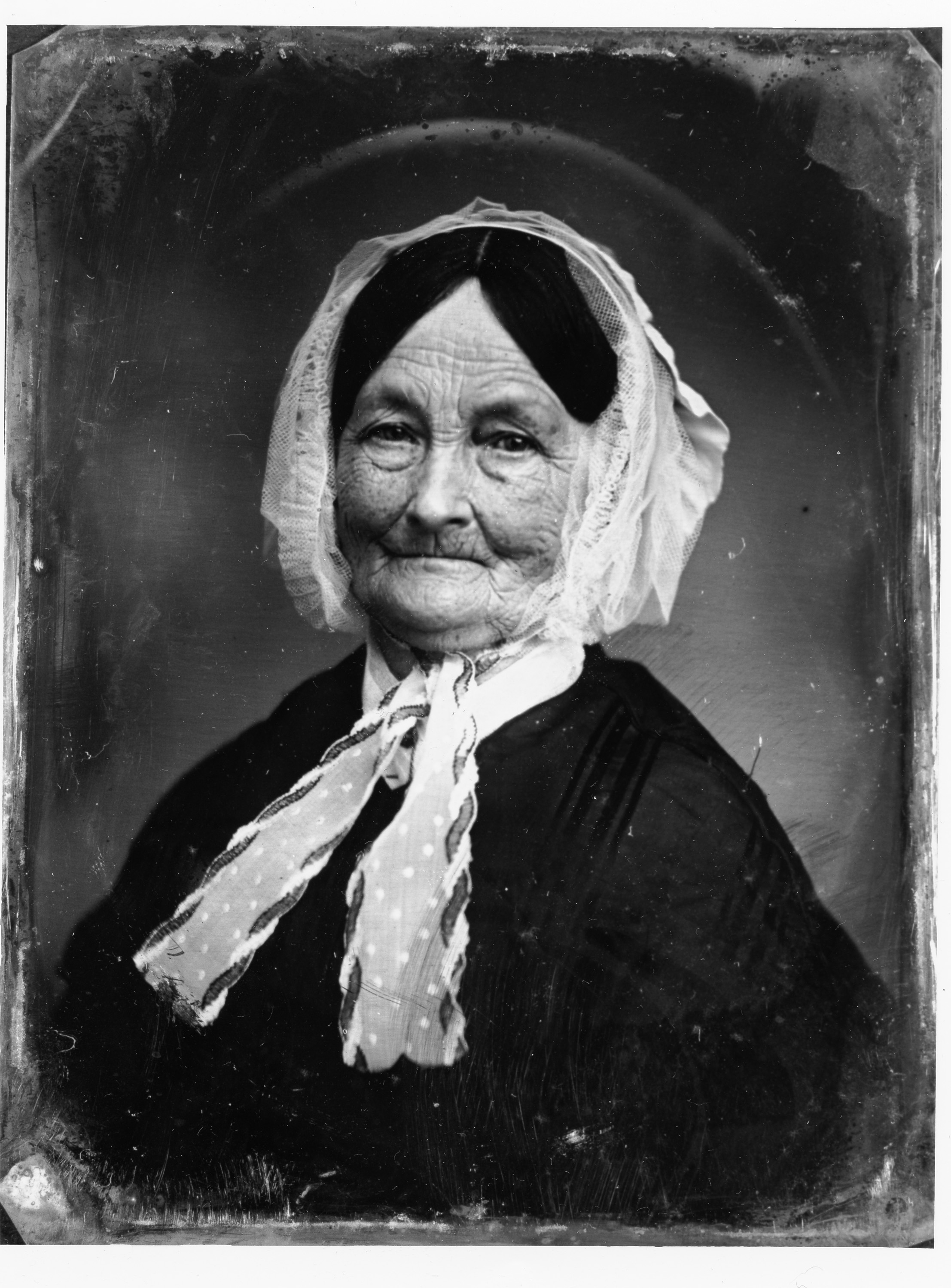
[M]ary Palmer Tyler took her work seriously. As a child of the American Revolution, she devoted herself to virtually the only occupation open to women at the time, that of mother.
While living in the Brattleboro area and raising her first eight children – she would eventually raise 11 – Tyler paid meticulous attention to what she was doing. Then, she put her experiences into a book of advice for other mothers. First published in 1811, “The Maternal Physician; A Treatise on the Nurture and Management of Infants Until Two Years Old,” was one of the earliest child care books written by an American woman.
Given the high infant mortality rate of the period, Tyler’s healthy children marked her as something of an authority on childrearing. But she gained little more than local renown for her skills, since she wrote “The Maternal Physician” anonymously, signing it “An American Matron.” Tyler decided to write the work anonymously to protect herself from criticism by the male medical establishment.
In her book, Tyler declined to show doctors the deference they were accustomed to, writing that “these gentlemen must pardon me if I think, after all, that a mother is her child’s best physician, in all ordinary cases.” Possibly to deflect the criticism that she knew the remark would bring, Tyler said her children’s own doctor had told her so.
As respectfully as she couched her opinion, Tyler defended her position by asking a rhetorical question: “Who but a mother can possibly feel interest enough in a helpless new born baby to pay it that unwearied, uninterrupted attention necessary to detect in season any latent symptoms of disease lurking in its tender frame, and which, if neglected, or injudiciously treated at first, might in a few hours baffle the physician’s skill, and consign it to the grave?”
She was probably right – especially considering the medical profession’s far from complete understanding of disease during the period.
Tyler wrote the book for several reasons. First, she was civically minded, and came by it honestly. Her family was poor, but patriotic. Her grandfather had served in the Massachusetts Provincial Congress and Committee of Safety, two governmental bodies formed by colonists in opposition to British authority shortly before the Revolutionary War. Her father had been among the raiders who had so famously dumped tea into the harbor during the Boston Tea Party. Her mother had also done her part for the revolution, making food for the soldiers and bandages for the wounded.
In writing a book, Tyler hoped to help women accomplish what was seen as their duty to the republic, being good mothers who would raise the nation’s next generation of moral citizens.
Tyler was also trying to prove that she belonged in the family into which she had married, theorizes Vermont historian Lyn Blackwell, who has studied Tyler extensively. Born Mary Palmer, she had married Royall Tyler, 18 years her elder and the creator of the first comedy written by an American to be professionally staged. Incidentally, that play, “The Contrast,” was a defense of marrying for love, not money, which explains why Royall Tyler married Mary, despite her family’s poverty.
Which brings us to the third reason she wrote the book: to make money. Royall was a prominent figure in early America. He had been engaged to the daughter of John and Abigail Adams. After that relationship failed, he moved from Boston to Vermont, becoming a lawyer, University of Vermont professor, and chief justice of the state Supreme Court. He should have made enough money to support his family, but he liked to live lavishly, so money was always scarce in the Tyler household. Mary hoped to augment it with her book.
Today, “The Maternal Physician” still makes engaging reading. It lets you glimpse the world of early American women. The view is a frightening one. These women were dealing with an alarming array of diseases in their children – smallpox, measles, dysentery, whooping cough, to name a few. Though they might call in doctors in more serious cases, the mothers were expected to provide the primary care.
Mary Tyler clearly believed that women were up to the task, if they listened to the voice of experience. In reading newspaper obituaries, Tyler said, she had been “forcibly impressed with the great proportion of children who are yearly consigned to the relentless grave under the age of two years. I revolved in my mind why it was so, and could not avoid concluding that it must be in a great measure occasioned by some gross mismanagement in mother or nurses, or perhaps both.”
Tyler’s advice to mothers has worn unevenly. Some opinions, like her faith that “new born infants, if well, … require no food but what they will obtain from their mother’s breast,” are widely accepted today. Others, like her suggestion to hold a warm onion against a child’s ear to alleviate an earache, may sound odd to some, but are still widely prescribed by naturopathic doctors today. And some, like her advice to bathe infants in cold water, may leave you puzzled.
Along with the medical advice, Tyler offers tips on disciplining and teaching a child. “(Y)ou should begin at eight or nine months old to educate your children,” she writes, “believe me, now is the only time to acquire that ascendancy over your children’s minds…”
Tyler’s own experiences as a mother were mixed, as Blackwell explained in a 1992 essay for the Journal of the Early American Republic. Her nine sons followed her example and proddings and devoted themselves to public service. They became ministers and teachers, governmental and military officials. Her letters to them, however, seem barbed with guilt, and remind her sons how they should send her what money they can spare. Being good sons, they oblige.
Tyler can be forgiven if she relied on her sons for support. She had no choice. Her husband had spent any comfort they might have had before leaving her a widow at age 51. And a woman in her day had no possibility of earning a true living.
Mary Tyler was perhaps hardest on her two daughters. In her essay, Blackwell cites the example of Tyler’s daughter Amelia, who shares her mother’s intellectual interests – indeed, she devoted her life to teaching – but never married or had children. Thus, Amelia never satisfied her mother’s greatest hope, that all women would become good mothers.

