


[P]OULTNEY — On a clear, frigid day in early March, hundreds packed a room in Whitney Hall at Green Mountain College. The standing-room only crowd was a perfect cross-section of the town of Poultney: Present were its former town manager, longtime high school principal, a sculptor, several school board members, a fussing toddler and the local hardware store owner.
“I’m just like a therapist,” joked Paul Costello, the executive director of the Vermont Council on Rural Development, who had been called upon to mediate the morning’s community conversation.
The room had gathered to take stock of a community trauma: Green Mountain College, after nearly 200 years in the community, would close after commencement in May.
Costello asked the room to spend the first 15 minutes airing concerns about the challenges to come. GMC provost Tom Mauhs-Pugh, a resident of the town, got the ball rolling: When the college would close, he said, about $7 million in direct payroll would leave Poultney and surrounding communities.
The long-simmering crisis in higher education as college enrollment rates decline – which has been plaguing the Northeast and Midwest most acutely – is now hitting Vermont exceptionally hard. In the first quarter of 2019 alone, three private colleges have announced they will close. A fourth is on probation with its accreditor.
And as schools close, community groups across southwestern Vermont – in Bennington, Rutland and Poultney – are now convening for visioning sessions. The main concern? How to fill the economic void left when institutions shut down.
Higher education, as a sector, employs about 4% of Vermont’s total workforce. According to a 2017 report by the Vermont Higher Education Council, more than 11,000 people work in the state’s public, private and two-year schools, making an average of $43,000 a year.
“We tend not to think of colleges as businesses. We think of them as a place where students go,” said Tom Greene, president of the Vermont College of Fine Arts. “I employ 250 people here. That’s a signal if we were to go away, that’s 250 less jobs in Montpelier.”
In many ways, what ails Vermont’s colleges is what ails the rest of the state – too few young people. And the problem is likely to get worse before it gets better.
Nathan Grawe, a professor of economics at Carleton College and an expert in how demographics affect higher education, notes data from the Western Interstate Commission for Higher Education predicts Vermont shedding an additional 10% of its high school graduates by 2030. The Northeast, as a region, is projected to lose another 50,000 high school grads in that same period.

Across the country, fertility rates took a big dip after the Great Recession and hasn’t recovered since. In many ways, the ongoing crisis in Vermont and the Northeast is a harbinger of things to come for higher education nationally.
“So if you fast-forward 18 years, that means that in the mid 2020s, we can foresee nationally a decline in high school graduates and college attenders. But Vermont was engaged in low fertility much sooner,” Grawe said.
There are other problems plaguing the industry. Students are increasingly flocking to online-only options, which are cheaper and more accommodating for those who work. (Champlain College, in Burlington, is making bold moves in an attempt to capitalize on the trend.) And the student debt crisis is increasingly making people wary of taking on loans.
The colleges that have closed in Vermont have been fragile for other reasons, too.
Burlington College, which shuttered in 2016, had taken on $10 million in debt to buy property in an ill-fated plan to expand. Green Mountain College owed $19 million to the USDA – a loan it had taken on to refinance earlier debts. Southern Vermont College in Bennington never recovered from an embezzlement scandal and the reputational blow it took when the accreditation of a nursing program was called into question. And at the College of St. Joseph, officials depleted the school’s meager endowment to pay for a physician assistants program that never got off the ground.
“When every high school graduating class is larger than the one before, you can in essence make mistakes and recover. And increasingly, we have to be aware as an industry that we’re not in that forgiving environment any longer,” Grawe said.
Meanwhile, if the higher education squeeze is a symptom of the Northeast’s demographic problem, further contraction in the sector could also compound it.
“We are one of the largest industries that bring young people to the state,” said Susan Stitely, the president of the Association of Independent Vermont Colleges. A report from AVIC notes about 80 percent of the students at Vermont’s private colleges and universities hail from outside the state’s borders.
The Legislature has taken a light touch to the crisis thus far, and lawmakers have been mostly concerned with ensuring academic records are maintained somewhere and accessible to former students.
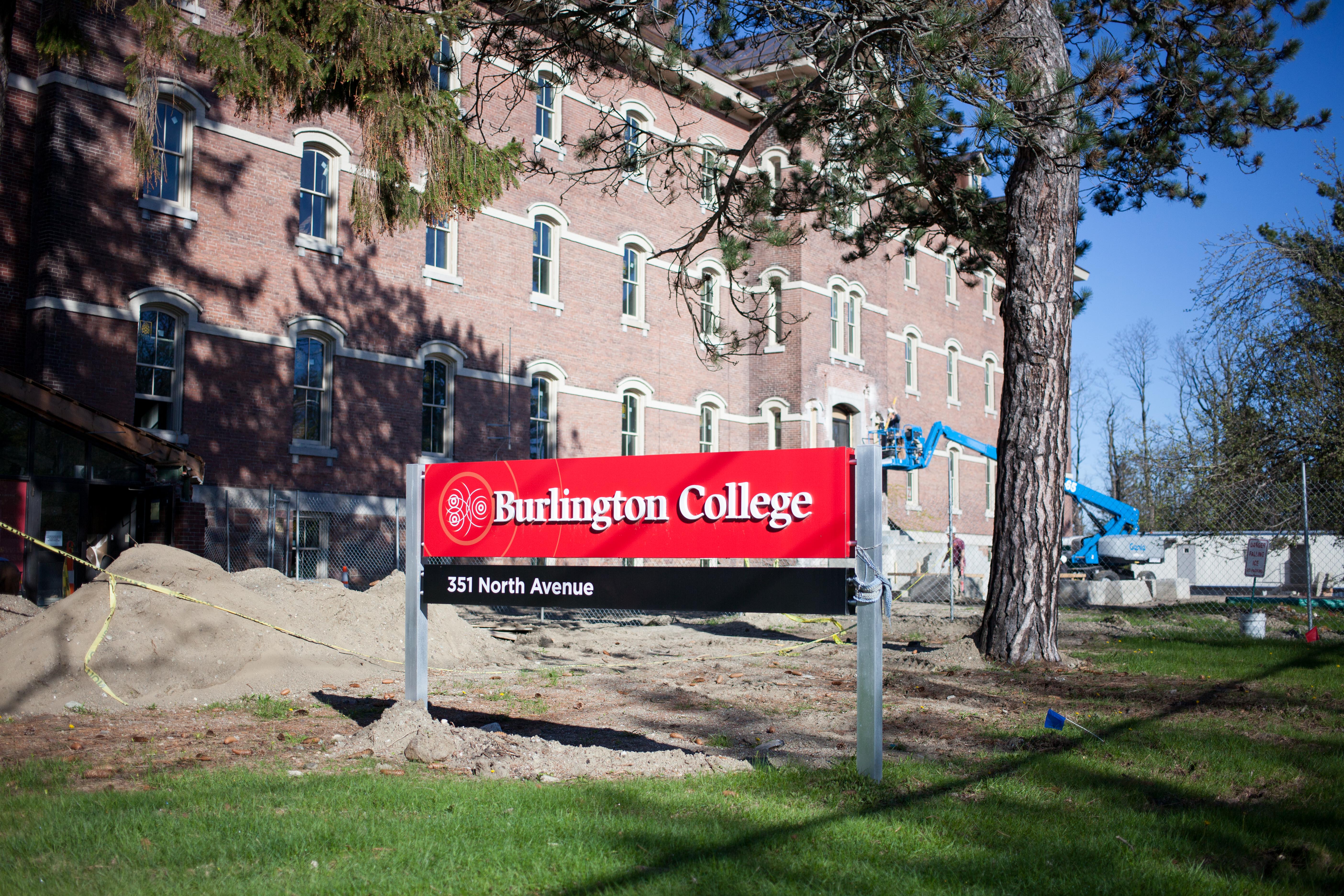
That’s a lesson learned from Burlington College, which closed so abruptly in 2016 that the Agency of Education had to step in and spend thousands in taxpayer funds to organize and take custody of the records. Language in this session’s miscellaneous education bill, S.164, requires the other private colleges in Vermont to step in if one of their peers shuts down without a plan for record maintenance in place. The Vermont State Colleges have also agreed to take records as an absolute last resort.
Senate Education Committee chair Phil Baruth, D/P-Chittenden, said lawmakers may, in the second year of the biennium, consider imposing some state oversight on the finances of the private colleges. For now, the state plays little regulatory role at all – regional accreditors, which are private entities, do the bulk of the work.

“The system as it stands seems vulnerable to somebody very rapidly sliding financially. Especially if they don’t want people to know,” Baruth said.
Gov. Phil Scott, for his part, has taken a similar approach to the higher education crisis as he has to Vermont’s larger demographic problem. In an echo of the state’s new Remote Worker Grant Program, which received headlines across the country and gives eligible workers up to $10,000 to help relocate to Vermont, the Scott administration this week unveiled the “Choose Vermont” scholarship.
“Do you know what NHL stars Tim Thomas and Martin St. Louis, the president of NASCAR, the band Phish – like, all of them – and this governor have in common? We all graduated from a Vermont college or university,” Scott tells the viewer in an upbeat, one-minute clip advertising the program, which will make available two $5,000 scholarships to students who commit to a Vermont school by June 1.
Ted Brady, the Deputy Secretary at the Vermont Agency of Commerce and Community Development, said the raffle is part of the state’s new strategy to highlight Vermont’s post-secondary options when marketing the state.
“There aren’t many places in the country where you can get everything from Division I hockey and basketball to an individualized, customized low-residency, build-your-own major,” he said.
As for Greene, he’s not sure state-level actors have many levers they can pull.
“There aren’t good answers. There isn’t a good government solution to this,” he said.

Greene is deeply anxious about the industry’s prospects. As many as half of Vermont’s private colleges could close or merge within the next few years, he says, “without some sea change in how people do business.”
For Grawe, the dramatic decline in the number of potential students means schools will have to look beyond aggressive recruitment strategies to stay viable.
“It goes without saying you should recruit effectively. But I think we’re looking at a change in numbers of students that’s too large to simply tell your marketing department: ‘have a good viewbook’,” he said.
In particular, Grawe thinks schools should be thinking even more seriously about retention. Colleges that do a good job getting their students across the finish line will be able to maintain their enrollment numbers even with fewer freshman coming in – and better serve their students.
“Schools’ best strategy is to seek to better fulfill their mission,” he said.
VTDigger’s Lola Duffort discusses college closures with Vermont College of Fine Arts president and former New England accreditor Tom Greene in our Deeper Dig podcast:
