

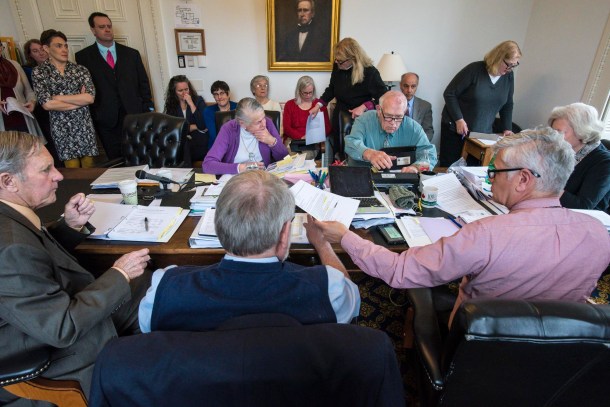
The Senate Appropriations Committee finalized the budget bill Friday, prioritizing spending on social services that haven’t seen increases in years.
The Senate’s version of the state budget for the next fiscal year, H.542, reflected agreement with the spending packages passed by the House and pitched by Gov. Phil Scott earlier this year.
But it also demonstrates Senate budget writers’ intent to reinvigorate some of the state’s “eroding” benefits programs.
The Senate Appropriations Committee increased funding for Reach Up, a program that provides benefits to low income children and families — hiking the appropriation up by $1.9 million next year.
Reach Up benefits have not been increased since 2004, and the program now only meets 35% of basic needs for the families.
“For families, those benefits hadn’t been increased for a long time,” said Sen. Jane Kitchel, D-Caledonia, the chair of the appropriations committee.
With the proposed new spending, a typical family receiving Reach Up assistance — one parent and two children living outside of Chittenden County — would see benefits increased from $640 to $700 per month.
They also provided about $1 million in additional funding to a Medicaid benefit for seniors living in residential care facilities.
The state has more than 100 residential facilities for the elderly, which offer some beds to seniors on Medicaid. The facilities serve seniors who require some level of supervised care, but don’t need to live in a nursing home setting.
But the reimbursement rate the facilities receive from the state, through the Assistive Community Care Service program, has remained the same since 2012, putting a strain on providers. With the additional spending, the facilities will see a $5 per day increase in reimbursement rates.
The Senate agreed with a proposal from the Scott administration to boost funding to the Department for Children and Families by $2.1 million, to hire 14 additional case workers in the department’s family services division, which deals with cases of child abuse and neglect.
The family services division has recently seen a dramatic increase in its caseload, from about 2,000 to 3,000 cases, largely driven the opioid crisis.
The Senate panel disagreed with the House and the Scott administration in several areas.
The Senate cut $1.2 million that the House had proposed to spend on the Working Lands program next year. The program, which provides financial assistance to farm and forest businesses, would see a smaller $150,000 boost of one-time spending under the Senate budget.
Senators also reduced funding for the Woodside Juvenile Rehabilitation Center, the only secure residential facility for minors in the state, by $525,000. Woodside, which has the capacity to hold 30 residents, but on average only holds 12, has a $6.3 million annual operating budget. It also recently lost federal funding.
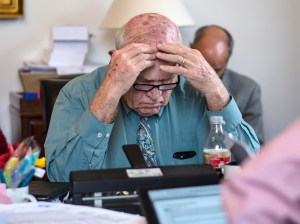
Sen. Dick Sears, D-Bennington, a member of the appropriations committee and the chair of the Senate Judiciary Committee, said the Senate wants to encourage the state to transition away from using the facility.
“Funding it for 30 beds is ridiculous,” Sears said.
The committee also gave the Department for Children and Families $200,000 in one-time money to help it plan the Woodside transition.
Senate budget writers also added $500,000 to help fund a significant increase in Medicaid dental benefits for adults. The plan is to increase Medicaid’s maximum yearly dental benefit from the current $510 to $1,000.
The annual cap has been a concern for advocates who say Medicaid patients forgo dental care due to coverage constraints. A recent state report said only 25% of adult Medicaid beneficiaries received dental care in fiscal year 2018, and just 9% received a preventative cleaning.
The Senate’s budget would also:
• Provide $2.5 million to the Vermont State Colleges to help reduce tuition: a $500,000 decrease from the House and governor’s budget
• Spend $2 million on an electric and hybrid vehicle incentive program for low income Vermonters—$500,000 more than the House and governor’s proposed budgets
• Allocate $2.5 million to give some mental health and disabilities service workers raises
• Like the House, the Senate restores $160,000 in funding to the Salisbury fish hatchery
The budget bill next will go before the full Senate for approval. Once budget passes, it will go to a conference committee, where House and Senate budget writers will negotiate differences between the two bills.
