

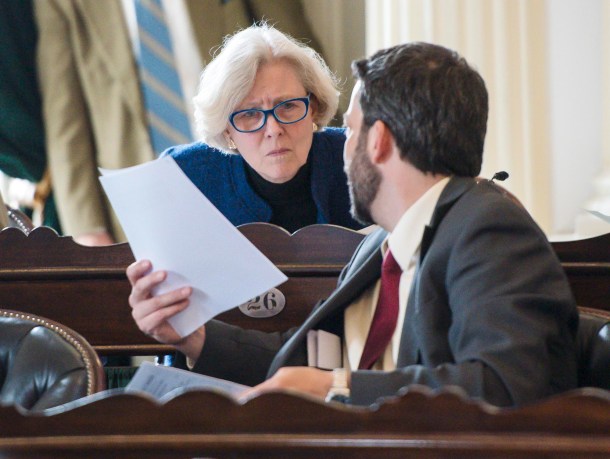
[S]enators crafting next year’s state budget are looking to boost funding for social services programs they say are “eroding” from stagnant spending.
They want to steer additional dollars to programs including Reach Up, which provides benefits to low income children and families, and a Medicaid benefit that provides financial assistance to seniors living in residential care facilities.
Sen. Jane Kitchel, D-Caledonia, chair of the Senate Appropriations Committee, said budget constraints in recent years, including Vermont’s massive pension debt, have made it harder to increase benefits for low income residents.
“I think some of us are very concerned about our basic safety net programs that have been eroding for years,” Kitchel said.
Kitchel has raised concerns about Reach Up, which hasn’t seen an increase since 2004 and is only able to meet 35% of a basic needs allowance for the families it serves.
A typical family receiving Reach Up assistance — one parent and two children living outside of Chittenden County — gets $640 a month: the grant’s maximum amount.
“Everybody wants to serve the families but nobody’s saying ‘Couldn’t you give them enough to feed and clothe their kids,’” Kitchel said.
Senators say they are also concerned about funding for Vermont’s residential care facilities which serve seniors who require some level of supervised care, but don’t need to live in a nursing home setting.
The state has more than 100 residential facilities for the elderly, which offer some beds to seniors on Medicaid. But the reimbursement rate the state pays the facilities through the Assistive Community Care Service (ACCS) program has remained the same since 2012, putting a strain on the care providers.
The Medicaid program pays residential care providers $37.25 per day for each resident receiving financial assistance. But facilities have to make up whatever isn’t covered by the program out of pocket, and some say they’re struggling to meet expenses.
Kim Roberge, the executive director of the Craftsbury Community Care Center, pegged the daily cost of providing service at closer to $80, not including room and board.
The financial pressure has led facilities like Craftsbury to raise rates for private payers. It can also lead the facility to offer fewer beds to seniors on financial assistance because they’re expensive to serve.
Roberge said that the wait for those on financial assistance to get a spot at the Craftsbury center is now about a year.
“If we don’t have ACCS beds for people who are low income where are they going to go? What’s going to happen to them?” she said.
Those who can’t get a spot at a residential care facility may end up in nursing homes even though they don’t need a high level of care, which Roberge said, is likely more expensive for the state.
The Senate Appropriations Committee has yet to finalize its budget proposal, and make decisions about funding levels for state programs in Fiscal Year 2020.
It is expected to pass a spending package in about two weeks, and make changes to the budget passed by the House last month.
