

[F]lourish Farm’s cricket protein is ready for the world, but the world isn’t ready for its cricket protein.
The backers of the Middlesex-based cricket company have decided to close up shop, saying Flourish hasn’t found the buyers it needs for the insect-based nutrient.
“It’s just ahead of its time, and we didn’t have the financial wherewithal to wait it out,” said Alan Newman, a longtime Vermont entrepreneur who threw his support behind Flourish two years ago. “Crickets as a regular form of protein, not a novelty, are probably a good three, five, seven years away.”
Flourish started in 2014 after entrepreneur Steve Swanson read a United Nations report about the benefits of using insect protein to fight world hunger and environmental problems. Swanson raised crickets in the basement of his family home in Williston and entered some Burlington-area pitch contests to find investors. Newman, a founder of Gardener’s Supply, Seventh Generation and Magic Hat Brewing, saw him pitch his company at two events and contacted him in the summer of 2017 to learn more.
Newman eventually gathered backers willing to risk their money in return for stock in the company, and in early 2018 the cricket farm received $600,000 to move into a Williston warehouse. In November, after the landlord in Williston complained about the smell, the company moved to a house in Middlesex.
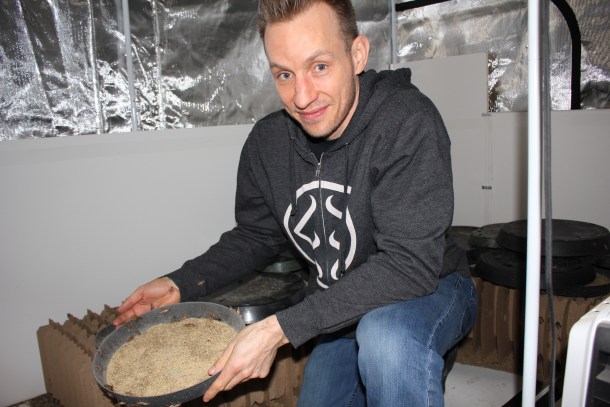
There, Swanson and an employee raised about 200,000 crickets at a time, roasting them and then turning them into powder for use in milkshakes, protein bars and other food items. There are many other small cricket companies doing the same thing — many of them selling the crickets as animal food — as well as large cricket protein operations in Thailand, Texas and Toronto.
But high overhead and low consumer enthusiasm took their toll, said Steve Hood, the company’s president. It would have cost too much money to keep the company going until the market matured, he said.
Hood and Newman both think that day will come. Hood said he has talked to people at the large cricket protein companies and they, too, say market acceptance for eating insect protein has been slower than anticipated.
“We all think it’s inevitable; it’s just going to take a lot more time and money than any of us thought,” Hood said. Newman estimated that amount of money at $1 million to $1.5 million.

“We’ll look back in 5 to 10 years and this will be common and sustainable and profitable,” Hood said. “We just don’t have the capital to get from here to there.”
Eating insects is common in some parts of the world. A study published last year in the journal Scientific Reports showed that eating crickets can help support the growth of beneficial gut bacteria and might also reduce inflammation. The author of the study, Valerie Stull, a professor at the University of Wisconsin’s Global Health Institute, co-founded a group called the Mission to Improve Global Health Through Insects. The university said more than 2 billion people worldwide regularly consume insects, which contain not only protein but vitamins, minerals and healthy fats.
But those people aren’t spending money in the West. In the U.S., consumers who are looking for nontraditional protein sources choose legumes, quinoa, pumpkin seeds, chickpeas and nuts. Swanson and Hood compared the taste of a roasted cricket to that of a potato chip or sunflower seed.
“Slow consumer acceptance of powder and whole roasted crickets were probably the most critical piece of the puzzle,” Hood said. “We could have found money and sourced some powder, and were in the process of developing a protein bar, but slow consumer acceptance meant slower-than-expected sales and revenues. That’s what prompted us to fold up the tent.”
Newman’s success in business is widely known in Vermont, but he said he has overestimated the market before.
“I tend to go where the puck is going and not where it has been,” he said. “Everybody gets impressed when they hear about the Magic Hats and Seventh Generations, how we got there ahead of the rush and rode the wave, and most people don’t look at the times I was ahead of my time that didn’t work.”

