


[S]tate officials plan to raise registration fees for hemp growers, with the larger growers assessed according to the amount of acreage they’re growing and the intended use.
Right now, any hemp grower who registers with the Agency of Agriculture, Food & Markets as required must pay an annual fee of $25. But the agency has been looking for a revenue source for its hemp regulation program, and this year turned to fees as a way to pay for at least one new position.
The existing Vermont fee is much lower than the standard nationwide.
Under the proposal, anyone growing between half an acre and 9.9 acres, or processing less than 10,000 pounds of hemp, would pay $500 per year. Growers with 10 to 50 acres or anyone processing less than 50,000 pounds of hemp would pay $1,000 per year, and growers with more than 50 acres or people processing more than 50,000 pounds would pay $3,000 per year. These rates are somewhat higher than those approved by the Senate Agriculture Committee in February.
Indoor commercial operations with viable seed production would pay $2,000, according to the proposal.
Agriculture officials would like to charge anyone growing or processing hemp for seed oil production, grain crop, fiber or textiles $100 per year
Hobbyists and very small-time growers with less than half an acre would pay the same $25 to register that they are paying now. The agency couldn’t let them off the hook entirely because under federal law, all hemp growers of any size must register with the state, said Cary Giguere, director of public health, agriculture resource management at the agency.
“We thought about exempting them from a fee altogether,” said Giguere. “We didn’t want to necessarily be in their business, but under federal law you need to be registered.”
The agency has lumped growers and processors together for the purposes of charging fees.
“In terms of capturing on-farm processing, you can be growing or processing individually or both and it’s the same fee,” Giguere said.
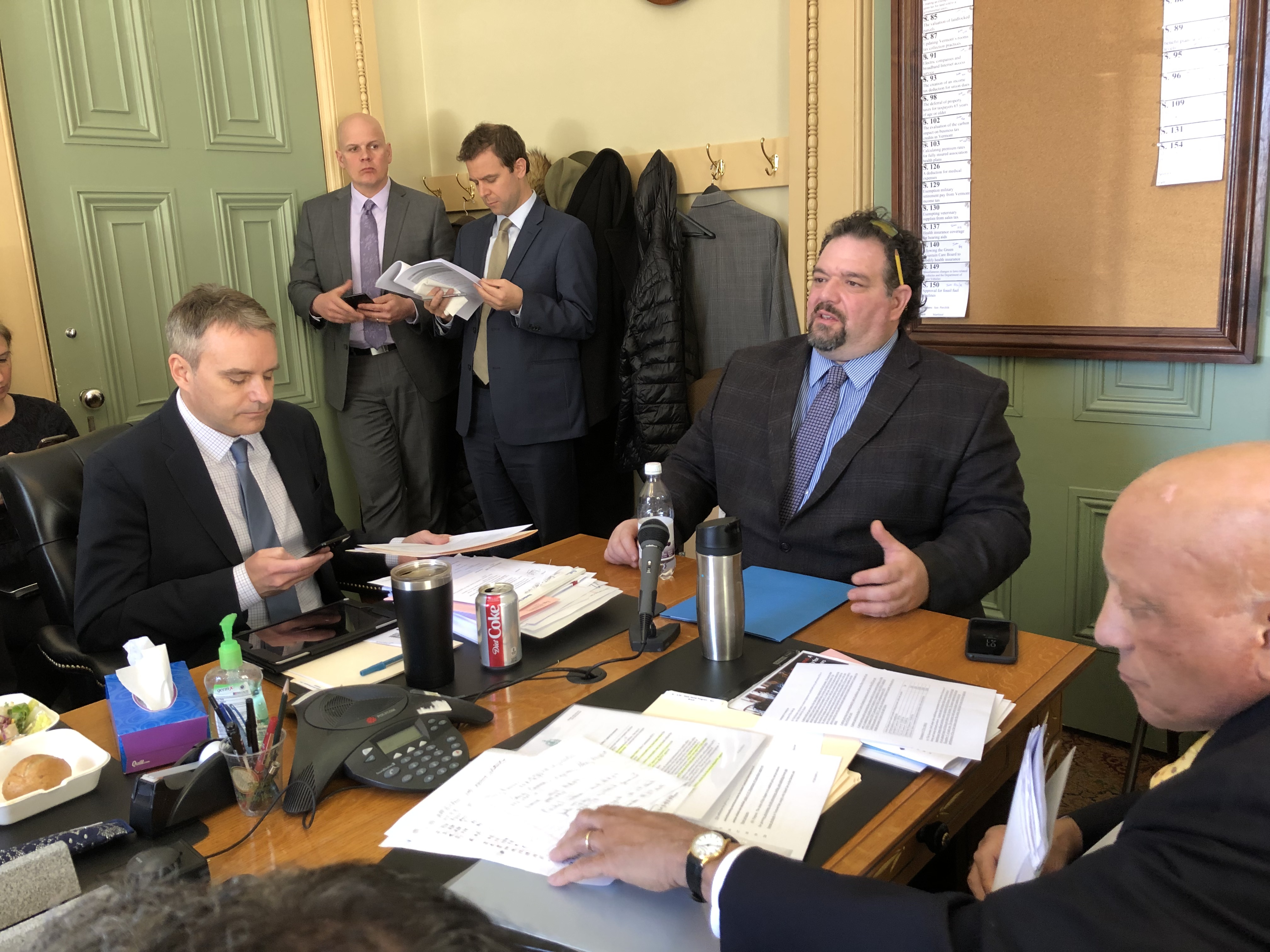
On Tuesday, the Senate Finance Committee went over the proposed fees in advance of a planned Wednesday vote. Giguere said if the fees had been effective this year, they would have raised more than $200,000 so far. The new fees would be effective Jan. 1.
“We intend to include positions in the hemp program, but not until we are collecting fees,” Giguere said. “Right now we’re collecting $25 and that isn’t enough to support a position. Our intention is to be back next year to add positions to the program.”
Hundreds of people have registered with the state as required to grow hemp, a variety of the cannabis plant species that is used to make fiber and cannabidiol, or CBD. CBD is a non-psychogenic product believed to have health benefits, and it’s increasingly being used as a supplement to oils, lotions, food and beverages. It is closely related to THC, or tetrahydrocannabinol, the main component in marijuana.
Hemp processor Carl Christianson, who co-founded Northeast Processing in Brattleboro, said he supports the idea of a tiered fee system.
“It is important to encourage small farmers and producers to participate in the hemp marketplace,” he said Tuesday. “At first glance, this fee structure takes steps in that direction.”
But Christianson said the proposal would allow a company to process unlimited quantities of hemp for fiber or seed oil production for only $100.
“This could be potentially damaging to farmers that are looking to avoid pollination of their crops, and are paying a higher fee for the right to do so,” he said. “The issues are complex, and there will certainly be a learning curve.”
About 30 Vermont businesses have registered with the agriculture agency as hemp processors, with more growers and producers entering the market every week. About 300 people have registered as growers so far this year, Giguere said.
“This is a blossoming market, to say the least,” said Sen. Chris Pearson, P-Chittenden and a member of the Senate Finance Committee.
Woodstock-area entrepreneur David Muller has proposed to lease a former prison property in Windsor to grow and process hemp. He said Tuesday that the fees appear in line with the expected economics of growing hemp, but said the language was slightly ambiguous. For example, he said, it’s not clear whether drying the hemp is considered processing. “If a farmer is growing and drying does she need to pay a processing fee and a growing fee?” Muller asked. “If a processor dries and extracts does he need to pay two fees?”

