


Entrepreneur David Muller hadn’t even heard of the 120-acre vacant Windsor prison property seven weeks ago. Now he is promoting a plan to lease it from the state and invest $1.5 million in a laboratory to conduct testing in the fast-growing hemp and CBD industry.
Muller, a resident of Boston and Woodstock who has founded several medical device companies, is making the rounds of Statehouse committees this month in a bid to educate lawmakers about his proposal, which includes a hemp-growing cooperative and CBD processing operation based in Windsor.
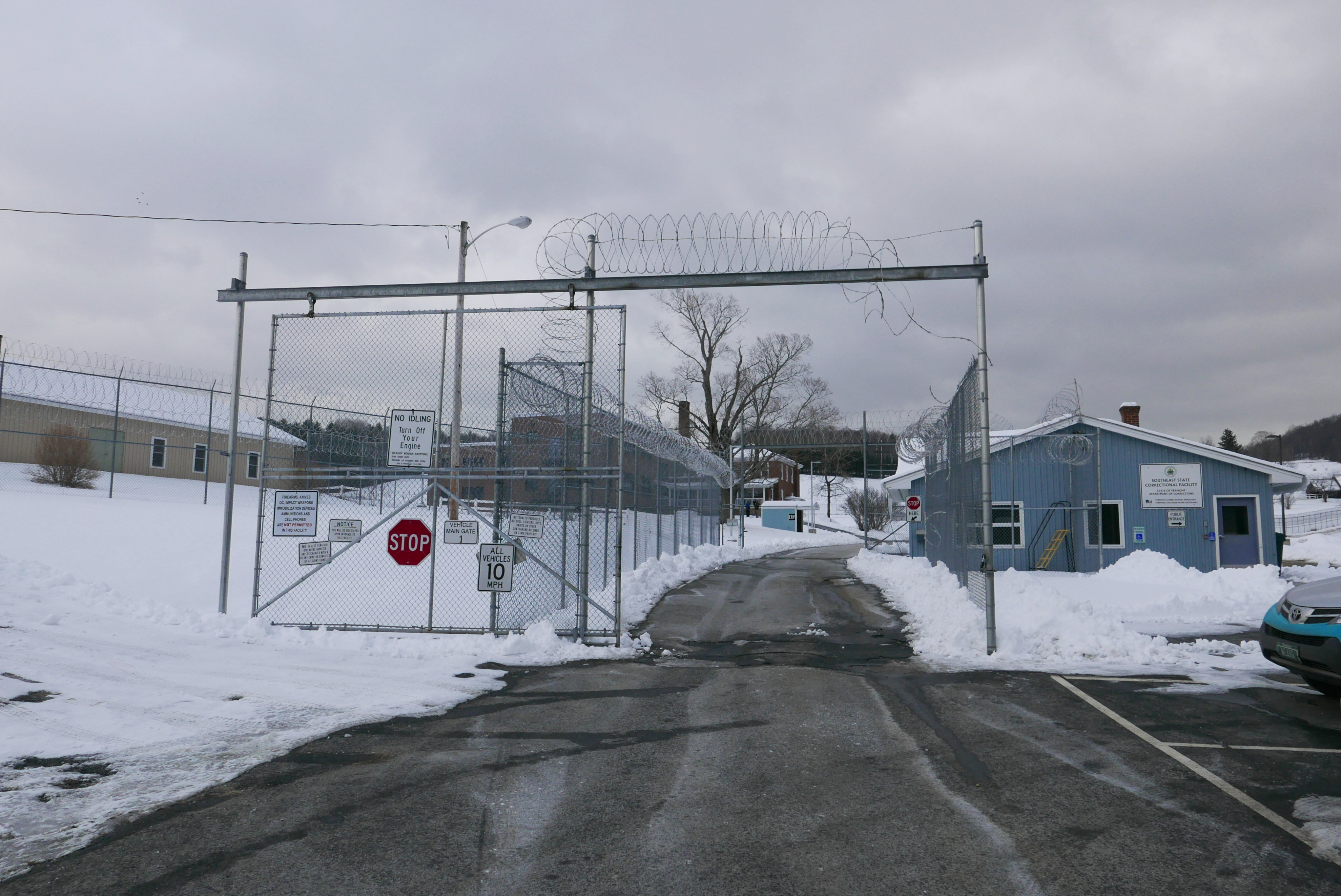
The prison site, which includes 27 structures with a collective 86,248 square feet, has been empty since late 2017. State Sen. Robert Starr, D-EssexOrleans, said the state is spending close to $6,000 a week to maintain it.
“If we gave it to you, we’d be ahead of the game,” said Starr at a hearing on Muller’s proposal last week. “It would be a benefit to get something productive in there.”
The prison property, which includes barns and agricultural fields, is one of several in the Springfield area that are vacant and available for Muller’s planned operation. But the prison’s tall perimeter fence is a strong draw for an operation that will eventually house millions of dollars worth of product.
“The nice thing about the prison farm is it has tillable acreage, it has security, and it has buildings that are usable for a variety of different things,” Muller said. He plans for his facility to produce one ton a day of dry hemp material. “It has great raw space for drying rooms, storage and the like; it’s got solid office space, a nice space to put in an extraction facility. It’s a natural use.”
If Muller wanted to buy the property, lawmakers would need to give permission for the sale to the Department of Buildings and General Services. But for a lease, the decision lies with BGS. Commissioner Chris Cole said Monday that he plans to talk with Muller about his proposal later this week.
“We haven’t even listed the property for leasing,” said Cole, who put together a report on the property for lawmakers late last year. “There may be more people interested in leasing what was a former correctional facility. As David Muller pointed out, the perimeter fence is very attractive for certain businesses.”
Many of the questions Muller heard from lawmakers Thursday focused on the industry itself, and the likely resilience of hemp prices in the face of increasing hemp acreage nationally and internationally.
“My concern is we’re going to theoretically build this industry and the farmers are going to get screwed in the long run, because that’s what happens over time with most commodities,” said state Sen. Anthony Pollina, P/D-Washington. “Our excitement comes from the ability to support farmers, support agriculture, and we have to be wary of the fact that co-ops or non-co-ops, farmers have not done very well, and I just don’t want to go down that same path.”
Muller told the lawmakers that he expects that a shortage of processing capacity will create a bottleneck for Vermont hemp farmers around harvest time. About 2,000 acres of land are registered with the state now for hemp production, he said. A processing co-op for farmers could alleviate the bottleneck, he said.
“There are now 20 to 30 people who all want to be involved. They are part-time farmers who have land that can be farmed,” he said. He described a cooperative similar to those used in the dairy industry. “The model is very straightforward; we all know it.”
Rep. John Bartholomew, D-Windsor, said he had seen an estimate that it would cost $1 million to demolish the buildings.
“One of the benefits I’m seeing is we have someone who can come and use the buildings, so wherever it goes, the state is not having to No. 1 continue to pay every day to maintain it, or pay the million dollars to knock everything down,” he said.
