

[A]dvocates for Vermont minorities have come out against a series of bills meant to address racism and bias in the state, arguing that they are piecemeal, flawed, and drafted without enough consultation from the communities they aim to protect.
“(W)e feel that any response about us without us is incongruous and paradoxical by and large,” the group writes in a letter to committee chairs and bill sponsors.
The organizations take particular issue with S.132, an act relating to hate crimes and bias incidents that was crafted by the attorney general’s office.
The advocates say the working group created by that bill to oversee efforts by law enforcement’s reporting of incidents needs to include representatives of the state’s racial justice advocacy community. It is currently composed entirely of officials involved in law enforcement, with advocates acting as “consultants.”
“We said clearly stakeholders need to be the ones driving the legislation,” Tabitha Pohl-Moore, president of Rutland area National Association for the Advancement of Colored People, said in an interview Wednesday. “We can’t support that.”
Former Rep. Kiah Morris, a Democrat from Bennington, asked to review the law herself to see that the legislation wasn’t rushed or imbalanced, but those attempts “fell on deaf ears,” according to the letter.
“Instead, the Attorney General’s office proposed a bill that smacks of reactionary language and lacks a more profound reflective practice,” the letter stated. “As a result, all amendments introduced from communities of color derived from situations of duress and not solidarity.”
The Senate Judiciary Committee took testimony Thursday morning on S.132, which expands the authority of the attorney general to investigate bias incidents, creates a working group to set up a system for reporting bias incidents and sets standards for training law enforcement on hate crimes and bias incidents.
Members passed the bill 5-0 without discussing the issues raised in the letter, including the composition of the working group.
Sen. Dick Sears, D-Bennington, the committee chair, said after the meeting that a number of signatories to the letter had also testified, and had not raised the same issues during their time talking to the committee.
“So I’m kind of surprised to see the letter,” he said. Sears added that he had spoken with Rep. Maxine Grad, D-Moretown, the House Judiciary chair, about the letter and the conversation would continue in her committee. “I think it’s something certainly the House will take up.”
Similar concerns were raised when Attorney General TJ Donovan proposed the legislation in mid-February.

Chloé White, policy director for the Vermont chapter of the American Civil Liberties Union, said at the time that it was important to have a diverse working group because it was tasked with, among other things, defining what a “bias incident” is in regard to law enforcement.
The bill was changed to include the following groups as consultants to the working group: Vermont’s Human Rights Commission, the Vermont Coalition for Ethnic and Social Equity in Schools, Vermont Interfaith Action, the Vermont branches of the NAACP, the Vermont chapter of the ACLU, “and any other entities or individuals the working group deems appropriate.”
Pohl-Moore said that wasn’t enough. “A voice is not a vote,” she said.
Asked about the criticism of the bias incidents bill, Grad, the House committee chair, said: “I’m committed to working on this issue with all the stakeholders and advocates making sure we have a collaborative and open dialogue moving forward.”
Investigative reach
While senators did not change the working group provision, there was a significant change made to S.132 before the bill was voted out Thursday.
The ACLU argued that one of the central provisions of the bill — the expansion of the attorney general’s investigative capacity — was a worrying expansion of powers.
The bill proposed applying the current statute for investigating unfair acts of commerce to apply to hate crimes and bias incidents. That would have allowed the attorney general to effectively subpoena information relevant to its investigations into such incidents.
Julio Thompson, an assistant attorney general in charge of the civil rights unit, said the law would provide an additional, but rarely used, tool for investigators, allowing them to gather additional evidence in support of a civil action.

He said it would only be needed in situations when authorities had evidence of an incident that met the standards for a hate crime, but did not have enough information to identify suspects. Or if an organization that possessed evidence required a subpoena to give it up.
Thompson described a situation in which authorities were investigating a hate crime at a school, but weren’t able to identify suspects (which would allow them to bring a lawsuit) and also couldn’t get information from the school due to federal standards that require a subpoena to release education information.
“We don’t have subpoena power so we don’t get evidence,” he said.
White, of the ACLU, told senators that her organization worried about subjecting everyone to investigative practices currently allowed only in the context of commerce and the workplace.
Committee members were receptive to her concerns. Sen. Phil Baruth, D/P-Chittenden, said the law would extend the investigative practices from “limited to areas of workplace to any form of social intercourse within the state could conceivably come under these investigative methods.”
Sears was the only member of the committee who voted to keep the language.
“It leaves us where we are today,” Thompson said of the amended bill, “which is that in cases where we don’t have an identified perpetrator or enough evidence to initiate a civil action, then there may be evidence that we aren’t able to get in order to provide a remedy to somebody.”
The bill was introduced at around the same time that Donovan, the attorney general, announced that he would not be bringing criminal charges in response to harassment and alleged threats against Morris, the former state representative.
He said that First Amendment rights, particularly when applied to criticism of public figures, protected a well-known white supremacist from criminal prosecution. In making that announcement, he also said his office would enact changes to bias incident reporting and investigation.
Other bills
The letter also takes aim at S.120, which proposes changing the position of executive director of racial equity to commissioner of racial equity, and expanding the duties of the role to work to eradicate systemic racism in the state’s public education system.
The letter stated the bill feels contrived, and lacks stakeholder perspective.
“This bill works to reverse worthier work put forth by more succinct coalitions in other laws — the most notable oversight concerns the use of overly inclusive language that perpetuates a culture of erasure,” the letter stated.
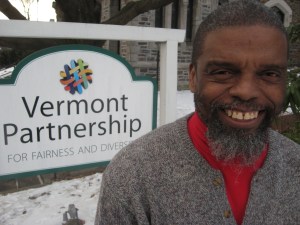
Among those signing the letter are Steffen Glenn Gillom, president of the Windham County NAACP; Tabitha Pohl-Moore, president of the Rutland Area NAACP; Sha’an Mouliert, Founder, “I am Vermont Too”; Wafic Faour, founder of Vermonters for Justice in Palestine; and Curtiss Reed, director of Vermont Partnership for Fairness and Diversity.
On H.496, a bill that proposes to amend hate-motivated crime statutes to clarify that prohibited conduct may be motivated by bias, and to create a civil penalty for repeated harassment or intimidation of a person, the activists took issue with the word “bias,” as opposed to “hate.”
“The exchanging the word hate to bias places people of color and other marginalized groups at risk as it ‘unbolts the door,’ letting those in power define and thus persecute based on the majority perception of what constitutes bias,” the letter stated.
“It is not an uncommon nor unprecedented practice for the most potent bureaucratic structures to utilize ‘gray’ language to promote their own agenda of at the expense of the disenfranchised,” the letter added. “Thus, crafting a weapon with no owner to be used by us or against us.”
The final bill the group singled out, S.79, does not seek to address issues of racism directly.
The legislation proposes to expedite the process for evictions in farm housing, among other landlord/tenant issues. The activists are concerned the bill targets migrant workers.
The letter calls on the lawmakers to shelve those bills and instead invest in the Human Rights Commission, adding the equivalent of two full-time employees to allow for investigatory work as well as outreach and education.
“While you work on those tasks,” the letter stated, “please allow us time to work on legislation to propose to your assembly that accurately reflects the views of, concerns, and thought-diversity in our Communities.”
Alan Keays and Ellie French contributed reporting

