


[T]he widow of a Vermont brigadier general and a 33-year-old White River Junction Army soldier with advanced colon cancer provided compelling, tear-provoking testimony on the health hazards Vermont military members face from the open-pit burning of waste on overseas deployments.
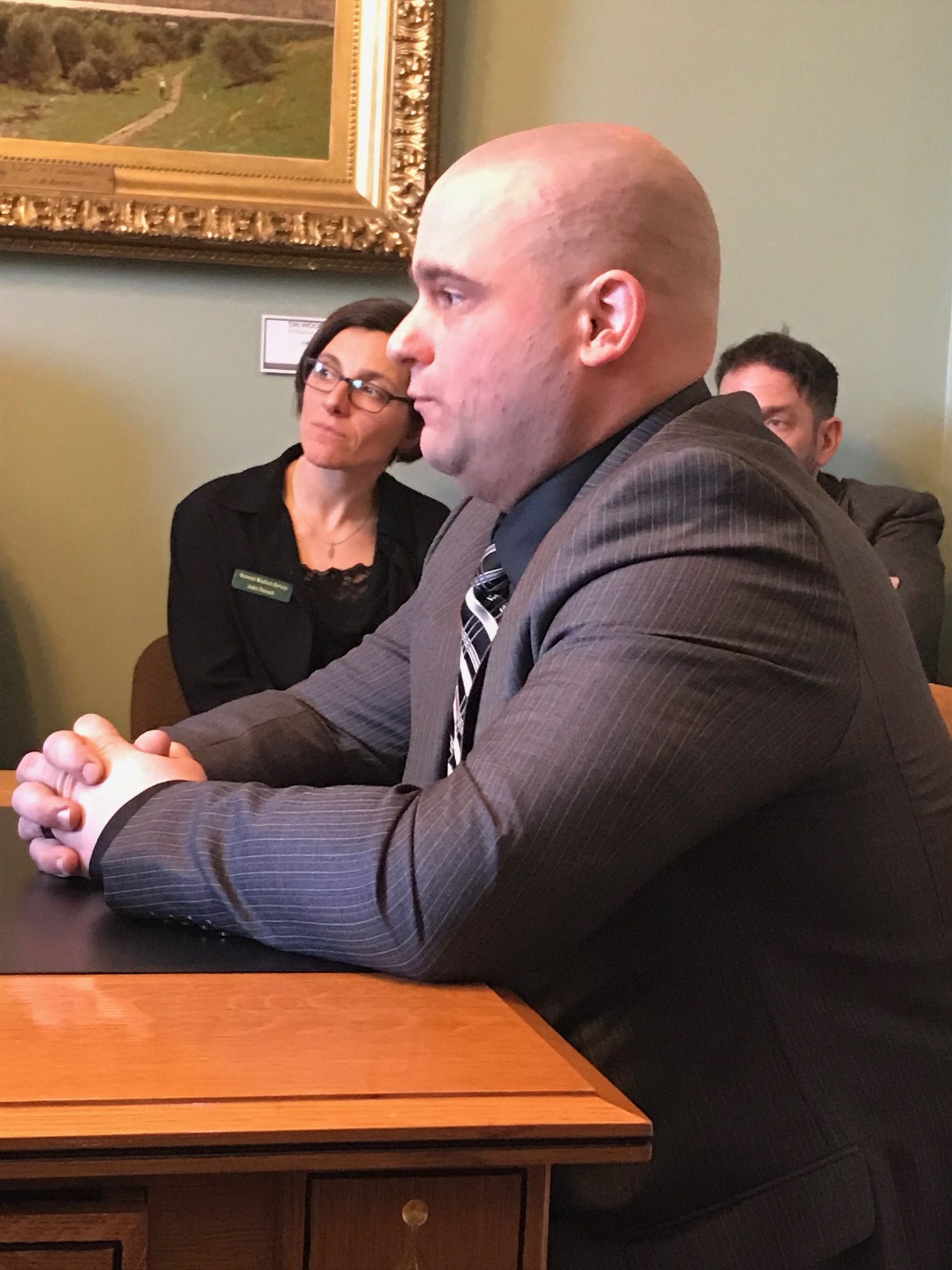
“You’re essentially looking at a dead man walking,” retired Sgt. Wesley Black told members of the Senate Government Operations Committee Tuesday. A stocky longtime Hartford firefighter, Black served two tours overseas with the Vermont Army National Guard, where he said large pits were dug to burn garbage and other waste, creating toxic fumes near the base. He was diagnosed with stage 4 colon cancer after doctors took three years to interpret his symptoms, including discharging blood.
“I have a 3-year-old son who I may not see to be the age of 5. I won’t see him to be 10. I won’t see him graduate, and I won’t see him become a man,” said Black, whose testimony, along with widow June Heston, caused staffers from Vermont’s congressional delegation and others who attended the hearing to wipe away tears.
“This is going to be a nationwide health crisis in our veterans,” Black said. He and others likened burn pit exposure to Agent Orange, a defoliant used during the Vietnam War that the government took decades to admit was connected to health problems for those who served.
Vermont lawmakers are considering a bill to raise awareness among Vermont military members and medical community about the health problems linked to open pit burning. Part of the effort would include encouraging veterans to sign up for the Airborne Hazards and Open Pit Burning Registry set up in 2013 by the Veterans Administration. So far, 394 Vermonters have registered.
“You only create a registry when you know you have a problem,” Heston said.
Black and Heston, whose husband Mike Heston died last year of pancreatic cancer, said the registry was complicated to navigate. Black said it took him two hours to sign up.
Several witnesses noted the contradiction between the Veterans Administration seeking information from veterans while the Department of Defense will not acknowledge the connection between open pit burning and health problems. Some also noted the historic unwillingness of the military to acknowledge responsibility and predict an uphill fight for vets to get help.
“While the Department of Defense has the responsibility for deploying their members overseas, they have historically not borne any of the financial responsibility for these exposures,” said Kathryn Becker Van Haste, health policy director for Sen. Bernie Sanders, I-Vt. That financial burden has fallen to the Veterans Administration, which has a smaller and more vulnerable budget, she said. After years of denial, it took until 2007 for the government to acknowledge Agent Orange as the “presumptive” cause for certain health problems veterans suffered in Southeast Asia.
Burn pits continue to be used today overseas. Van Haste said Sanders and others members of Congress have pushed for the Defense Department to end the practice but are told there are “insufficient methods” to get rid of the waste.
Black said third-party contractors like KBR and Halliburton operate the pits but are not held accountable. The U.S. Supreme Court recently agreed the companies should not be held liable.
Members of the committee expressed alarm that work conditions that would be considered unsafe in the U.S. are allowed in overseas military settings. They also expressed frustration at wanting to take stronger action while acknowledging military issues were largely federal policy.
Van Haste described potential federal legislation to have the medical problems associated with burn pits be part of veterans’ periodic health assessments.
An aide to Rep. Peter Welch, Kevin Veller, said the Vermont Democrat had met with 21 service members in the state who had been exposed to toxins, six of whom had cancer. An estimated 10,000 Vermont service members have served in locations with burn pits, primarily in Iraq, Afghanistan and Djibouti in Africa since 2001, as well as some parts of the Arabian peninsula.
Welch is supporting an effort to have service members automatically enrolled in the burn pit registry if they serve in an area where the practice is done. The registry, witnesses said, could provide the evidence the Pentagon needs to routinely pay disability benefits.
Welch “certainly believes that the cost of caring for the warrior is part of Congress’ obligation,” Veller said.
Heston said her husband was denied disability benefits from the Department of Defense but secured lesser benefits through the Veterans Administration. The DoD, she said, wants more evidence of the connection. Meanwhile she said a dump where her husband served was moved closer to the base when the smoke started to affect airplane engines.
“More research is not needed, the evidence is clear” that cancer rates among service members in burn pit areas are significantly higher than the general population, June Heston said. Awareness within the medical community, she said, needs to be improved. Doctors at the University of Vermont Medical Center were unable to diagnose her husband’s health problems.
The Vermont bill would distribute information to doctors through the Health Department and the Vermont Medical Society. Veterans would get information through the Vermont National Guard and other outreach organizations.
