


[J]une Heston is angry.
She lost her husband, Brig. Gen. Michael Heston, last November after a two-year battle with pancreatic cancer. Heston, who also served as the deputy adjutant general of the Vermont National Guard, served three tours overseas in Afghanistan, all of them including exposure to burn pits.
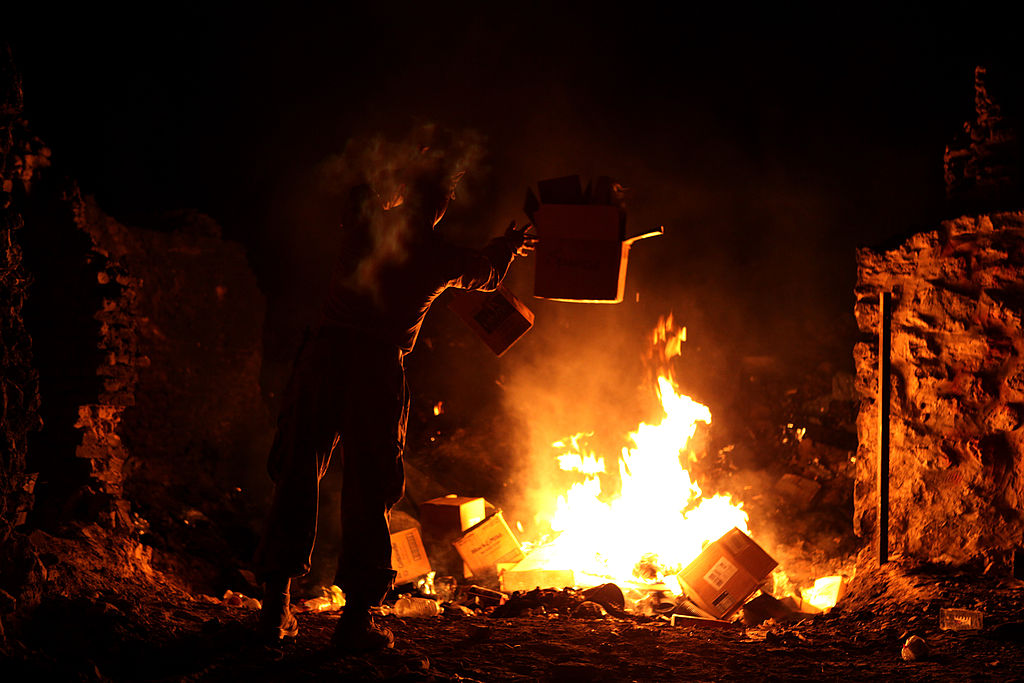
On Wednesday, Sen. Jeanette White and Sen. Pro Tem Tim Ashe outlined legislation designed to raise awareness for doctors and soldiers about the symptoms and illnesses associated with inhaling the fumes from the garbage, including human and medical waste, plastics and batteries as well as weaponry, that is burned during overseas deployments.
The legislation targets the estimated 10,000 Vermont National Guard soldiers who have served in the areas with burn pits, primarily Afghanistan and Iraq, to join a national registry in order to stay informed. So far, 366 Vermont veterans have signed up for the registry.
“You think that when you came back, you’ve made it through the battlefield, when you’ve come home that you’re good. And then you’re told that you’re not,” June Heston said Wednesday, choking back tears.
“I’m angry. I lost my husband. My kids lost their father. And for what?” she said. “Every time he was called to duty, he did it. He did exactly what he was asked.” In addition to his military service, Heston was a Vermont state trooper for 26 years. He and June lived in Richmond and raised a daughter, Kelsey, and son, Keegan.
June Heston said her husband was approved for disability benefits from the U.S. Department of Veterans Affairs — she has received a portion after his death — but he was denied disability benefits from the Department of Defense, which would have included health insurance.
She also said no one in the military has apologized.
“An apology would mean responsibility,” June Heston said. She said no lawsuit is planned. She will be testifying before Congress at an unknown future date. Efforts to hold private contractors accountable have been unsuccessful in the courts, including a recent Supreme Court rejection.
Heston case was featured in a series on burn pit exposure last year on WCAX-TV.
June Heston praised the idea behind the Vermont legislation to raise awareness within the medical community about burn pit exposure. June Heston said doctors in Vermont were “clueless” about what was causing her husband’s medical problems. He was 58 when he died and served three tours — seven, 15 and 12 months — between 2003 and 2012 during Operation Enduring Freedom in Afghanistan.
Service members have suffered brain tumors and other cancers, as well as reported respiratory problems, after working at or near burn pits, large open waste facilities ignited with jet fuel.
Ashe and White said the U.S. armed forces and government have been slow in the past to acknowledge medical issues involving the use of Agent Orange during the Vietnam War and from Gulf War syndrome for those exposed to toxic oil fumes while serving in Iraq.
“After a period of equivocation, the U.S. government has usually acknowledged what veterans know too well — that their illnesses and suffering are real, that it is connected to their military service and that the U.S. government must treat and compensate the veterans,” the legislation says. Ashe called the burn pit controversy a public health “ticking time bomb.”

The controversy over the burn pits has reached Congress, which has vowed to hold hearings, according to the New York Times. Former Vice President Joe Biden has weighed in, speculating that toxic substances from burn pits contributed to the cancer that claimed his son, Beau, who served in the Delaware Army National Guard and died in 2015.
The Department of Veterans Affairs has denied the bulk of the claims filed. According to the Times, more than 11,500 disability compensation claims have been filed since 2007 with a medical condition related to burn pit exposure with about 2,300 granted. Most of the denials were for a “lack of evidence” the illness was service-related.
The proposed Vermont legislation notes Veterans Affairs provides contradictory information on the health impacts of exposure to the pits. On the one hand, the department says research does not show “long-term health problems from exposure to burn pits” but then goes on to list health effects from the toxic smoke.
Heston said the call for more research is unnecessary and the connection is clear between the illnesses and the burn pit exposure. The legislation calls on the federal government to “not repeat past patterns of denial” and acknowledge the connection.
The legislation calls on the Vermont Health Department to develop educational material to inform veterans about the health effects and would require the Vermont National Guard and Vermont Veterans Affairs Office to contact service members who served in areas of exposure.
White said she proposed the legislation after meeting with a constituent in the Guard who brought the issue to her attention.
White chairs the Senate Government Operations Committee, which oversees military issues. Her committee will begin taking testimony on the bill as early as this week.
“We are saddened anytime we lose one of our own,” said Guard public affairs officer Captain Mikel Arcovitch. “Brig. Gen. Heston’s death came far too early in his life and we are greatly saddened by his loss. He was a tremendous man and leader.”

