

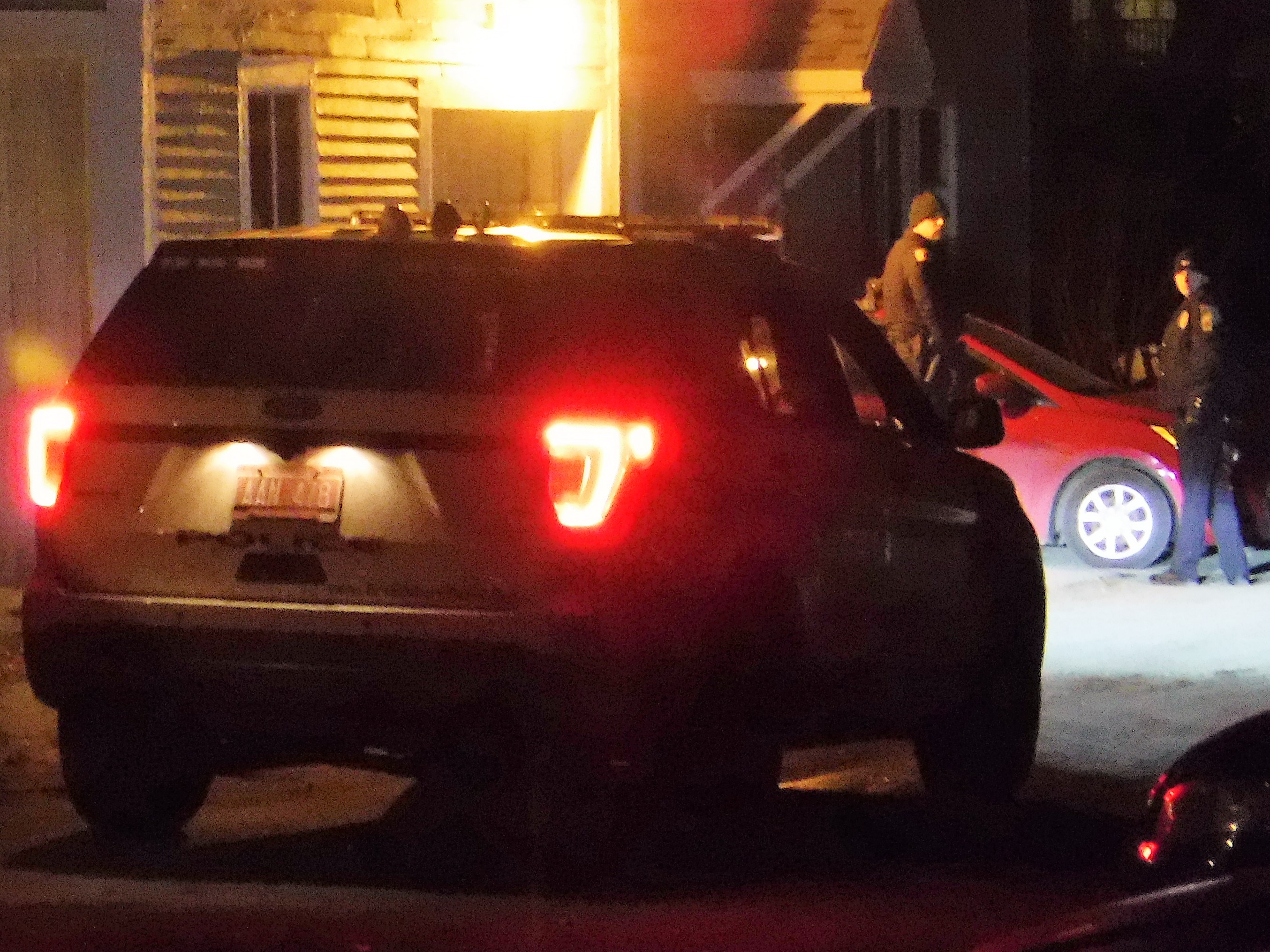
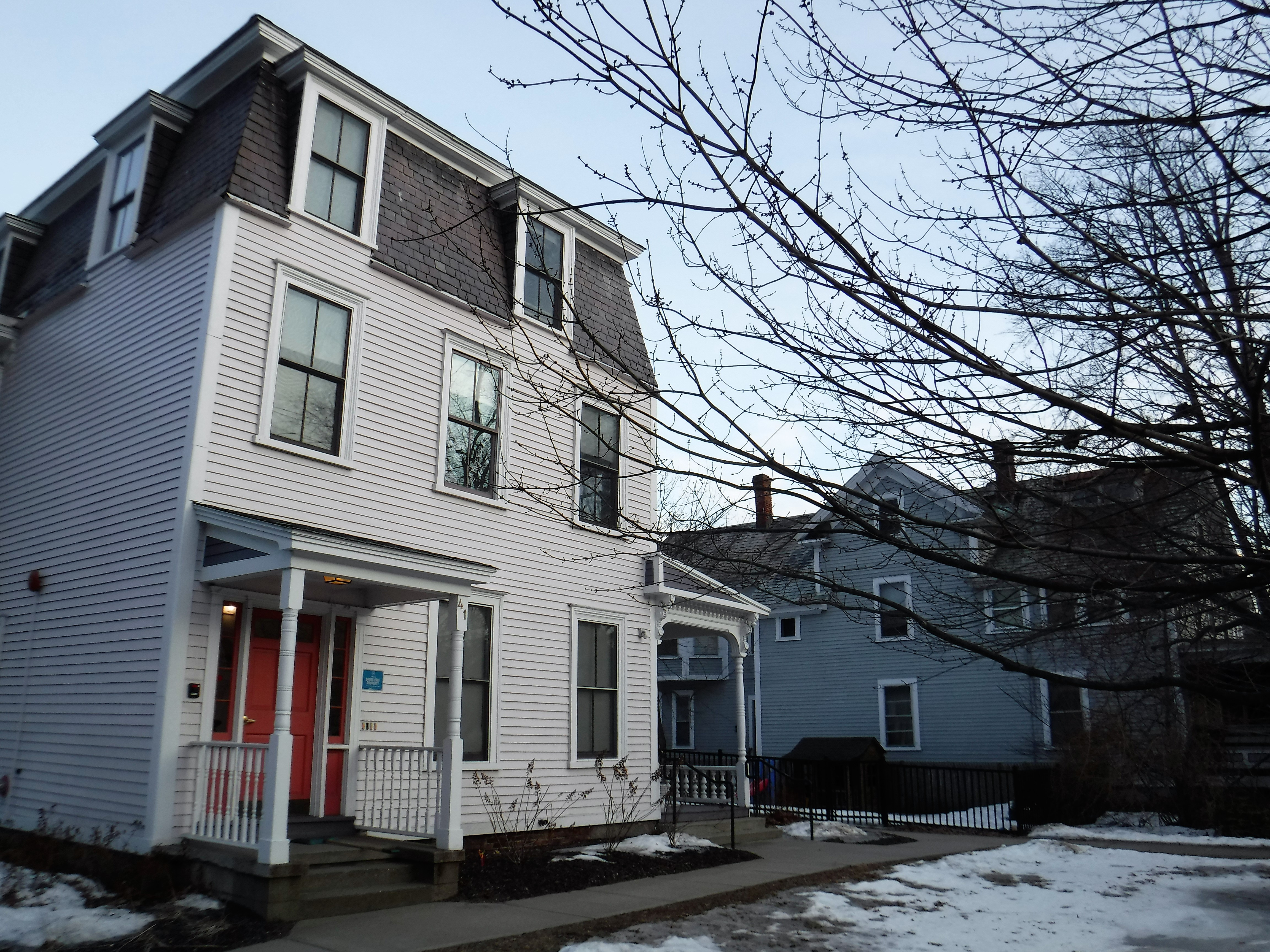
BRATTLEBORO — Ask neighbors if they were surprised by recent news that police seized illegal drugs and weapons from an apartment at 33 Oak St. — the same place a dealer reportedly held two people at gunpoint because of a debt this past Christmas Day — and they say no.
They’re instead shocked the building — tucked in a tree-lined neighborhood between a special needs school and a residence for single mothers and children — has yet to see a slowdown in suspicious activity.
“We have heroin and guns and gangs and we can’t get them out,” says a neighbor, one of many who asked not to be identified because the aforementioned dealer remains armed and at-large. “I don’t know what we’ve got to do.”
Closing a drug house, Vermonters facing the same situation are discovering, is easier said than done.
Five years ago, then Gov. Peter Shumlin made national news by devoting his State-of-the-State address to rising local reports of opioid abuse.
“It is a crisis bubbling just beneath the surface that may be invisible to many,” Shumlin said in 2014, “but is already highly visible to law enforcement, medical personnel, social service and addiction treatment providers, and too many Vermont families.”
Shumlin, who left office in 2017, doesn’t have to go far to see how the situation has boiled over. The Windham County native owns a set of buildings two doors down from 33 Oak St., which local leaders say has exploded into a “hot spot” topped only by two other drug houses in less affluent neighborhoods.
‘It’s very typical and found all over the state’
“It’s astounding,” says Brattleboro Town Manager Peter Elwell, who notes police responded to 70 calls at the address this past year, with reports ranging from loitering, noise and disorderly conduct to overdoses, assaults and stolen vehicles.
In his State-of-the-State, Shumlin explained heroin and other opioids were particularly problematic to Vermont because drugs sold cheaply in such cities as Boston and New York fetched more if dealers traveled a few hours north to rural areas with less supply than demand.
Brattleboro, the first exit off Interstate 91 and the nearest Vermont community to the New England drug-route hubs of Holyoke, Mass., and Hartford, Conn., has seen local heroin use skyrocket from 20 overdoses in 2010 to upward of 100 and five resulting deaths this past year.
For their part, neighbors of 33 Oak St. have witnessed dozens upon dozens of strangers stopping by a secluded back apartment, where authorities say a dealer has taken over a tenant’s residence and set up shop.
All 70 police calls at 33 Oak St. in the past year
“It’s very typical and found all over the state,” says Sgt. Chris Lora of the Vermont State Police’s Drug Task Force. “Folks from out of state find someone who may be a user and they’ll provide drugs for free in order to stay there and sell. It’s not their address, so they have no ties or responsibilities.”
Neighbors knew little more until police took to social media last month asking them to look out for a 21-year-old Hartford, Conn., man named Chyquan Cupe, who’s facing charges including cocaine possession, unlawful restraint and aggravated assault with a deadly weapon.
Cupe allegedly is the apartment squatter who held two people at gunpoint Christmas Day and forced them to physically fight over a drug debt and, on another occasion, assaulted someone else while attempting to drag them from a vehicle.
But when police arrived to arrest Cupe Dec. 28, the suspect wasn’t there — prompting an alert that he “is considered armed and dangerous and should not be approached by members of the public.”
‘Why can’t you cops just go in there and arrest them?’
Police did seize an unspecified “large amount” of drugs, a handgun with an obliterated serial number and a sawed-off 12-gauge shotgun — both weapons loaded and “strategically located” under couch cushions and in the laundry. But neighbors have discovered that haul, which drew television news cameras, wasn’t enough to stop continued drug dealing.
“A lot of people ask, ‘Why can’t you cops just go in there and arrest them?’” Brattleboro Police Chief Michael Fitzgerald says. “They don’t understand what it takes.”
All the foot and vehicle traffic neighbors complain about is considered “reasonable suspicion,” Fitzgerald says, but authorities can’t receive a search warrant until they show probable cause. Police did that to enter the building in December. But to return, they need to start over from scratch.
“People think common sense should be enough, but my opinion doesn’t matter in a court of law,” Fitzgerald says. “We can’t go back to a judge and say, ‘They’re continuing to do it.’ We have to rebuild a case all over again, and that takes time.”
State Police face the same challenge.
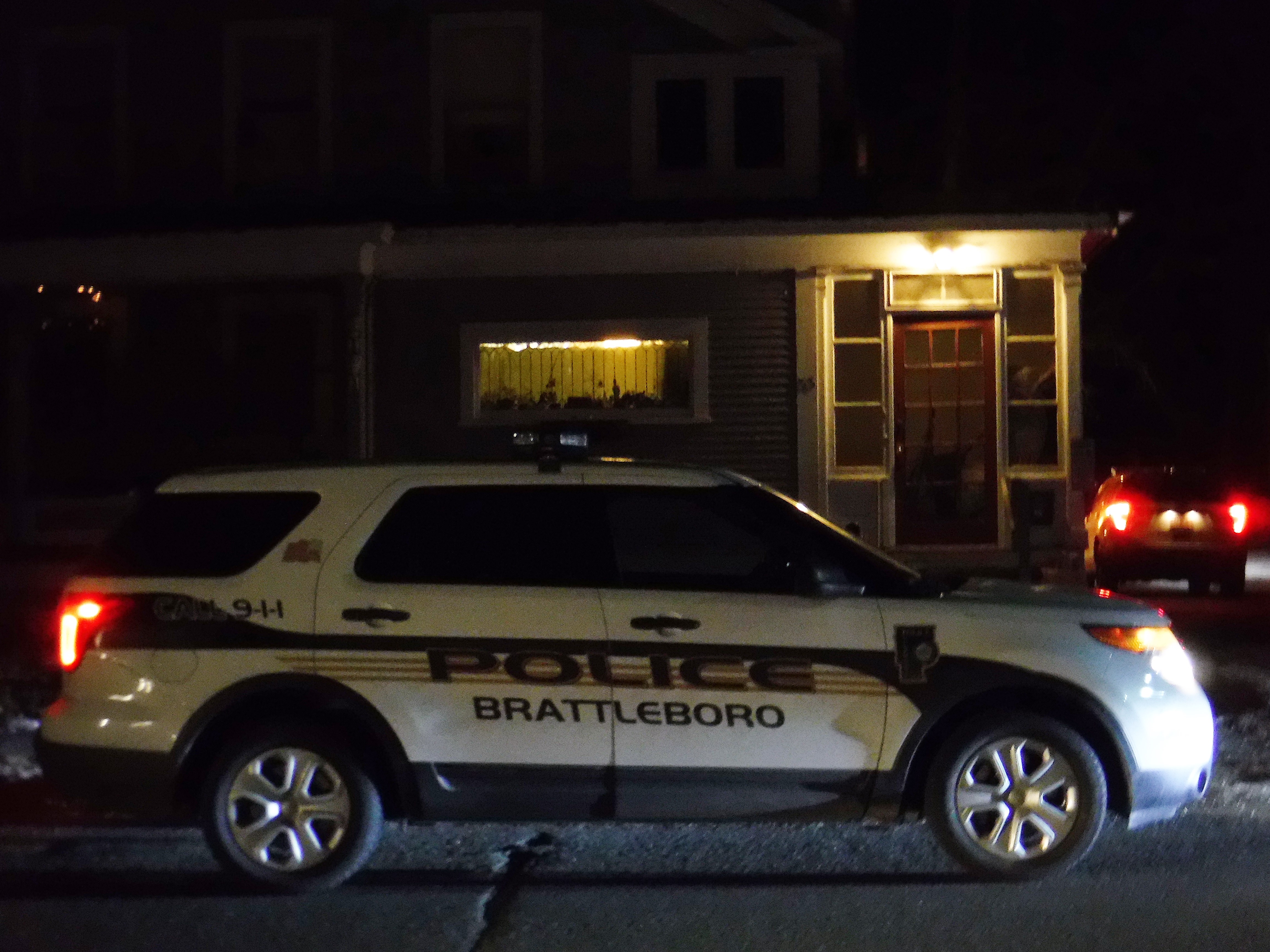
“We have people call and complain about an address — they suspect what’s going on, and we probably suspect it as well,” Lora says. “But we have laws to abide by. You have to be able to prove it.”
Neighbors have attempted to stop the flow of strangers at 33 Oak St. by taking to a megaphone and asking people if they’re there to purchase drugs. Residents also are photographing license plates during the day and, if a vehicle is idling at night, shining a laser pointer at the driver.
But neighbors have learned that even if they video an exchange of envelopes, authorities can’t prosecute unless they have the actual drugs sold so they can be tested for authenticity. Compounding the challenge, most dealers charged are released on conditions unless they have enough of a record to make the matter a felony.
‘They don’t take action when the hard stuff is involved?’
“We’ve seen some of the street gangs send low-level people up to sell drugs,” Lora says, “and if they get arrested, they’ll send someone else up to take their place.”
Adds Fitzgerald: “There’s a lot of obstacles, a lot of time, a lot of burden of proof.”
There’s less understanding from neighbors who question how, with all those hurdles, nearly two dozen law enforcement officers were able to raid downtown Burlington’s Good Times Gallery last month after discovering it was selling marijuana.
“But they don’t take action when the hard stuff is involved?” one Brattleboro resident asked.
In response, U.S. Attorney Christina Nolan has told the press the discovery of a loaded gun in a store on one of the busiest streets in the state’s largest city was “a very significant factor” in the decision to take action in Burlington.

The State Police Drug Task Force, for its part, is reporting some progress in southern Vermont. Officers have arrested 15 people in Windham and neighboring Windsor counties and nearly a dozen more in Rutland County in the past several months on charges of distributing heroin, fentanyl and cocaine. Authorities, however, can’t provide more specific statistics about dealers or drug houses.
“We don’t keep track of problem residences, but you could call any police department in the state and they’ll give you a list,” Lora says. “There’s a demand here and people realize there’s money to be made. And you can’t just arrest your way out of it. Arrests are not a deterrent anymore.”
In Brattleboro, neighbors have hoped the landlord of 33 Oak St., Robert Remy-Powers, will simply evict the tenant. But Remy-Powers says it’s not so simple.
“The last thing I want is an article — it seems it could endanger a lot of people’s lives,” he said. “Why haven’t the police done the job? Why haven’t they taken care of the problem?”
‘It’s just where they happen to show up’
When asked about actions he’s taking, Remy-Powers answered in the third person by saying, “the landlord is trying to evict the tenant,” although legal action has yet to start. He added the fact that one 33 Oak St. apartment had been dealing drugs last spring and summer and, once that tenant was evicted, a second unit began selling shortly thereafter is “just an unlucky coincidence.”
“It’s just where they happen to show up,” he said. “It’s terribly disconcerting that it’s happening. The landlord is trying to do everything he can. What else can I say?”
One way local leaders are attempting to take aim is by enforcing building codes. Municipal inspectors recently found numerous violations at 33 Oak St., including discarded needles lacking proper bagging and disposal. But after the house failed the exam, the landlord received a two-week reprieve to institute required improvements.

That, too, has frustrated neighbors, who are considering filing a private nuisance action in civil court.
“They can have guns and drugs,” one says, “and our only recourse is maybe we can get them because they have trash bags outside?”
Brattleboro’s drug challenge isn’t contained to one neighborhood, with other residents calling for a strong-armed crackdown to stem related Main Street panhandling and town-wide burglaries.
“My stance is we’re not going to arrest our way out of a problem,” Fitzgerald has responded. “We’re not soft on crime, but we’ve got to recognize the difference between those who victimize others, those who make a bad decision and those who need our help.”
Police are working with area health and human service providers on Project CARE — Community Approach to Recovery and Engagement — to connect people who overdose or face arrest for minor drug offenses with local treatment options.
“You’re still going to be held accountable for the crimes you have committed,” Fitzgerald says, “but if someone says, ‘I need help,’ we can get them what they need.”
That’s because the police chief knows that even if residents stop drug dealing on their street, sales will migrate to another one.
“Today it’s 33 Oak,” Fitzgerald says. “Tomorrow it will be someplace else.”
