


[T]he Senate bill to tax and regulate cannabis sales has the Senate Judiciary Committee divided over whether or not to allow medical dispensaries to enter the retail market before a state system is operational and competitors are able to start business.
Committee chair Sen. Dick Sears, D-Bennington, said Wednesday he was deeply concerned medical dispensaries would be able to monopolize the cannabis market before other businesses even opened, creating a difficult environment for entrepreneurs.
Sen. Philip Baruth, D/P-Chittenden, agreed that it would put other businesses at a severe disadvantage but was not sure if dispensaries would be able corner the entire market.
However, Sens. Alice Nitka, D-Windsor, and Joe Benning, R-Caledonia, both said that this was not a great concern of theirs and allowing medical dispensaries to enter the recreational market before the state system is operational is necessary for a quick rollout of legal sales and would bring revenue into the state.
The member of the committee who remains undecided is Sen. Jeanette White, D-Windham.
White said she did not think allowing the dispensaries to enter the market first would lead to them monopolizing the industry, but she did have concerns about deregulating the medical industry to allow them to sell recreational cannabis.
White said in order to facilitate an early retail market, they would have to allow the dispensaries to use their own growing operations and that the Legislature would have to sign off on increasing the dispensaries’ production — something that is currently based on the number of patients who are served at each dispensary.
White’s concern is that would disincentivized small local cannabis growers from going into business because the majority of cultivation would be controlled by the dispensaries.
Medical dispensaries have been lobbying state officials to give them access to the recreational market throughout the beginning of legislative session. The largest dispensary in Vermont, Champlain Valley Dispensary — which serves about 4,000 patients — was also pushing to have medical dispensaries enter the retail market during the Governor’s Marijuana Advisory Commission’s discussions this past summer.
John Hollar, a lobbyist who represents Grassroots Vermont, a medical dispensary based in Brandon, recently told the committee it is the position of the dispensaries that in order to stay viable it is important they be given the ability to enter the market early.
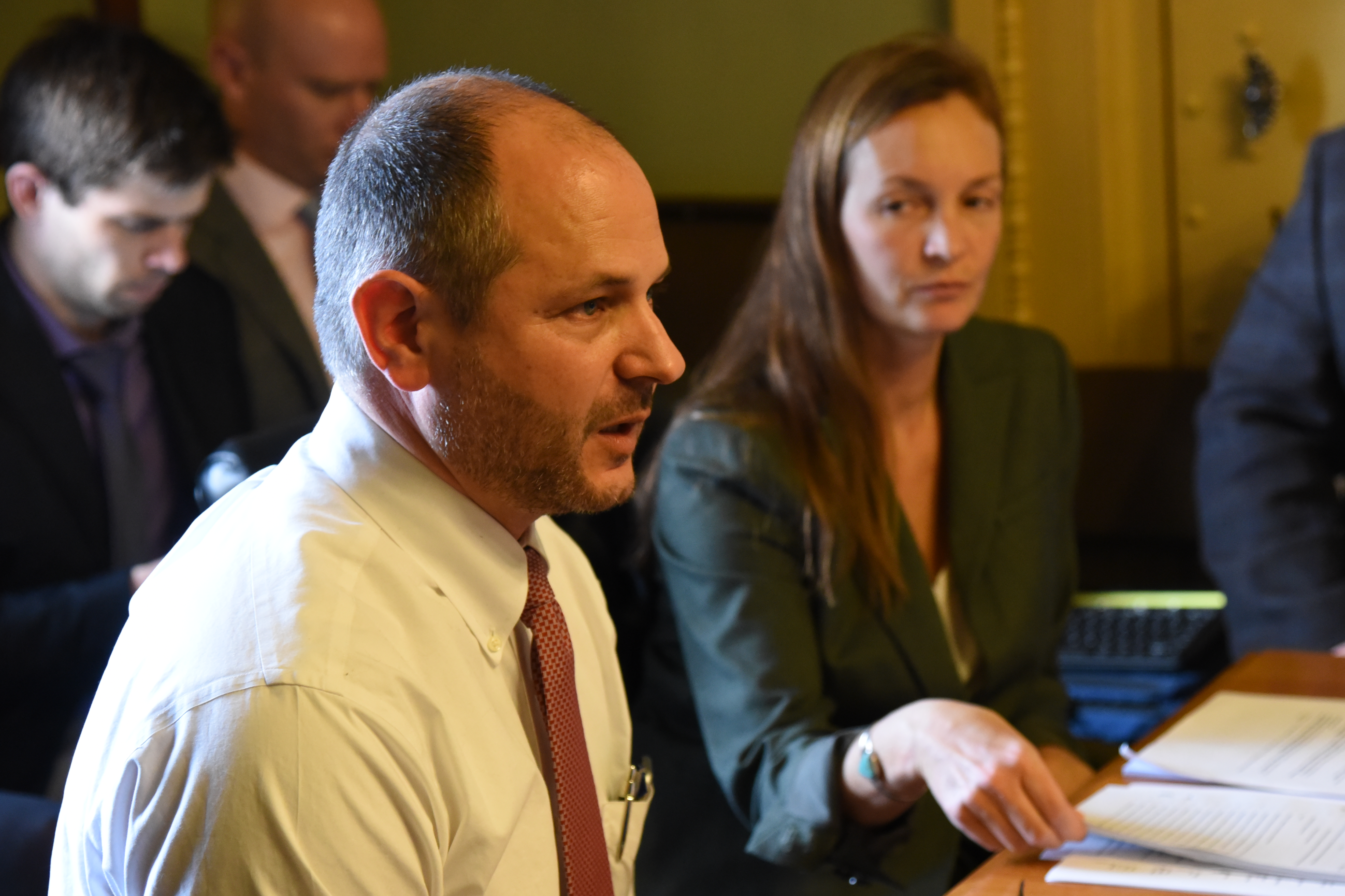
Champlain Valley Dispensary executive director Shayne Lynn testified in a committee hearing two weeks ago that it is important to make sure medical dispensaries are still viable and able to provide medicine to patients moving forward.
During his testimony Lynn also said the medical industry had lost money as patients went to the illicit market since cannabis became legal in July.
On the recent debate in the committee on whether to give the industry what it has asked for, Lynn said he would not to comment until after the bill moves out of committee.
The proposal backed by the industry is that medical dispensaries would be given temporary licenses to sell retail cannabis in order to roll out legal sales by January 2020. The industry would remain under the control of the Department of Public Safety until a state cannabis control board was set up that would regulate and set up consumer protection protocols for the recreational market.
Currently, while the ability to become a medical cannabis patient is very well regulated by the state, there are no quality control standards that dispensaries must follow. There are about 6,000 medical marijuana patients in Vermont.
An investigation by VTDigger found Champlain Valley Dispensary and others have long grown cannabis that has been contaminated with mold. Inhaling mold spores through smoke has been found to cause serious lung infections in people with compromised immune systems.
It is also impossible for the public to know the extent to which Vermont’s medical cannabis is contaminated by mold, other substances, or how many patients have filed complaints about quality control.
Francesca Thompson, a Vermont medical cannabis patient who has used Grassroots Vermont for medical products, said the medical cannabis industry has failed to give her quality medicine that she requires and that it does not make sense to her that lawmakers would be looking to give it an advantage over local growers who she has turned to receive quality products she can afford.
“The thought that they would allow dispensaries to integrate a recreational market when they have failed to create a medical market is unfathomable to me,” Thompson said. “The gray market is providing the majority of the medicine in this state now because it is the only affordable way to do it.”
In the Senate Judiciary Committee the debate is scheduled to continue through at least the end of the week.

Sears, who has been one of the most vocal supporters for legalizing cannabis sales, said on Wednesday that his “support for the bill is waning” over this issue and that he will not vote for a bill he does not believe in.
In the House, the draft of its cannabis tax and regulate bill already has language to allow medical cannabis dispensaries to receive temporary licenses to sell to the public before other businesses do.
“If Budweiser and Coors were allowed to go first after Prohibition,” Sears said, “that’s what we have now in this country. So I’m really concerned about this and I don’t know how someone else will get in.”
