

[T]he federal Environmental Protection Agency gave its preliminary approval yesterday to a plan from the Scott administration to fund clean water projects with existing revenue and create regional districts to implement projects.
But Democratic lawmakers are concerned that the administration’s clean water funding plan will decrease revenue to the general fund.
Deborah Szaro, acting EPA regional administrator, said in a letter to the Vermont Agency of Natural Resources dated Feb. 11 that the state has come up with a “sensible framework” that meets the state’s obligations to provide a long-term source for clean water funding.
Julie Moore, secretary of the ANR, said in an interview Tuesday that she was “thrilled” that the EPA had signed off on the plan.
“Coming out of the last session and the last report card that EPA issued, it was clear that this was the key remaining hurdle to be able to say that we met all the initial milestones that were in our implementation plan,” she said.
Szaro notes that the federal agency will make a “final determination” on the funding plan and two other required permits in its next report card, which will come out mid-year.
Vermont must come up with $2.3 billion over the next 20 years to comply with federal pollution reduction orders for Lake Champlain, Lake Memphremagog and other water bodies in the state. Since the 2015 passage of Act 64, Vermont’s Clean Water Act, the state has used short-term sources — like appropriations from the capital bill — for the majority of its share of the funding.
Excess phosphorus is the main cause of toxic cyanobacteria blooms. The EPA has ordered that the surrounding watersheds lower phosphorus pollution coming into the lakes. Last year, the EPA gave Vermont a “provisional pass” on its Lake Champlain report card for not identifying a long-term clean water funding source.
The governor has proposed using revenues from the estate tax — $8 million next year and as much as $13 million in years to come. In addition, Scott would direct an increasing portion of the property transfer tax to clean water.
While the funding plan may have gained the approval of the EPA, it has been greeted with skepticism by Democratic lawmakers and environmental advocates, who are concerned about diverting revenue from the general fund.

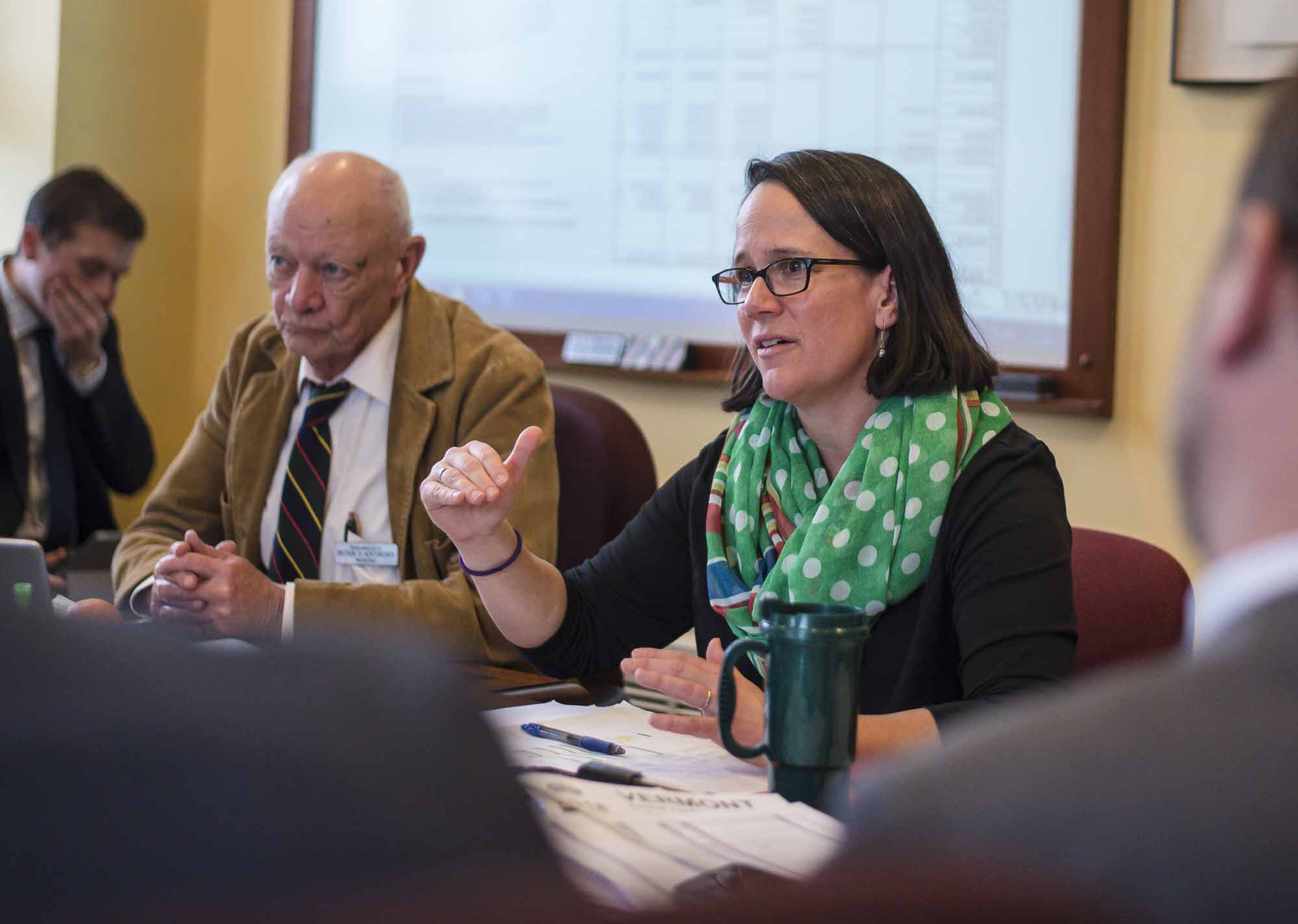
Sen. Chris Bray, D-Addison, chair of the Senate Natural Resources and Energy Committee, said in an interview Tuesday that the EPA’s letter was “saying encouraging things” but included some caveats. “It’s not saying, ‘oh, you’ve nailed it’ — it’s saying ‘you’ve identified a process that puts you on the way to having a reasonable answer’.”
He added that although the letter says that “significant portions” of the long-term funding are in statute, the administration’s proposal to redirect money from the general fund would be subject to the give and take of yearly appropriations.
“I think they’re overly confident in knowing that these funding streams will continue,” he said.
Bray said his committee will soon be voting on a clean water funding bill that would contain a combination of a per parcel fee and an impervious surface fee.
Moore said that the letter does not mean that this is the “only answer” for clean water funding, but that this option meets the state’s obligation to the EPA.
“So to the extent the Legislature wants to look at alternatives, hopefully they’ll hold themselves to the same review standard — that they need EPA’s endorsement that what they’re doing is sufficient,” she said.
The state is also proposing establishing regional clean water districts that would act as intermediaries between ANR and municipalities, regional planning commissions and nonprofits that are doing the projects.

Under the proposal, ANR will continue to lead planning and water quality monitoring to keep track of the state’s progress in reducing water pollution, but will issue block grants to the clean water districts to fund projects in their regions. Moore said the boundaries for the districts would likely be the 15 watershed basins that the agency already uses for clean water planning.
“It makes a lot of sense to manage from a watershed perspective,” said Moore, who added that this may prove politically challenging as town lines do not necessarily follow watershed boundaries.
Bray said that the clean water district proposal, something he had put forth in a previous session, is not yet “a proven model.”
“The literal concern that I think the committee has is that while we’re interested in exploring … utilities distributed around the state to do this work, it represents a big change in terms of how we’ve been managing water quality work in the state,” said Bray. “So far, we have always had ANR at the top level holding all the responsibility for organizing and regulating water quality work.”
