


[O]fficials in a scattered array of jurisdictions are ordering edible CBD products off the shelves, saying the items are not approved by the FDA. But that won’t happen in Vermont, according to the state Agency of Agriculture.
There’s “no chance” the agency, which regulates hemp and its products, will take similar action, said Cary Giguere, section chief of the agency’s resource management division, on Thursday.
Now Vermont officials are working to make sure Vermont-made CBD products remain on sale in other states. Agriculture officials on Thursday asked FDA Commissioner Scott Gottlieb to allow interstate commerce of edible CBD products.
At issue are products that contain cannabidiol, or CBD, a non-psychogenic product of the hemp plant that is believed to have health benefits and is increasingly being used as a supplement to oils, lotions, food and beverages. Such products are proliferating in states where they can be sold, including Vermont. CBD is closely related to THC, or tetrahydrocannabinol, the main component in marijuana.
The FDA says on its website that products that contain THC or CBD cannot be sold as dietary supplements.
Maine and New York City both recently ordered edible products with CBD removed from shelves, saying CBD was not approved by the FDA as a food additive. According to news reports, edible CBD items have also been seized in Arizona.
Giguere said Vermont CBD producers have called him this week to report their products were pulled off the shelves in Maine. Vermont CBD users have called as well, he said, to ask if they should stockpile supplies.
Because of the recent seizures, “CBD companies in Maine are hurting; they have come to a full stop if they are producing anything but drops and tinctures,” said Netaka White, a hemp and CBD consultant who started and later sold a hemp oil and seed processing facility in Middlebury.
In its Feb. 7 letter to the FDA, the Vermont Agency of Agriculture asks Gottlieb to look for a way to introduce CBD-containing products into interstate commerce.
“The pathway includes allowing the hemp industry to market food as containing hemp-derived CBD products for non-listed medical conditions for use by the public,” the letter says. The FDA can use its discretion to decide hemp extracts are allowed in dietary supplements, Giguere said.
Interstate commerce is vital to Vermont’s CBD producers, Giguere said. Right now, Vermont’s red-hot CBD industry is producing more CBD than Vermonters can use.
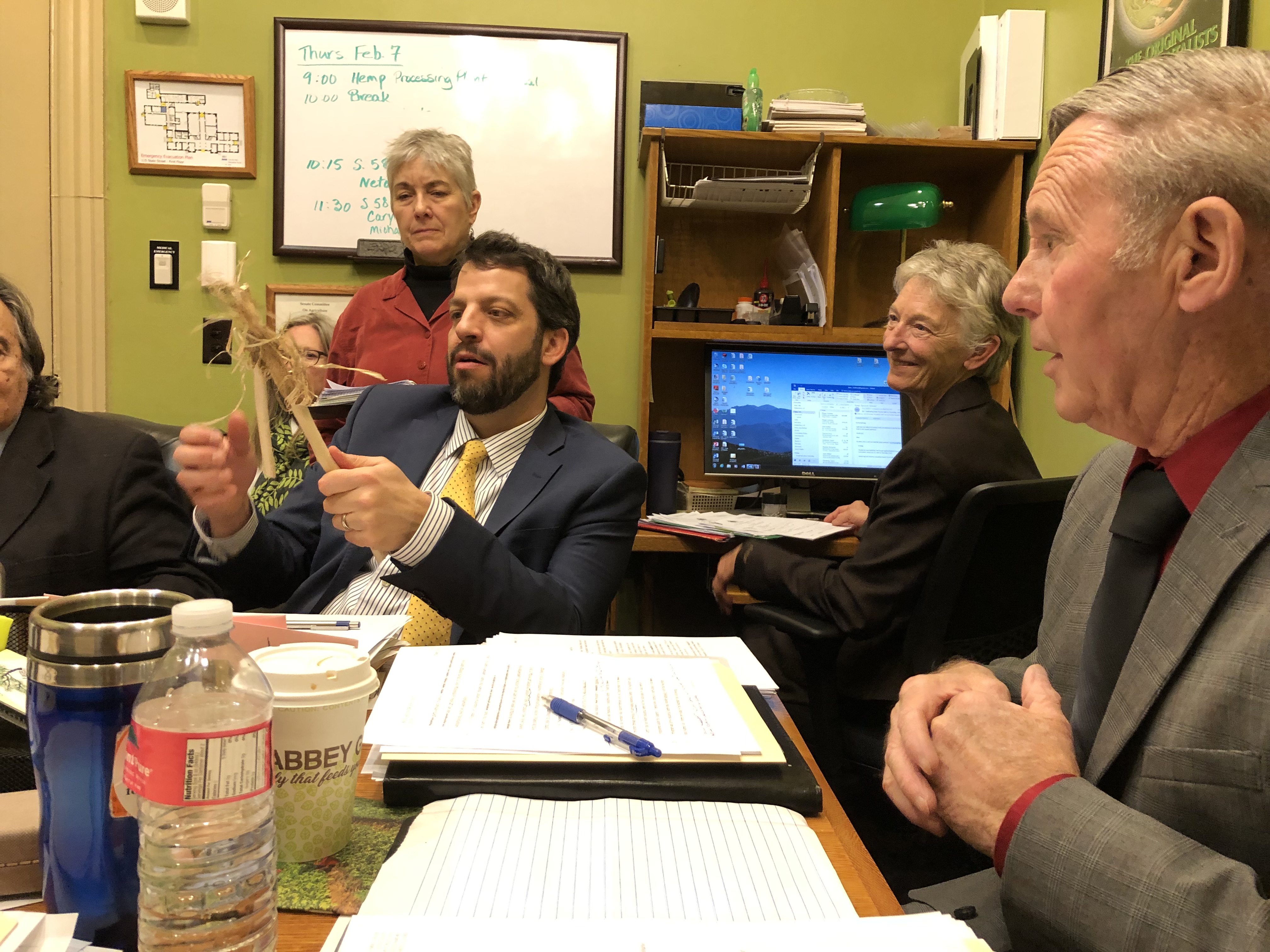
“Our hemp producers really need access to out-of-state markets,” said Giguere. “Other hemp-producing states have the same concerns as we do.”
The hemp and CBD industry has grown very fast, and the rules governing it are still being written. In Vermont, lawmakers are working to come up with state regulations for hemp farmers, marijuana growers and CBD producers.
The FDA is working on its own regulations governing interstate commerce of the products. On Dec. 20, the agency said in a statement on its website that “in view of the proliferation of products containing cannabis or cannabis-derived substances, the FDA will advance new steps to better define our public health obligations in this area.”
Industry leaders and public officials, including Vermont’s congressional delegation, are pressing federal officials for more information.
Lawmakers are still learning about the cannabis plant and its products. At a hearing in January at the Statehouse, hemp farmers told lawmakers that one of their biggest priorities is educating the public and officials about hemp, and differentiating it from marijuana.
Bridget Conry, outreach director for the CBD distributor Ceres and Southern Vermont Wellness, said Thursday that the existing uncertainty “is familiar territory” for her company, which has three brick-and-mortar stores in Vermont.
“We’re in this interesting place where we’re told it’s OK to move forward with certain farming aspects of hemp, but the issue of CBD is still a gray area,” Conry said. “We are used to that.” Like many others in her business, Conry said regulation will help.
“We’ll continue to advocate for smart regulation and testing requirements,” she said. “We don’t know what that looks like right now, but a lot of it is built on best practices and transparency and consistent labeling. Regulation will give clarity to consumers so they feel safe and so businesses feel safe too.”
