

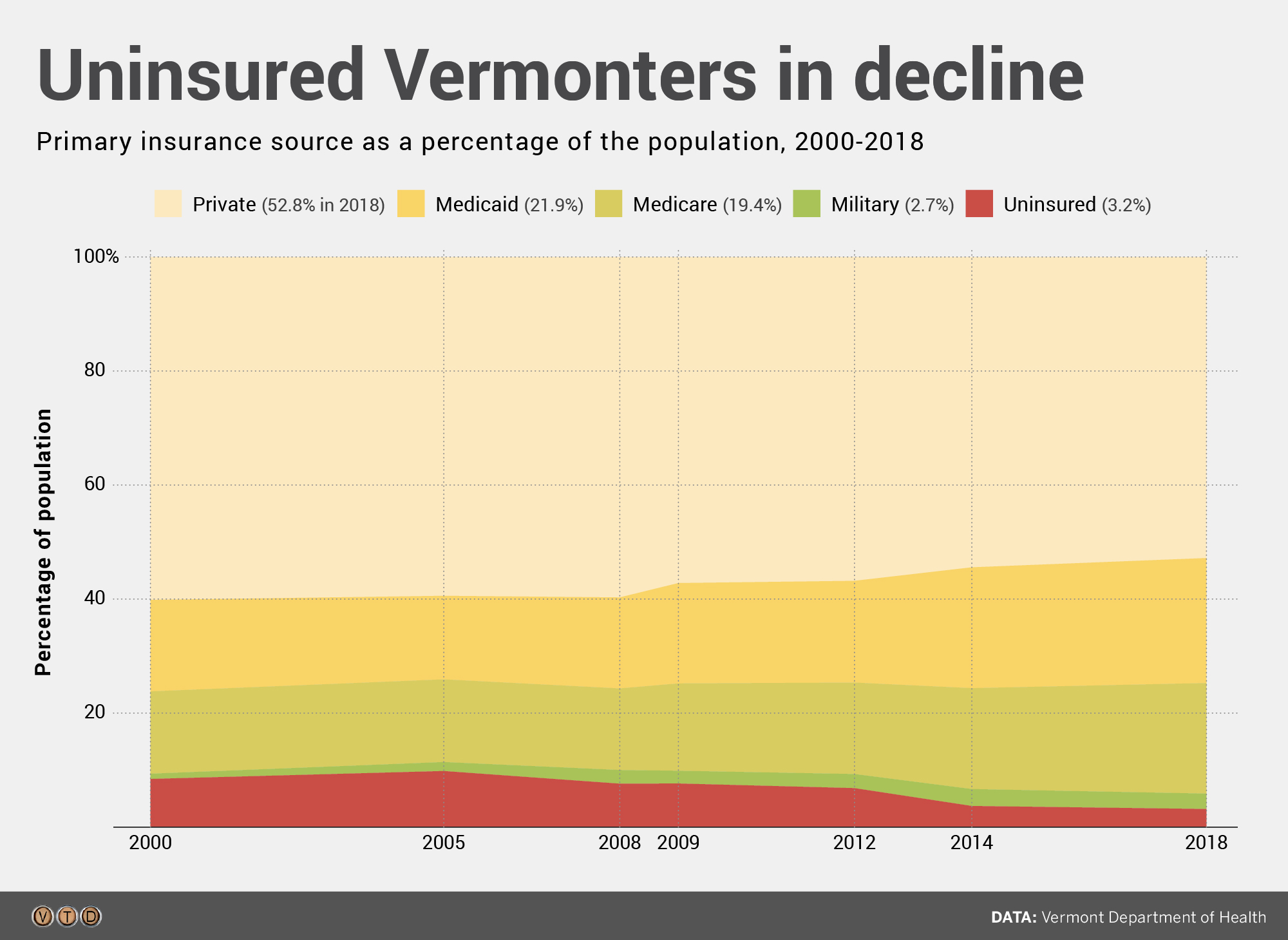
[T]he number of Vermonters without health insurance continues to decline, but many residents still struggle with the high cost of health care.
Those are two key takeaways from the 2018 Vermont Household Health Insurance Survey – the first such survey conducted by the state since 2014.
The report puts the state’s uninsured rate at just 3.2 percent, down from 3.7 percent in 2014 and 6.8 percent in 2012.
But the survey also says more than a third of Vermonters under age 65 are “underinsured,” meaning their policies don’t sufficiently cover current or future medical expenses. The underinsured are more likely to have trouble paying their medical bills and less likely to receive timely care.
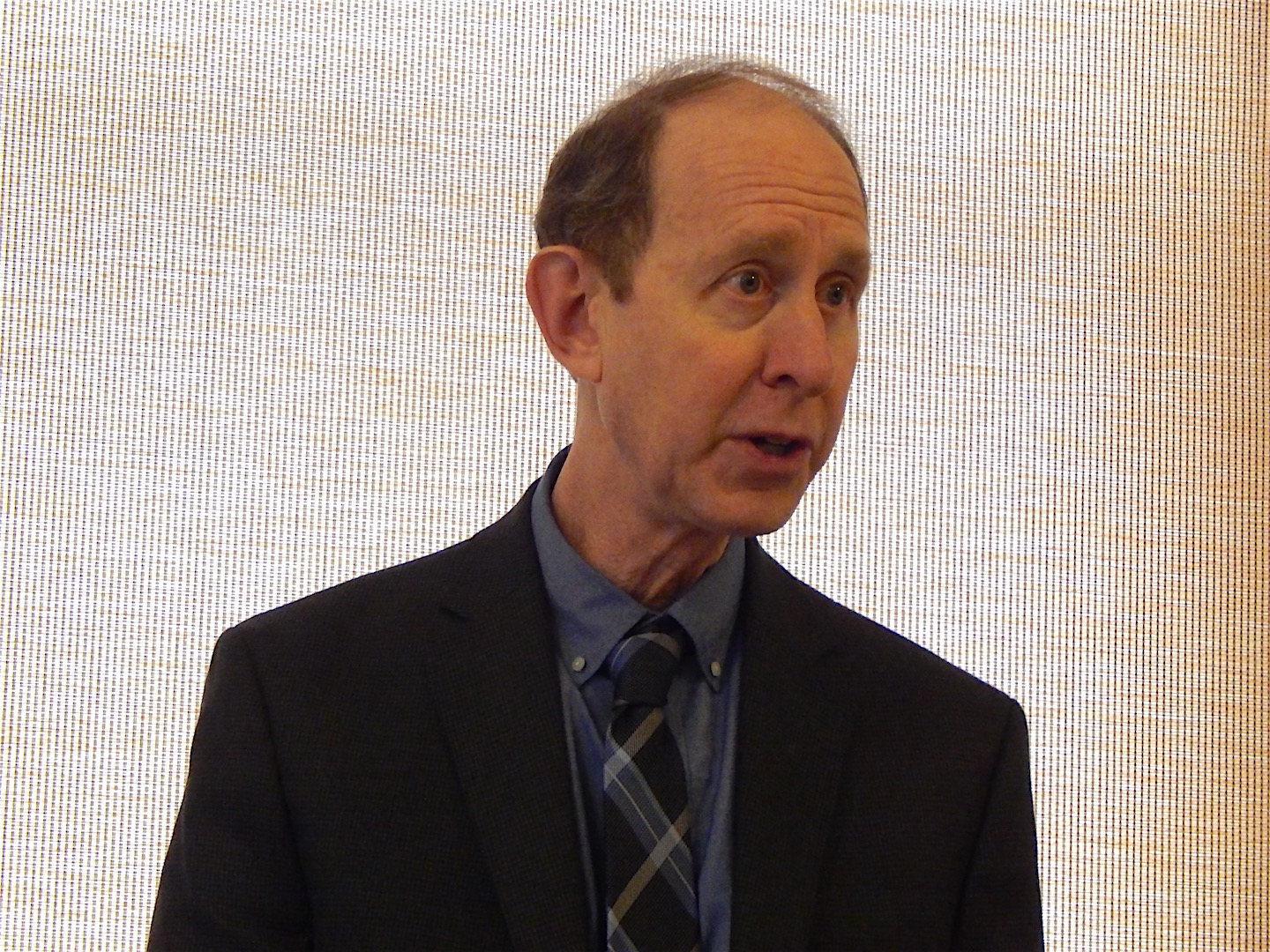
“It confirms a lot of what we experience at the Health Care Advocate’s office every day,” said Mike Fisher, the state’s chief health care advocate. “There are more and more Vermonters who, even though they have health insurance, have a hard time getting the care they need.”

The Household Health Insurance Survey is based on a random phone survey conducted in the first half of 2018. The state collected data from 3,002 households and 7,193 people; the data subsequently were “weighted to be representative of all Vermont residents,” officials said.
Health care policy discussions and decisions often focus on the need to keep the state’s uninsured rate low, and the new survey shows that’s happening: Officials say nearly 97 percent of Vermonters, or about 604,800 people, have health insurance.
Among that population, more than half have their primary coverage through private insurers. About 22 percent primarily are covered by Medicaid, and 19 percent by Medicare.
Those proportions didn’t change significantly since the last survey, but they are shifting away from private insurance over time. “Since 2000, the proportion of Vermonters with private insurance has decreased from 60 percent to 53 percent,” the report says.
There are roughly 19,800 people without insurance in Vermont, down slightly from 23,200 in the 2014 report. By comparison, there were 61,100 uninsured in the 2005 survey.
Officials say the federal Affordable Care Act, including the expansion of Medicaid and the availability of increased subsidies, has been key in reducing the number of people without insurance.
Still, Vermont is performing much better than the national average: The U.S. Census Bureau issued a recent report showing the national uninsured rate at 8.8 percent for 2017, though that report found a higher uninsured rate for Vermont – 4.6 percent – than the new state survey did.
The bottom line, state Health Commissioner Mark Levine said, is that “Vermont has seen a sharp decline over the past several years in the number of people without insurance, a positive trend that appears to be related to the fact that we were one of 37 states to expand access to Medicaid, (and) our state has been increasingly successful in helping Vermonters enroll in health insurance plans.”
But there are some nuances within the state’s uninsured numbers.
For example, men are twice as likely as women to be uninsured. And the uninsured rate is higher for Vermonters who are self-employed or work for smaller companies.
Also, Lamoille County stood out with an 11 percent uninsured rate. No other county had a rate of more than 4 percent, said Sean Sheehan, deputy director of health access eligibility and enrollment at the Department of Vermont Health Access.
“To figure out what’s going on in Lamoille certainly is a big challenge and a task going forward,” Sheehan said.
Additionally, Fisher noted that 10 percent of those between ages 25 and 34 don’t have insurance – the highest rate among any age group.
The state’s low overall uninsured rate is “good news,” Fisher said, but it “doesn’t mean there isn’t some concern.”
There also is concern about those who are underinsured. Using a formula developed by the Commonwealth Fund, the state survey found that 36 percent of Vermonters under age 65 – which is when Medicare eligibility starts – don’t have insurance policies that can adequately cover their needs based on their income.
Thirteen percent of that population is underinsured due to high deductibles, while 15 percent are underinsured due to out-of-pocket expenses.
“It’s a complicated dynamic between premiums and out-of-pocket costs,” Fisher said. There are cases where a consumer can cover their insurance premium, “but your co-pays or deductibles are so high that you still can’t afford to get the care you need,” he said.
The underinsured rate is up seven percentage points from 2014, and that increase is bigger among those who have private insurance. Those numbers are significant, state officials say, because there’s a difference in how the underinsured access and pay for care.
In general, “underinsured Vermonters ages 18-64 delay care at higher rates than those with adequate insurance,” the survey says. That’s particularly true for dental care, the report found.
Also, the underinsured reported higher rates of “problems paying medical bills”; being contacted by a collection agency due to unpaid medical expenses; and using all or most of their savings to pay health care bills.
The underinsured statistics, however, don’t provide a black-and-white picture of affordability. For example, the formula doesn’t factor in insurance premiums.
Also, Sheehan said there’s a national trend toward more high-deductible plans paired with health savings accounts. Those savings accounts, to which employers can contribute, can help offset deductibles but aren’t factored into underinsured calculations, he said.
Sheehan said the number of Vermonters who report problems paying their medical bills has been declining. “It’s also worth noting that Vermont compares quite favorably to most states in this regard,” he said.
Still, Levine said the underinsured rate is a concern because “affordability is essential to timely access, and access is essential to public health.”
“While survey data shows a hopeful reduction in the number of uninsured Vermonters and a drop in debilitating health care bills for those who are uninsured, too many insured Vermonters can’t pay for medical expenses they have or could have,” he said.

