


[T]he first lawsuit challenging forced mergers under Act 46 was filed Thursday by the Stowe and Elmore-Morristown school districts.
The two districts were ordered to merge by the State Board of Education in the final plan for restructuring districts across Vermont under the controversial consolidation law.
The lawsuit alleges the state board violated both the Vermont and U.S. constitutions and Act 46.
“The State Board’s decision was in violation of due process and Act 46,” David Bickford, an Elmore-Morristown school board member, said in a statement. “Members of the State Board had not even reviewed our proposal when they voted to reject it.”
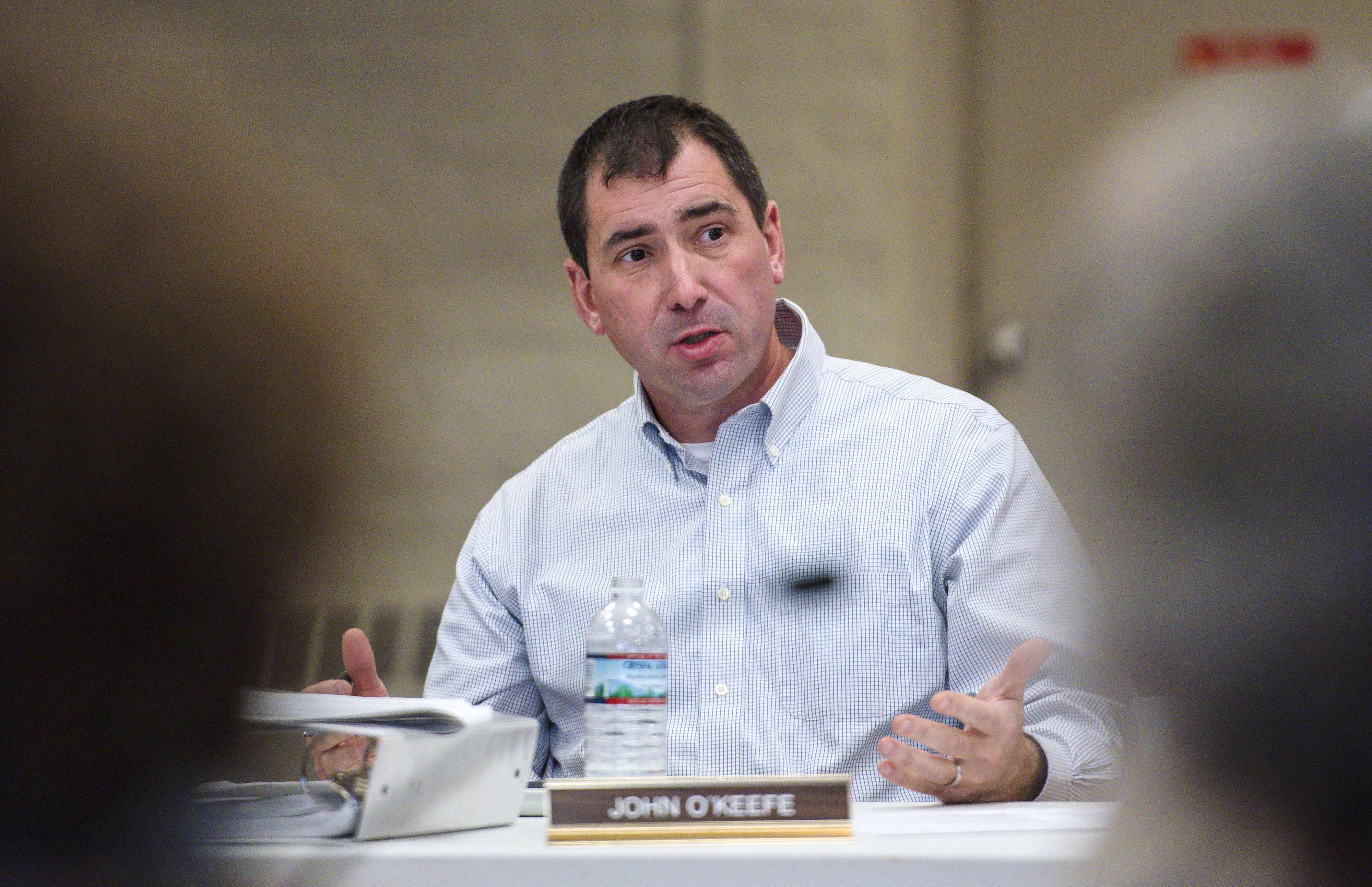
The lawsuit, filed in Washington County Superior Court, accuses state board members of being arbitrary in their process and of relying on incorrect information. It quotes board member John O’Keefe stating incorrect enrollment numbers during a board meeting, and Peter Peltz, another board member, stating that Stowe hadn’t submitted an alternative proposal to the Agency of Education, when it in fact had. Downs, Rachlin & Martin attorneys Robert Luce and William Clark are representing the two districts.
“The State Board failed to articulate the standard it used to evaluate the proposal and instead engaged in ad-hoc decision making, therefore denying EMUU-Stowe due process of law,” the school districts wrote in their complaint.
The lawsuit seeks a stay preventing the state board from merging the school districts. Under deadlines outlined in Act 46, districts were expected to consolidate by July 1, 2019.
Krista Huling, the state board’s chair, declined to comment. Agency of Education spokesperson Ted Fisher said the agency doesn’t comment on pending litigation.
The lawsuit also accuses the board of being overly biased in favor of mergers and of ignoring the leniency intended by the law.
“By focusing solely on whether merger was ‘possible’ and ‘practicable,’ and ignoring whether merger was ‘necessary’ or the ‘best means’ of meeting or exceeding the goals of Act 46, the State Board imposed more stringent requirements on alternative governance proposals than Act 46,” the suit says.
Downs Rachlin Martin argues that the state board simply doesn’t have the authority to dissolve school districts. Doing so violates the separation of powers principle enshrined in the Vermont Constitution, the lawyers say, because only the Legislature has the power to dissolve school districts – a power it cannot delegate.
The lawsuit points to an earlier Vermont Supreme Court advisory opinion that found that a law was unconstitutional because it gave executive branch agencies the power to grant municipal charters.
The state’s Constitution, according to that opinion, “expressly commits to the Legislature the power to ‘constitute towns, boroughs, cities, and counties.’ This power is essentially a trust, and requires the exercise of judgement and discretion in its execution, and no power is given to delegate it.”
Separately, another group is planning its own lawsuit challenging the forced mergers. Margaret MacLean, an organizer in the effort, said 32 school districts, five municipal boards, and several citizens have agreed to sign on as plaintiffs. They expect to file next week, she said. Stowe and Elmore-Morristown had been invited to join that coalition, but they announced in late November they would retain their own attorneys and fight the State Board of Education independently.
The decision to merge Stowe and the Elmore-Morristown districts, which belong to the same supervisory union, was perhaps the state board’s most contentious decision. The Vermont secretary of education, in her own proposed plan to the board, hadn’t recommended the two districts be merged. The state board initially voted to merge the two districts in October, but it reconsidered that vote on two separate occasions in November. In both subsequent votes, the board split 4-4, with Huling breaking the tie to vote against allowing the districts to remain independent.
