


[A] new fair and impartial police training requirement for all law enforcement officers is slated to take effect in 2019, but police say they don’t have the necessary funding to start in-person trainings ahead of the legislative deadline.
Police have until Dec. 31 to start offering the biannual trainings to in-service officers, according to a law passed in 2016.
However Richard Gauthier, executive director of the Vermont Criminal Justice Training Council, says $40,000 needed to hire a training coordinator was never appropriated, so the training will have to be held online.
Since 2011, the Criminal Justice Training Council has been required to provide new officers with training in fair and impartial policing. But Act 147, signed by then-Gov. Peter Shumlin in 2016, mandated that law enforcement officers receive a minimum of four hours of additional training every other year.
Earlier this month, Gauthier sent a memo to Adam Greshin, commissioner of the Department of Finance and Management, saying there are “significant deficiencies in the police academy’s ability” to provide mandatory in-service training.
“Due to lack of resources, we will not be able to meet the legislative deadline of December 31, 2018, to provide all VT law enforcement officers with the baseline F.I.P. training, nor would we be able to provide training to the mandatory F.I.P. policy, as required,” Gauthier wrote.
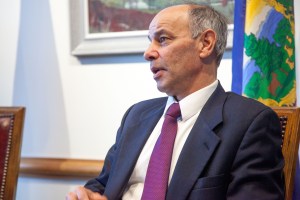
Gauthier went on to say the bill mandating these trainings, Act 147, originally included funding to hire the part-time coordinator but that the money “was stripped out of the final version the Governor signed.”
Greshin said he hadn’t heard about the issue until this month, but the administration would consider funding the position during the next budgeting process.
“If I had to guess the thought was this mandate was given a couple of years lead time so that funding could be lined up, but we heard nothing from the Legislature on this, it was not brought to our attention earlier,” Greshin said.
Gauthier and legislators involved in crafting fair and impartial policing policy said they were unsure about what had happened to the funding for the new training.
However, Gauthier said he was sure it was just a “procedural snafu.”
“I’m sure it was not deliberate and I’m sure it was inadvertent. I certainly don’t think anybody had ill will,” he said.
In recent years, lawmakers have made addressing racial disparities in the state’s criminal justice system a priority.
The latest traffic stop data from the Vermont State Police show significant racial disparities in Vermont still exist, though that gap is narrowing.
In 2016, troopers searched black drivers during a traffic stop at a rate of 2.6 percent, that report found. That figure decreased to 2.15 percent in 2017.
While the report says this search rate is relatively small, it is more than a percent higher than that of white drivers. The report found that the search rate of white drivers was about 1 percent in 2016, and that it decreased to 0.79 percent in 2017.
A report by the Department of Corrections released last week also shows racial disparity in the criminal justice system.
While the latest Census figures show black people make up a little more than 1 percent of the state’s population, the report reveals 8.5 percent of Vermont’s prisoners are black.
Rep. Maxine Grad, D-Moretown, the sponsor of the 2016 bill, did not return calls this week seeking comment.
During a Joint Legislative Justice Oversight Committee meeting in Montpelier on Friday, Sen. Dick Sears, D-Bennington, said he and other legislators had thought they had dealt with funding the newly mandated police bias training.
“It’s very frustrating to make the effort to deal with fair and impartial policing and authorize the training and then to hear that the trainers, the folks who were supposed to do the job, don’t have the money to do the job,” Sears said.


