


[I]n 1968, a partnership between a doctor and a nurse gave rise to the first midwife program in Vermont.
A half-century and 13,000 births later, that same principle – physicians and nurse-midwives working together – is helping to keep the program going at what is now University of Vermont Medical Center.
Though the business and practice of delivering health care continues to change, nurse midwives say their commitment to providing holistic care to women during and after pregnancy is more relevant than ever.
The program’s 50th anniversary, which was celebrated earlier this month, is “sort of a remarkable feat,” said Marti Churchill, lead nurse midwife. “We’ve had some bumps in the road. We were at risk a few times. And so it’s pretty sweet that we’re still here.”
The basic idea of midwifery is ancient: Churchill says “women have been attending women in birth since the dawn of time.” But the birth of a hospital-based midwifery program in Burlington was a case of the right people coming together at the right time.
Dr. John Maeck, who in the 1960s led the obstetrics/gynecology department at what was then called the Medical Center Hospital of Vermont, was exposed to midwifery while on a tour of England. He later became friends with Claire Lintilhac, a retired nurse living in Stowe.

Lintilhac, according to a family history from the Shelburne-based Lintilhac Foundation, had been born in China to missionaries from Canada and followed in the footsteps of her father, who was a physician.
As a traveling nurse, “much of her work was in remote areas and in midwifery – she felt a special calling in helping women and developed a supportive, nurturing approach to her patients and the birthing process,” the family’s history says.
Lintilhac offered financial backing to help start a midwife program here, and Maeck recruited a midwife from the United Kingdom to Vermont in 1968. “The fact that there was a medical doctor who was very receptive and had experience in England was the perfect scenario for this to blossom,” said Crea Lintilhac, Claire Lintilhac’s daughter-in-law and executive director of the foundation that bears the family name.
The program’s first decade was “a slow introduction and integration of midwifery into a university teaching hospital,” Churchill said. But in 1978, four certified nurse midwives were hired and the program began offering 24/7 care.
“From the late ’70s, all through the ’80s and into the early ’90s, we were delivering 400-plus babies a year,” said Churchill, who’s been with the program for 25 years. “We were pretty much the only all-woman practice at that point.”
The UVM midwife service has grown since that time, but that growth hasn’t happened in a straight line due to various challenges and setbacks. For instance, in the 1990s “there started to be more options in the community for all-women providers,” Churchill said. “And with that, the midwife practice took a hit … so we were breaking even, but we weren’t making money.”
And in 2007, hospital administrators pondered shutting down the 24/7 midwife service and folding it into a physicians’ practice. After outcry from the community, mothers and midwives, that didn’t happen.
The UVM program got a big boost seven years later due to a new affiliation with an Essex Junction OB-GYN practice. “It doubled our numbers,” Churchill said. “And now we’ve actually attracted more people because more women are experiencing our care and reminding people that this is a really good thing.”
It’s a “good thing,” advocates say, because nurse midwives can help keep mothers and babies healthier.
“We have increasing, good data to suggest that the inclusion of midwives in obstetric care, especially in low-risk women, improves outcomes including a reduction in cesareans,” said Dr. Kelley McLean, a maternal fetal medicine specialist and the midwife service’s medical director.
McLean added that, “on a more personal level, (midwives) have very different training than physicians have, and they’re much more focused on holistic care of the patient. They really are invested in the whole woman.”
Churchill said nurse midwives attend to psychological, social and emotional health in addition to providing physical care. She said the long list of important considerations for a mother include “how much food she has, what kind of support she has, how she’s treated in her workplace, her housing – it goes on and on.”
“No woman is pregnant in a vacuum,” Churchill said.
She added that there’s an important distinction to be made between the traditional idea of midwifery, which often is associated with home birth, and certified nurse midwives like those at UVM, who have formal medical training and attend births in a hospital setting.
That doesn’t mean, however, that midwives can go it alone if a pregnancy gets complicated. Churchill said constant collaboration with physicians is the key in those cases.
“Our (midwife) practice is able to take care of moderate and even some high-risk patients because our physician colleagues can co-manage with us,” Churchill said. “It elevates our ability to give care because they’re willing to work with us.”
McLean said that relationship works both ways. For doctors, midwives “kind of push us to think outside of our own little box that we’ve created in terms of what we think is the right thing to do,” she said.
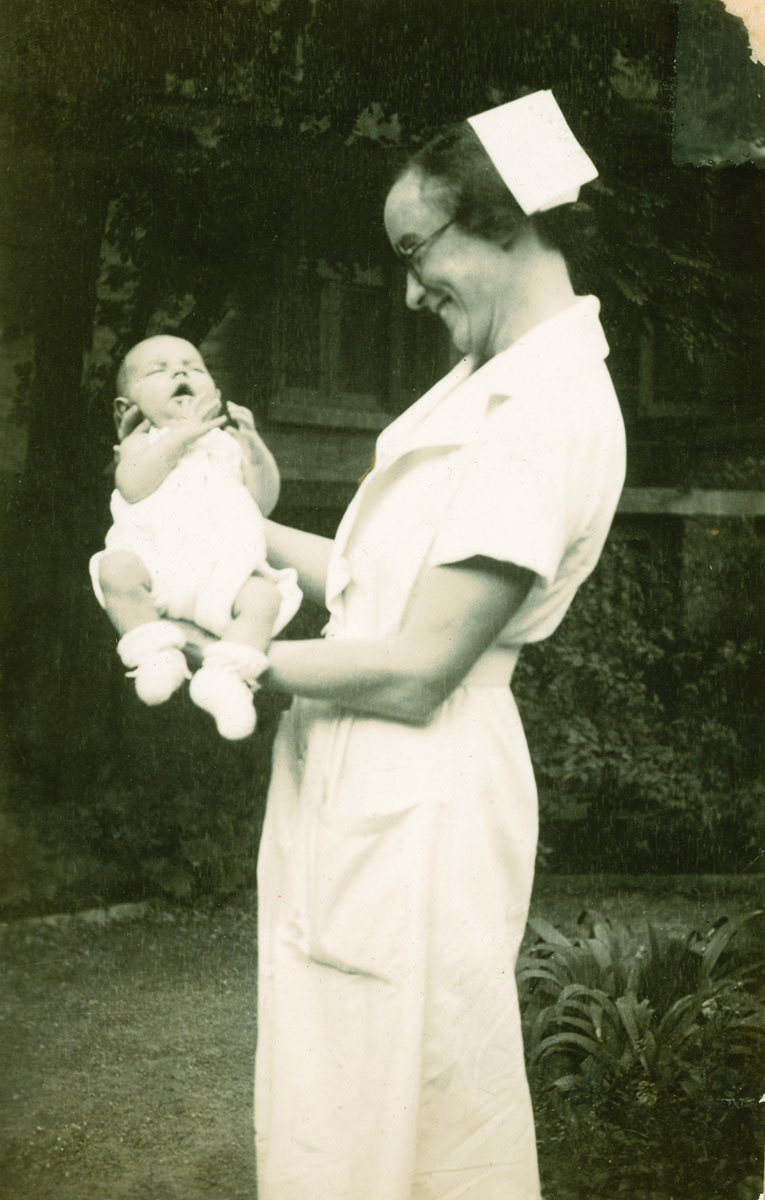
UVM Medical Center administrators say their midwife program is now one of the oldest in the country, and the physician-midwife collaboration has played a role in that. But the program’s longevity also owes a big debt to outside help: Though Claire Lintilhac died in 1984, her family’s foundation has continued to support the program.
By Crea Lintilhac’s estimate, that support has added up to more than $4.8 million since the 1970s. Lintilhac money helped the service go full-time in its early days, and the family also has funded expansions such as research and educational opportunities for midwives; a lactation clinic; and mental health services, Churchill said.
McLean said the Lintilhac Foundation’s support “helped protect the midwifery service in times where it was a little more precarious.”
That’s not to say that there are any guarantees about the program’s long-term future. McLean said the fee-for-service health care payment system isn’t built to reward midwifery’s holistic approach.
“The financial piece of that is complicated, and it’s very hard to measure how important midwifery care is in this current model,” she said.
But Vermont is in the middle of an experiment in shifting the health care payment model toward one that emphasizes good outcomes and preventative care. And in health care facilities across the state, there is increasing emphasis on wellness and integration of physical and mental health.
For Crea Lintilhac, midwifery “is exactly the kind of health care and support that we’re trying to move toward.”
Disclosure: Crea Lintilhac is on the board of the Vermont Journalism Trust, the parent organization to VTDigger, and VTDigger has received funding from the Lintilhac Foundation.


