


[A] leadership transition is under way at the state Department of Mental Health.
Friday was the last day of work for Commissioner Melissa Bailey, who is leaving the department for a job in Pennsylvania. Bailey’s deputy commissioner, Mourning Fox, is taking over on an interim basis while officials search for a permanent replacement.
Human Services Secretary Al Gobeille said he wants to make that hiring decision “quickly, because it’s a very important position.”
“I’m shooting for the first of the year, and hopefully sooner,” Gobeille said.
Bailey, who brought a background as a school-based mental health clinician to state government, has held a variety of titles with the Human Services Agency and the Mental Health Department since the early 2000s.
She was named the department’s deputy commissioner in 2015 and took the top job in 2017 when Gov. Phil Scott took office.
Bailey and other department officials have spent a significant amount of time dealing with a capacity problem in the mental health system, as evidenced by an increasing number of psychiatric patients waiting in hospital emergency rooms because of a lack of inpatient beds. The state is trying to address that problem in part by adding beds via partnerships with the Brattleboro Retreat and University of Vermont Health Network.
Gobeille said Bailey “has been an outstanding commissioner. We are very, very sad to see her go.”
“She was able to have a vision for the whole system and build a great team and has just been a force for good her entire time as a state employee,” he said.
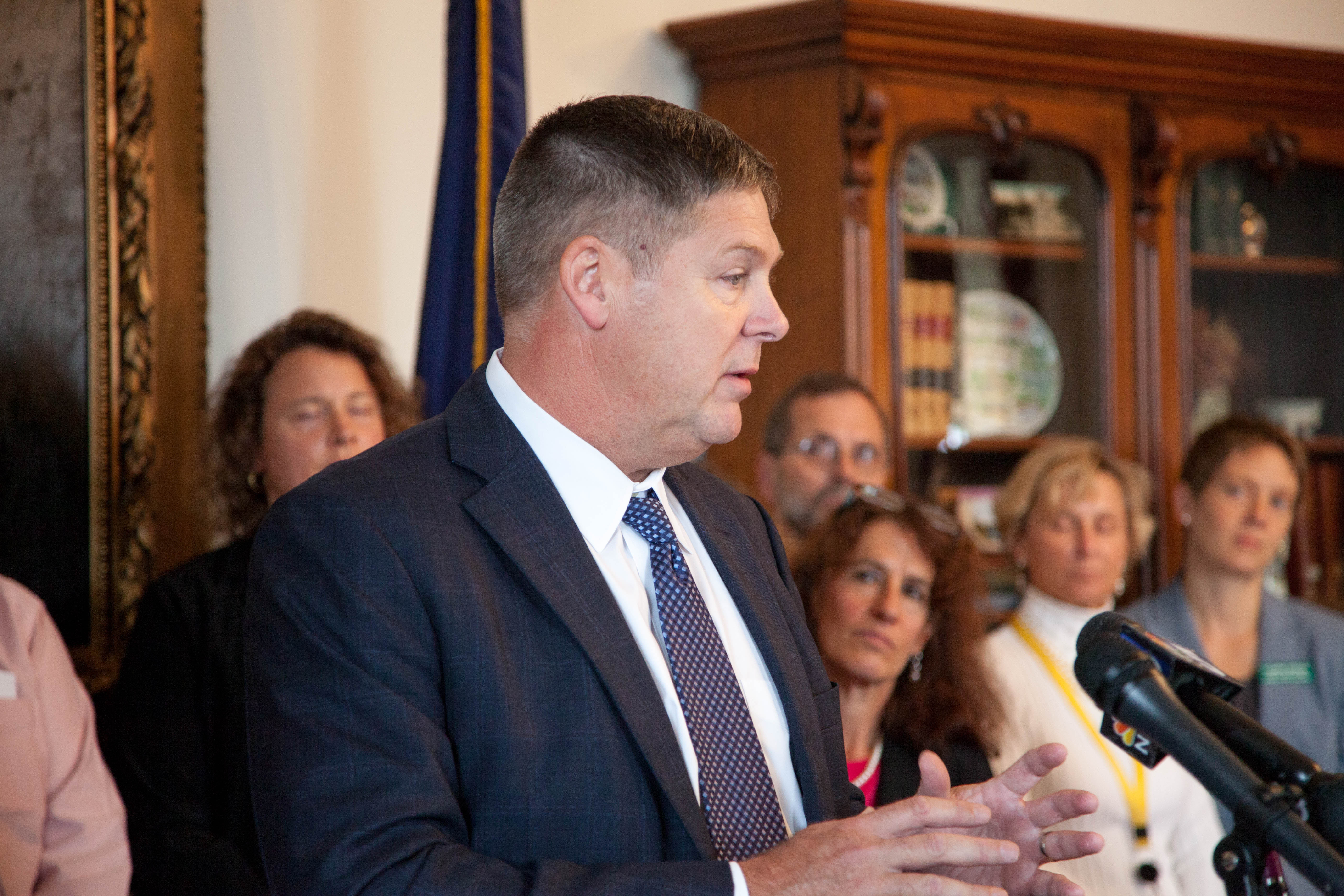
In making a final appearance on Thursday before the legislative Health Reform Oversight Committee, Bailey made a point of praising her staff.
“I have been incredibly impressed with their dedication, their professionalism – they really care about what happens to people,” Bailey said. “I think they are amazing people, and really, this is one of the hardest things about leaving the state.”

Fox said he has been with the Mental Health Department for about six years and has served as deputy commissioner “for just shy of two years.”
Fox has been in the mental health field since 1994. His official biography on the department’s website shows the diversity of his experiences: He started out as a psychiatric emergency services clinician; developed a counseling program at a college; directed a maximum security inpatient forensic unit; and is an FBI-trained hostage negotiator.
In Vermont, he has worked in the state’s “designated agency” system of community mental health services. Within the Mental Health Department, his titles have included director of operations and mental health services director.
Fox “comes from the inpatient side of the mental health field,” Gobeille said. “He’s worked in large mental health hospitals and has just incredible experience.”
Fox said he doesn’t expect a big learning curve as interim commissioner. And he’s interested in taking the commissioner’s job when Bailey’s replacement is officially named.
“But I’ve (also) told the secretary that I’d be OK with being the deputy or whatever role is necessary,” he said. “My job is not to move up the ladder. It’s to help Vermonters and do this work.”
Bailey and Fox, appearing together before the Health Reform Oversight Committee, also offered updates on key mental health initiatives aimed at relieving pressure on the state’s system.
For example, Bailey said an effort to add at least a dozen new inpatient psychiatric beds at the Brattleboro Retreat is on track.
The state is funding that effort via $4.5 million allocated in the fiscal 2019 capital bill and another $1 million in the budget. The state will contract for exclusive use of the beds for acute, adult patients.
“We feel really good about the plan that they’ve put forward,” Bailey said. “It does create additional Level 1 capacity in a facility that already has Level 1 capacity, so we’ll be able to share resources and staff and, really, understanding about that patient population.”
Bailey said the beds are expected to be ready by January 2020. Peter Albert, senior vice president of government relations for the Retreat, said administrators have hired an architectural firm, developed plans and are “anxious to get started by January in terms of renovation.”
The project will include an additional four mental health beds that won’t be contracted by the state. Bailey said that makes sense “because those beds can be used by any payer, and it’s definitely a resource that the state needs.”
Funding for the project is dependent on finalization of a contract between the Retreat and the state. Gobeille said he expects that contract to be signed within a week to 10 days.
The department’s focus isn’t only on building more beds.
Officials also have partnered with five Chittenden County municipalities – Essex, Winooski, South Burlington, Colchester and Shelburne – on a team of “community outreach” mental health workers tasked with offering help before a resident ends up in an emergency room or in police custody.
Municipalities have shared the cost with the state, and Bailey said the outreach workers have flexibility to go where they’re needed most. The results, she said, are clear: The outreach team made contact with 611 people between April and September of this year and ended up referring only 39 to a hospital emergency department.
“I think it’s a great model, and it’s actually showing a really positive impact in those communities,” Bailey said.
