


Vermont officials have revised a new report on drug-injection sites after learning that one of their sources was an international study that’s been retracted.
The revisions came several days after Gov. Phil Scott’s Opioid Coordination Council issued a report contending that safe injection sites – also known as supervised injection facilities – are “not a viable option for Vermont.” The report cited legal, health and public safety concerns.
The council’s analysis relied in part on a widely discussed study that’s been withdrawn due to “methodological weaknesses.” But officials say that doesn’t change their minds about safe injection sites.
“If anything, this situation reinforces the need for additional research before considering the high-risk option of pursuing the establishment of a (safe injection facility) in Vermont,” said Ben Truman, a state Department of Health spokesperson.
Safe injection sites, in which drug users could inject under supervision while also receiving information about treatment, have functioned for years internationally. They don’t yet exist in the United States, though advocates in cities including Philadelphia are trying to get injection sites off the ground.
The governor’s council cited federal law as a major reason for the lack of U.S. injection sites to date.
“The potential federal criminal and civil liability to those working in, supporting or aiding the operation of a (safe injection site) is significant and likely would pose an insurmountable obstacle to the establishment of (an injection site) in Vermont regardless of any action the Vermont Legislature might take,” the council’s report says.
The council further concluded that “current research does not support whether or to what extent (safe injection facilities) reduce fatal opioid overdose, reduce the spread of disease or help to offer pathways out of drug misuse.”
In the initial version of the report, which was released Monday, that conclusion was based partly on a meta-analysis showing that safe injection sites “had no effect on overdose mortality or syringe sharing and only a small positive effect in some health outcomes.”
That sentence, and others referencing the meta-analysis, now have been deleted from a revised version of the state report. That’s because the analysis, conducted by three researchers from the University of South Wales in the United Kingdom, has been retracted by the editor of The International Journal of Drug Policy.
The journal’s editor said the piece was retracted following “two critical reviews received by the journal after publication … and additional commissioned independent assessments” as well as the authors’ acknowledgement of “honest human error.”
Vermont officials decided to change the Opioid Coordination Council’s report after fielding questions about the meta-analysis. They also heard directly from an author of that analysis on Wednesday.
“This change, while unfortunate, has no impact on the conclusions of the OCC,” Truman said.
He noted that the council’s report drew on a variety of research beyond the discredited meta-analysis. “An in-depth literature review performed by the Health Department led to the OCC’s findings that the data are insufficient to draw conclusions about local impact, and that the simulated models used to project cost-effectiveness do not appear to incorporate available data from (safe injection sites) in Canada or elsewhere,” Truman said.
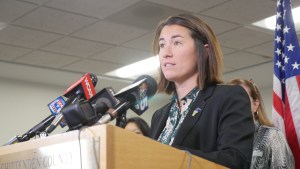
But some say the state’s initial reliance on the retracted analysis – and officials’ subsequent adherence to their conclusions – indicate a possible bias against safe injection facilities.
“It seems like this report was designed to confirm that safe injection sites won’t work,” said Scott Pavek, a Burlington resident who is in recovery from substance use disorder.
Pavek, who comments often on addiction issues and governmental policies on social media, raised the issue of the withdrawn meta-analysis soon after VTDigger.org published the opioid council’s findings on Monday. Now, he says there’s “a noticeable gap in the new report where this meta-analysis was taken out.”
“The timeline and the response (to the retraction) make me question the credibility of what’s going on,” Pavek said in an interview.
He noted, for instance, that the council’s report is skeptical of the large amount of data and other information coming from the InSite safe injection facility in Vancouver, British Columbia. But Pavek said that same level of scrutiny was not applied to information that portrays injection sites as potentially detrimental to communities.
Pavek also took issue with the council posing this question in its report: “Does a (safe injection site) prevent overdose deaths or simply delay them?”
“That’s what people used to say and still say about naloxone,” Pavek said, referring to the widely available overdose-reversal drug. Even “delaying” overdose is a positive outcome, Pavek argues, because each day is “another day for people to consider recovery.”
The opioid council’s report says members are working “with a sense of urgency to improve intervention systems on behalf of Vermonters … who are still in need of treatment.” That can happen, the council says, through greater investment in syringe-service programs and in the “hub and spoke” system of medication-assisted treatment.
But supervised injection sites, the council argues, have an “unproven track record of harm reduction.”
Chittenden County State’s Attorney Sarah George, who has publicly supported supervised injection sites, says that statement “wholly misinterprets the entire principle of ‘harm reduction.’”
“To say that the over 100 overdose prevention facilities in the world who have done exactly that – have reversed thousands of overdoses, have induced countless individuals into some form of treatment and recovery, and who have had zero deaths amongst them, ever, have an ‘unproven track record of harm reduction’ – is false and disingenuous,” George said.
George acknowledges the obstacles presented by federal law. But she doesn’t think that should stop the conversation about safe injection sites, and she believes that conversation can continue in conjunction with discussion about other ways to address the opiate epidemic.
“This topic is controversial, and people feel strongly about whether or not (supervised injection sites) would be good for Vermont,” George said. “But the fact that it’s controversial, in my opinion, means we should be talking about it more openly and honestly, rather than blaming federal barriers or misrepresenting data to justify opposition.”
George also said she was “surprised and disappointed” to see that the Opioid Coordination Council used the discredited meta-analysis in its initial report. She took particular note of the Health Department’s use of the word “unfortunate” in reference to the situation.
“The retraction is not unfortunate,” George said. “The publishing of the meta-analysis to begin with definitely is.”

