

[T]he top Pentagon official is visiting the last and largest site in Vietnam to be contaminated by Agent Orange, thanks in part to some prompting from Vermont U.S. Senator Patrick Leahy.
Leahy has been pushing for years for the U.S. to clean up sites in Vietnam where it used the chemical herbicide, which has been linked to a range of human health problems.
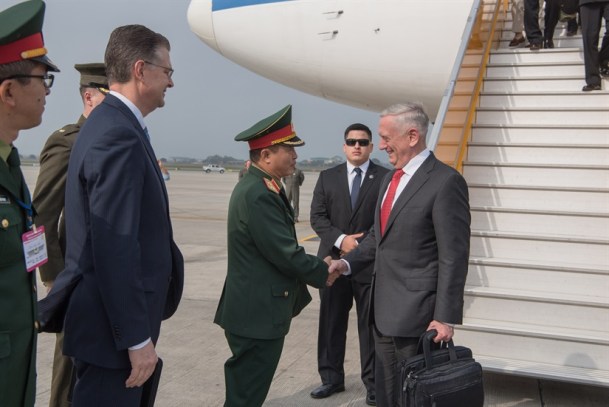
Secretary of Defense Jim Mattis visited Bien Hoa, where a decade-long remediation effort led by the U.S. Agency for International Development (USAID) is expected to begin next year at a cost of $390 million.
“I came to show the support of the Defense Department for this project and demonstrate that the United States makes good on its promises,” Mattis said, according to Reuters.
Speaking to reporters ahead of the visit, Mattis said, “I just want to get eyes on it so when I go back and I talk to Congress, I can tell them my impression with actually having seen the site.”
Mattis visited the Agent Orange contamination area after a phone call with Leahy, according to Tim Rieser, Leahy’s longtime foreign policy aide.
“This is a big undertaking. One that no one thought would happen because the tradition has been that, frankly, the U.S. government doesn’t clean up this type of thing after wars and for years the Pentagon’s position was that ‘we don’t do that,’” Rieser said.

“It finally took Leahy speaking with Mattis and explaining the uniqueness of this problem and the importance of this relationship,” he added.
The Department of Defense did not respond to a request for comment.
U.S. troops dropped Agent Orange during the Vietnam War to clear jungle foliage and better track Viet Cong positions. The chemical compound has since contributed to severe health problems that, according to the U.S. Department of Veterans Affairs, include Parkinson’s Disease, prostate cancer, and Leukemia.
Decontamination of ground soil containing Agent Orange at Danang International Airport and now Bien Hoa has all been possible because of funding secured by Leahy, as a longtime member of the powerful Senate Appropriations Committee.
A similar project at Danang International Airport finished at the end of last year, after five years of work costing $110 million.
Leahy began pushing for the cleanup efforts more than a decade ago. During a visit last year to Vietnam by President Donald Trump, the senator said the work cleaning up Agent Orange has been pivotal to improving U.S.-Vietnam ties.
“This probably affected our relationship as much as anything because it was a daily reminder of the war,” Leahy said at the time. “And then it became a generational reminder.”

