


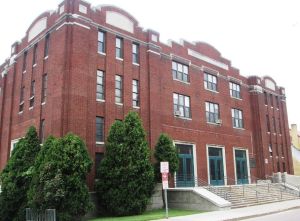
BURLINGTON — The city’s high school needs renovations, and its stormwater and wastewater systems are run-down. And Memorial Auditorium, once a gem of the downtown, is sitting vacant in disrepair.
In November, voters will be deciding on a $70 million bond for the high school renovation and a $30 million bond for the city’s stormwater and wastewater system. A $15 million to $25 million bond on Memorial Auditorium is expected at March’s Town Meeting Day.
But can a city emerging from a credit crisis afford the high school project and other investments that would double its debt?
Burlington Mayor Miro Weinberger and the city council believe the answer is “yes” after unanimously passing a new debt policy on September 24 which lays out a path forward that would allow the city to double its “overlapping debt” — the combined total of the city and school district’s debt — in the next five years while retaining its current credit rating with accreditor Moody’s.
The city’s credit rating sits at A2, two steps behind where the city was at its highest point in 2010 before it was revealed that then-Mayor Bob Kiss used $17 million in taxpayer money to keep Burlington Telecom afloat. The city’s credit rating toppled to Baa3, and was approaching “junk bond” status, Weinberger describes.
“The reason I was elected is that I said my top priority was putting Burlington’s finances in order,” he said. “Things were in financial disarray in 2012.”
But with the new policy, officials say they are sure the city can afford the upcoming projects.
“We are definitely confident that borrowing at this level should not result in a credit rating downgrade,” Weinberger said. “In fact, we don’t believe that borrowing at this level is an obstacle to further upgrades.”
The city’s credit rating journey
Moody’s attributed the city’s “A2” credit ranking in its most recent analysis in April to conservative fiscal management by the city’s leadership, operating surpluses and the stable underlying economy and tax base in the state’s largest city.
Weaknesses remain, however. The evaluation factors in the city’s deferred maintenance — for example, the high school — that will lead to an increased debt burden. The city also has elevated pension liability.
While the city’s credit is on the upswing, Moody’s couldn’t assign a future outlook to the city due to the level of outstanding debt. Continued surpluses could lead to an upgrade, but if the city renews its reliance on cash flow borrowing or starts having operating deficits, it could be downgraded, Moody’s said.
Moody’s also listed “material increase in the debt burden” as a possible cause of a credit decrease. Moody’s spokesman Joe Mielenhausen declined to comment on the city’s debt policy as the city has not come to market with the proposed new bonds.
When rating cities, Moody’s looks at city’s debt burdens relative to the value of the tax base and operating revenues.
“Basically, the higher a government’s debt burden, the higher its payments are to pay down that debt,” Mielenhausen said. “The higher the debt, the more likely that a decline in tax base value or operating revenues will prevent the local government from making the payments on that debt on time and in full.”
The current rating is a significant improvement from when Weinberger took office in 2012. While the city’s credit downgrading starting in July 2010, in September 2012 the downgrade rapidly accelerated. Upgrades started in March 2015, and the city attained its current rating in November 2017.

Weinberger describes inheriting a city in financial disarray nearing “the edge of a significant abyss” and campaigned heavily on getting the city’s finances in order. An audit of the city’s finances right after he took office found 27 negative findings and 12 material weaknesses, all of which have been fixed, the mayor said.
The city’s credit rating free-fall was due to both the $17 million in misused funds and the building legal confrontation with Citibank, which sued the city for $33 million. The city settled by paying the bank $10 million and agreeing to sell BT.
The city sold Burlington Telecom to Schurz Communications in December 2017, and stands to recover about $5 million of the $17 million it had used to keep BT afloat. Weinberger and some councilors have expressed a preference to put at least some of that money as equity in BT.
Moody’s listed “contingent liabilities” as part of the Burlington Telecom sale as a possible cause of a downgrade, but Mielenhausen said that the reported terms of the sale “do ameliorate our concerns.”
Evaluating city’s new debt policy
If the voters approve the high school bond project and future projects, they will be footing a hefty bill. The total overlapping debt for the city and the school district is projected to increase from
$81.7 million in 2019 to $195.6 million in 2024 before leveling off to $183.6 million by 2028.
The city’s current debt is comprised of general obligation bonds, public improvement bonds and the fiscal stability bond voters passed to stop risky short-term borrowing. The debt comprises annual borrowing for routine maintenance and borrowing for other initiatives, such as buying new fire trucks and repairing sidewalks.
The school district currently has $37 million of debt from projects addressing deferred maintenance, including Edmunds Elementary School, JJ Flynn Elementary School and the turf field at the high school.
The projections include debt associated with part of the city’s sustainable infrastructure plan, anticipated infrastructure improvement needs moving forward, the Memorial Auditorium and high school renovation projects and routine annual borrowing for maintenance.
The city is aiming to maintain the debt load at up to 4 percent of the equalized value of taxable assets — i.e., real and personal property — in the city. The policy allows for borrowing up to 4.25 percent in case the need for such borrowing arises, but the city council would have to approve any decision to go more into debt than that.
If voters approve bonds that would lead to borrowing levels that approach the new debt limits, a Burlington household assessed at $250,000 would see a $381 increase in the total cost of the municipal tax due to the city’s debt, from $272 in 2019 to $653 in 2028.
If the high school bond passes, Burlingtonians with homes valued at $250,000 will be paying $302 more in education tax for the high school project in 2028 than they are now.
Despite the significant debt increase, Weinberger said he remained confident that the city would be able to afford emergency spending if needed. He said that the city has built up a $6 million pool of uncommitted funds for emergencies.
Plus, while the 4 percent taxable asset value is the city’s target — and what the projections account for — there is a significant spread between the targeted debt and the maximum of 4.25 percent allowed under the policy. The difference is about $12 million.
The city set its direct debt target at the level for AA rated cities, which is a higher rating than the city currently has. The policy sets the limit for overlapping debt, which is the combined debt with the school district, at the standard for direct debt in “A” rated cities, the city’s current rating.
“We are basically holding the overlapping debt in the standard for direct-debt in a single-A city,” Weinberger said. “It’s a conservative standard for overlapping debt.”
Councilor Karen Paul said the policy will ensure the city is financially responsible moving forward, and she hopes the city can get back to a “AA” rating.
“I think it does set us on a good path forward and will cause us to make very disciplined decisions because we have those projections,” she said. “I would not vote anything that jeopardizes our credit rating, we worked too hard to get there.”
Upcoming projects requiring voter support
When voters go to the polls in November, they will be voting on a $70 million bond to do major renovations to Burlington High School and a $30 million bond for wastewater and stormwater system repairs. Both bonds require only a majority of votes to pass. While most general obligation bonds require two thirds approval to succeed, an exception is made in the city charter for bonds relating to public schools.
Council President Kurt Wright said that while the city has figured out that it can afford the increased debt without affecting its credit rating, it’s another question whether or not individual citizens will support the increases.
“People know there’s more stuff coming, and there’s a lot of people who are already strapped based on taxes,” he said.
Wright said that while he believes the high school bond will pass, it will be much closer than the “slam dunk” stormwater/wastewater revenue bond vote.
The high school renovation plan calls for the demolition of several buildings that make up the high school and a three-story addition to the school’s main building. The renovation will address accessibility concerns for students with disabilities, safety concerns and increase access to technology. It will also address maintenance issues which have been pushed off for years.
The wastewater and stormwater bond is a revenue bond, and will not contribute to the part of the city’s debt that is supported by property taxes. The average taxpayer will see a 12.2 percent increase in their wastewater bill and a 16.7 percent increase in their stormwater bills, which will add up to around $5 a month.
The TIF bond approved by voters for the CityPlace Burlington project also does not affect part of the city’s debt that is supported by property taxes.
The city is also aiming to get the Memorial Auditorium bond on the March 2019 Town Meeting ballot. That bond would require two-thirds support as a general obligation bond, and the city is still discussing pricing options.
Weinberger said he believes the debt policy projections should help Burlingtonians feel more comfortable supporting the high school bond on election day in November and the Memorial Auditorium bond moving forward.
“This debt policy explicitly lays out a 10-year projection that I think, really, for the first time, does give voters a pretty clear sense of how the high school vote and the Memorial Auditorium vote fit into the vision of what the city and the school district would like to use their property taxes for for years to come,” he said.
Clarification: The headline for this story has been modified to show that the debt limit is new, not an increase from a previous ceiling. Also, the story has been updated to clarify how the wastewater, stormwater and TIF bonds affect the city’s debt.
